







Copy in clipboard...
Iraqis vote in parliamentary elections rife with political rivalries
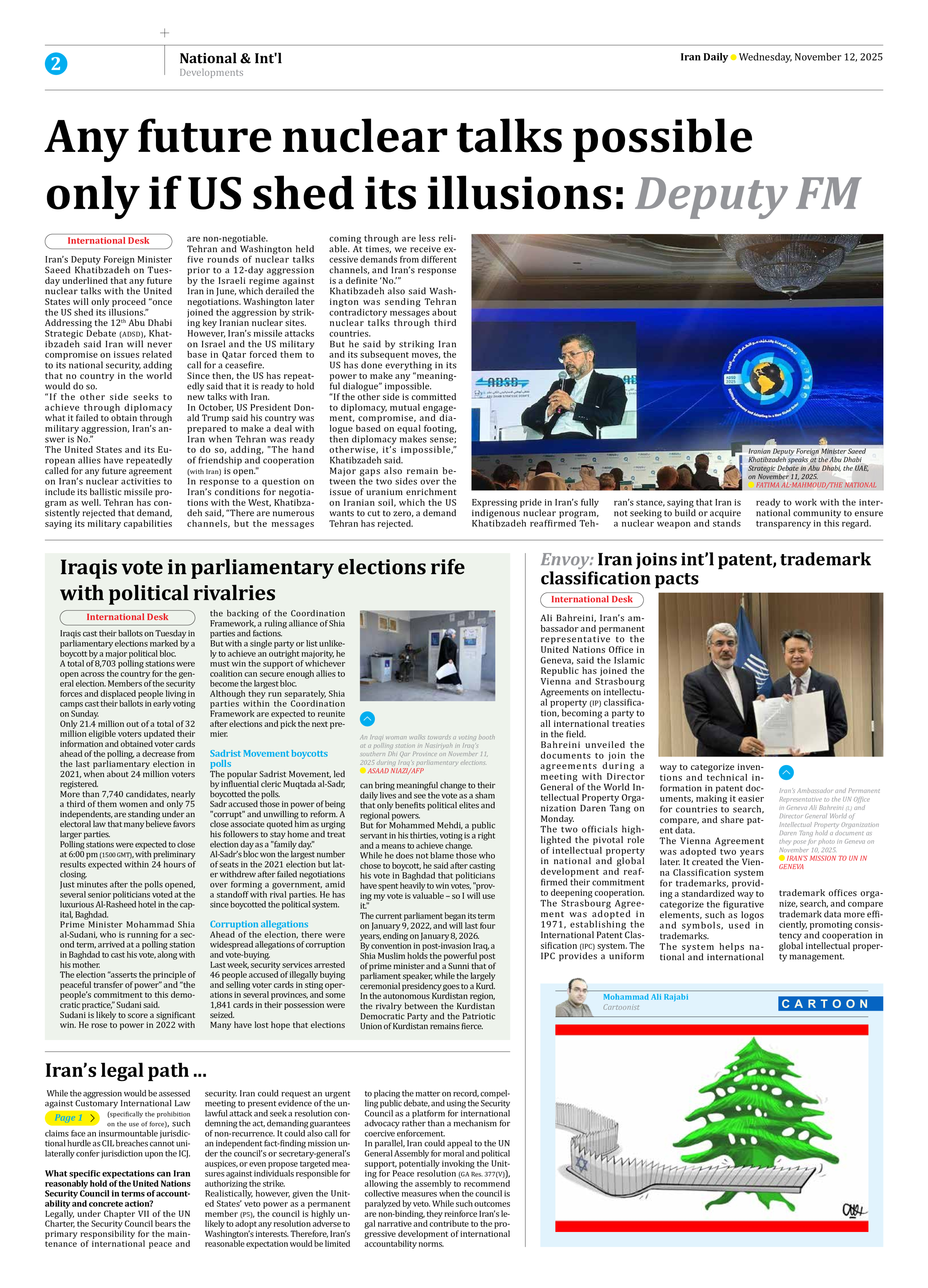
Iraqis cast their ballots on Tuesday in parliamentary elections marked by a boycott by a major political bloc.
A total of 8,703 polling stations were open across the country for the general election. Members of the security forces and displaced people living in camps cast their ballots in early voting on Sunday.
Only 21.4 million out of a total of 32 million eligible voters updated their information and obtained voter cards ahead of the polling, a decrease from the last parliamentary election in 2021, when about 24 million voters registered.
More than 7,740 candidates, nearly a third of them women and only 75 independents, are standing under an electoral law that many believe favors larger parties.
Polling stations were expected to close at 6:00 pm (1500 GMT), with preliminary results expected within 24 hours of closing.
Just minutes after the polls opened, several senior politicians voted at the luxurious Al-Rasheed hotel in the capital, Baghdad.
Prime Minister Mohammad Shia al-Sudani, who is running for a second term, arrived at a polling station in Baghdad to cast his vote, along with his mother.
The election “asserts the principle of peaceful transfer of power” and “the people’s commitment to this democratic practice,” Sudani said.
Sudani is likely to score a significant win. He rose to power in 2022 with the backing of the Coordination Framework, a ruling alliance of Shia parties and factions.
But with a single party or list unlikely to achieve an outright majority, he must win the support of whichever coalition can secure enough allies to become the largest bloc.
Although they run separately, Shia parties within the Coordination Framework are expected to reunite after elections and pick the next premier.
Sadrist Movement boycotts polls
The popular Sadrist Movement, led by influential cleric Muqtada al-Sadr, boycotted the polls.
Sadr accused those in power of being "corrupt" and unwilling to reform. A close associate quoted him as urging his followers to stay home and treat election day as a "family day."
Al-Sadr’s bloc won the largest number of seats in the 2021 election but later withdrew after failed negotiations over forming a government, amid a standoff with rival parties. He has since boycotted the political system.
Corruption allegations
Ahead of the election, there were widespread allegations of corruption and vote-buying.
Last week, security services arrested 46 people accused of illegally buying and selling voter cards in sting operations in several provinces, and some 1,841 cards in their possession were seized.
Many have lost hope that elections can bring meaningful change to their daily lives and see the vote as a sham that only benefits political elites and regional powers.
But for Mohammed Mehdi, a public servant in his thirties, voting is a right and a means to achieve change.
While he does not blame those who chose to boycott, he said after casting his vote in Baghdad that politicians have spent heavily to win votes, "proving my vote is valuable – so I will use it."
The current parliament began its term on January 9, 2022, and will last four years, ending on January 8, 2026.
By convention in post-invasion Iraq, a Shia Muslim holds the powerful post of prime minister and a Sunni that of parliament speaker, while the largely ceremonial presidency goes to a Kurd.
In the autonomous Kurdistan region, the rivalry between the Kurdistan Democratic Party and the Patriotic Union of Kurdistan remains fierce.