







Copy in clipboard...
Any future nuclear talks possible only if US shed its illusions: Deputy FM
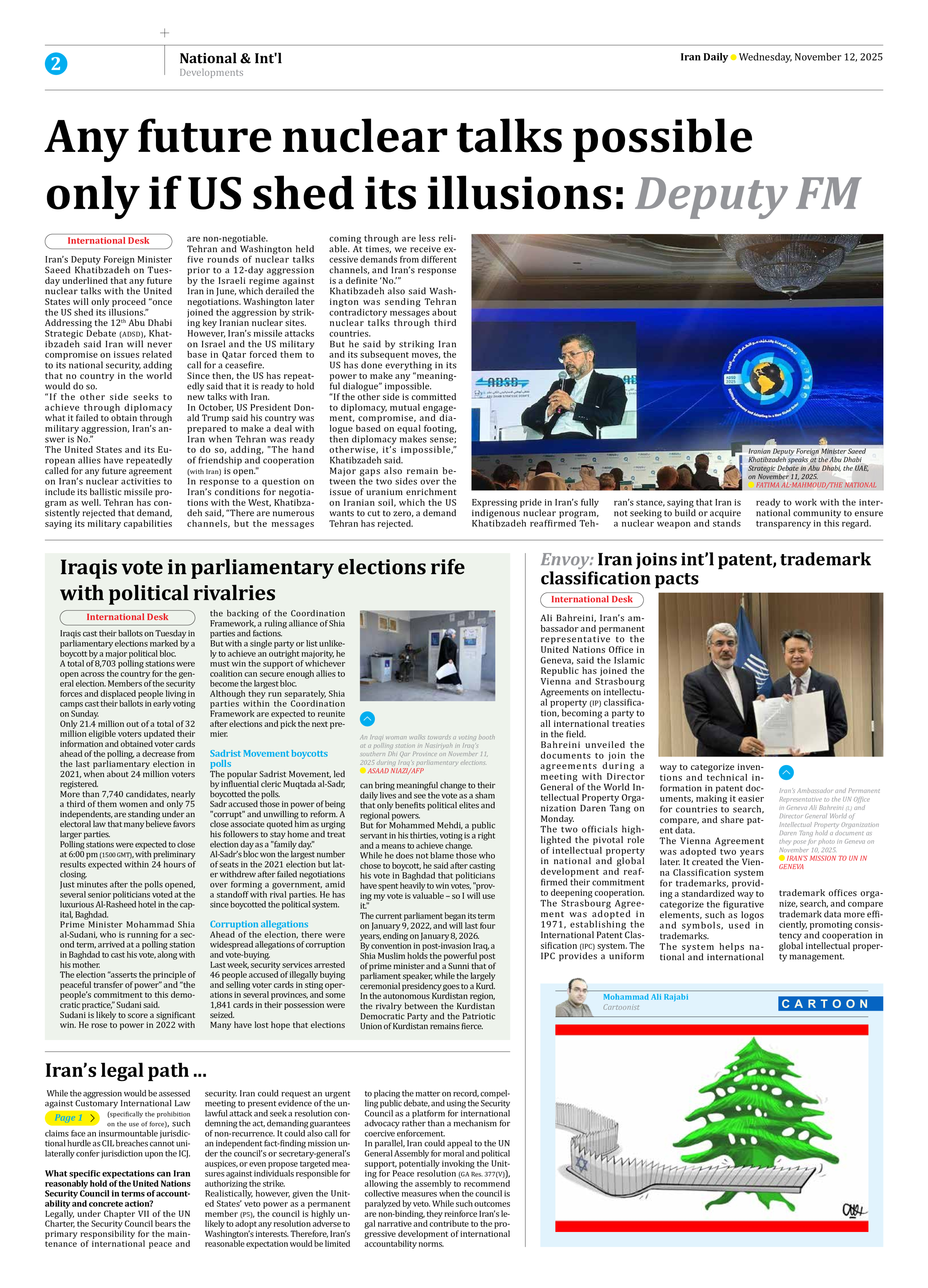
Iran’s Deputy Foreign Minister Saeed Khatibzadeh on Tuesday underlined that any future nuclear talks with the United States will only proceed “once the US shed its illusions.”
Addressing the 12th Abu Dhabi Strategic Debate (ADSD), Khatibzadeh said Iran will never compromise on issues related to its national security, adding that no country in the world would do so.
“If the other side seeks to achieve through diplomacy what it failed to obtain through military aggression, Iran’s answer is No.”
The United States and its European allies have repeatedly called for any future agreement on Iran’s nuclear activities to include its ballistic missile program as well. Tehran has consistently rejected that demand, saying its military capabilities are non-negotiable.
Tehran and Washington held five rounds of nuclear talks prior to a 12-day aggression by the Israeli regime against Iran in June, which derailed the negotiations. Washington later joined the aggression by striking key Iranian nuclear sites.
However, Iran’s missile attacks on Israel and the US military base in Qatar forced them to call for a ceasefire.
Since then, the US has repeatedly said that it is ready to hold new talks with Iran.
In October, US President Donald Trump said his country was prepared to make a deal with Iran when Tehran was ready to do so, adding, "The hand of friendship and cooperation (with Iran) is open."
In response to a question on Iran’s conditions for negotiations with the West, Khatibzadeh said, “There are numerous channels, but the messages coming through are less reliable. At times, we receive excessive demands from different channels, and Iran’s response is a definite ‘No.’”
Khatibzadeh also said Washington was sending Tehran contradictory messages about nuclear talks through third countries.
But he said by striking Iran and its subsequent moves, the US has done everything in its power to make any “meaningful dialogue” impossible.
“If the other side is committed to diplomacy, mutual engagement, compromise, and dialogue based on equal footing, then diplomacy makes sense; otherwise, it’s impossible,” Khatibzadeh said.
Major gaps also remain between the two sides over the issue of uranium enrichment on Iranian soil, which the US wants to cut to zero, a demand Tehran has rejected.
Expressing pride in Iran’s fully indigenous nuclear program, Khatibzadeh reaffirmed Tehran’s stance, saying that Iran is not seeking to build or acquire a nuclear weapon and stands ready to work with the international community to ensure transparency in this regard.