







Copy in clipboard...
President calls for overhaul of youth programs, says Iran’s future hinges on ‘creative minds’
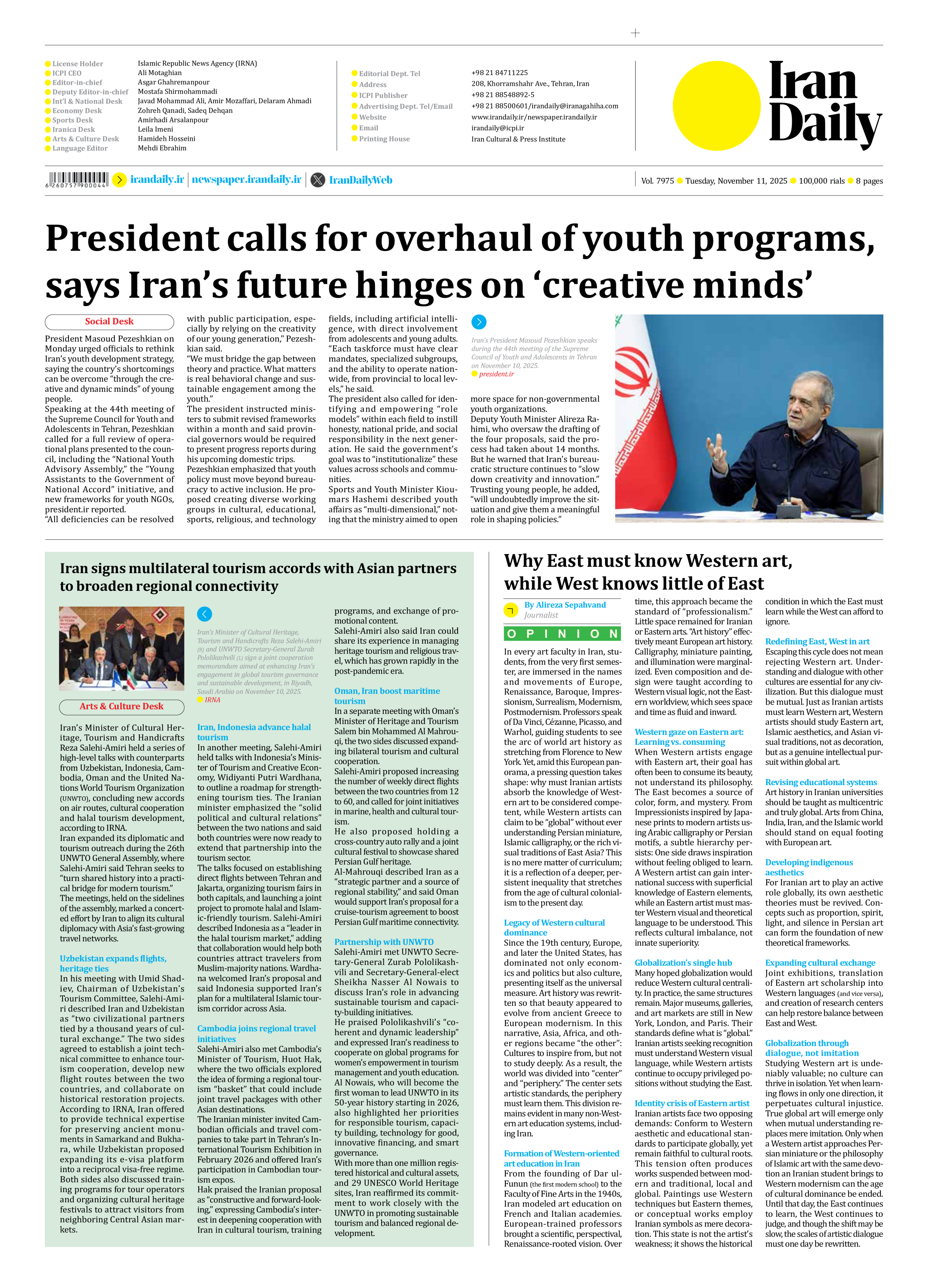
Speaking at the 44th meeting of the Supreme Council for Youth and Adolescents in Tehran, Pezeshkian called for a full review of operational plans presented to the council, including the “National Youth Advisory Assembly,” the “Young Assistants to the Government of National Accord” initiative, and new frameworks for youth NGOs, president.ir reported.
“All deficiencies can be resolved with public participation, especially by relying on the creativity of our young generation,” Pezeshkian said.
“We must bridge the gap between theory and practice. What matters is real behavioral change and sustainable engagement among the youth.”
The president instructed ministers to submit revised frameworks within a month and said provincial governors would be required to present progress reports during his upcoming domestic trips.
Pezeshkian emphasized that youth policy must move beyond bureaucracy to active inclusion. He proposed creating diverse working groups in cultural, educational, sports, religious, and technology fields, including artificial intelligence, with direct involvement from adolescents and young adults.
“Each taskforce must have clear mandates, specialized subgroups, and the ability to operate nationwide, from provincial to local levels,” he said.
The president also called for identifying and empowering “role models” within each field to instill honesty, national pride, and social responsibility in the next generation. He said the government’s goal was to “institutionalize” these values across schools and communities.
Sports and Youth Minister Kioumars Hashemi described youth affairs as “multi-dimensional,” noting that the ministry aimed to open more space for non-governmental youth organizations.
Deputy Youth Minister Alireza Rahimi, who oversaw the drafting of the four proposals, said the process had taken about 14 months. But he warned that Iran’s bureaucratic structure continues to “slow down creativity and innovation.” Trusting young people, he added, “will undoubtedly improve the situation and give them a meaningful role in shaping policies.”