







Weaving identity into every Baluchi carpet
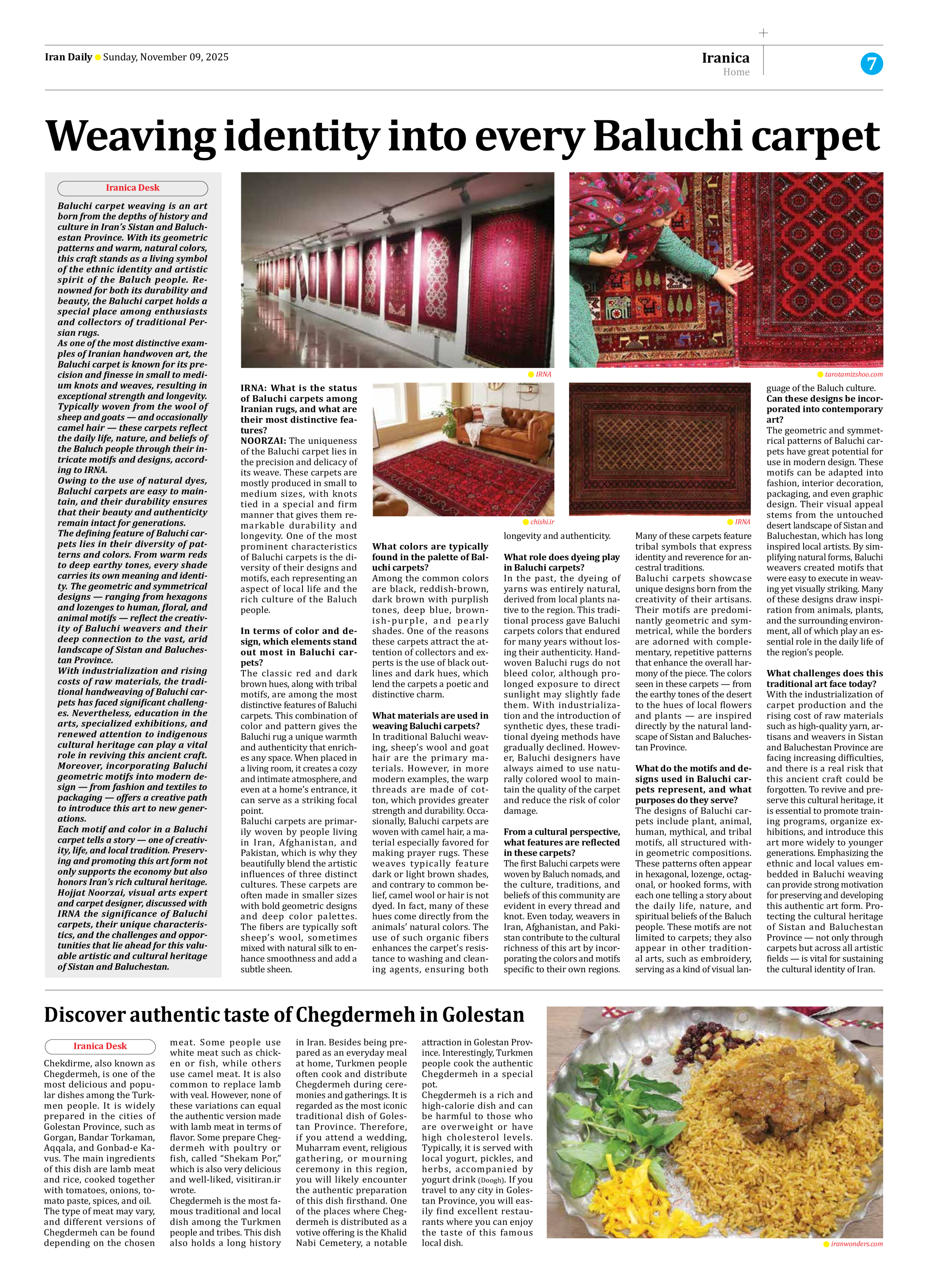
Baluchi carpet weaving is an art born from the depths of history and culture in Iran’s Sistan and Baluchestan Province. With its geometric patterns and warm, natural colors, this craft stands as a living symbol of the ethnic identity and artistic spirit of the Baluch people. Renowned for both its durability and beauty, the Baluchi carpet holds a special place among enthusiasts and collectors of traditional Persian rugs. As one of the most distinctive examples of Iranian handwoven art, the Baluchi carpet is known for its precision and finesse in small to medium knots and weaves, resulting in exceptional strength and longevity. Typically woven from the wool of sheep and goats — and occasionally camel hair — these carpets reflect the daily life, nature, and beliefs of the Baluch people through their intricate motifs and designs, according to IRNA. Owing to the use of natural dyes, Baluchi carpets are easy to maintain, and their durability ensures that their beauty and authenticity remain intact for generations. The defining feature of Baluchi carpets lies in their diversity of patterns and colors. From warm reds to deep earthy tones, every shade carries its own meaning and identity. The geometric and symmetrical designs — ranging from hexagons and lozenges to human, floral, and animal motifs — reflect the creativity of Baluchi weavers and their deep connection to the vast, arid landscape of Sistan and Baluchestan Province. With industrialization and rising costs of raw materials, the traditional handweaving of Baluchi carpets has faced significant challenges. Nevertheless, education in the arts, specialized exhibitions, and renewed attention to indigenous cultural heritage can play a vital role in reviving this ancient craft. Moreover, incorporating Baluchi geometric motifs into modern design — from fashion and textiles to packaging — offers a creative path to introduce this art to new generations. Each motif and color in a Baluchi carpet tells a story — one of creativity, life, and local tradition. Preserving and promoting this art form not only supports the economy but also honors Iran’s rich cultural heritage. Hojjat Noorzai, visual arts expert and carpet designer, discussed with IRNA the significance of Baluchi carpets, their unique characteristics, and the challenges and opportunities that lie ahead for this valuable artistic and cultural heritage of Sistan and Baluchestan.
IRNA: What is the status of Baluchi carpets among Iranian rugs, and what are their most distinctive features?
NOORZAI: The uniqueness of the Baluchi carpet lies in the precision and delicacy of its weave. These carpets are mostly produced in small to medium sizes, with knots tied in a special and firm manner that gives them remarkable durability and longevity. One of the most prominent characteristics of Baluchi carpets is the diversity of their designs and motifs, each representing an aspect of local life and the rich culture of the Baluch people.
In terms of color and design, which elements stand out most in Baluchi carpets?
The classic red and dark brown hues, along with tribal motifs, are among the most distinctive features of Baluchi carpets. This combination of color and pattern gives the Baluchi rug a unique warmth and authenticity that enriches any space. When placed in a living room, it creates a cozy and intimate atmosphere, and even at a home’s entrance, it can serve as a striking focal point.
Baluchi carpets are primarily woven by people living in Iran, Afghanistan, and Pakistan, which is why they beautifully blend the artistic influences of three distinct cultures. These carpets are often made in smaller sizes with bold geometric designs and deep color palettes. The fibers are typically soft sheep’s wool, sometimes mixed with natural silk to enhance smoothness and add a subtle sheen.
What colors are typically found in the palette of Baluchi carpets?
Among the common colors are black, reddish-brown, dark brown with purplish tones, deep blue, brownish-purple, and pearly shades. One of the reasons these carpets attract the attention of collectors and experts is the use of black outlines and dark hues, which lend the carpets a poetic and distinctive charm.
What materials are used in weaving Baluchi carpets?
In traditional Baluchi weaving, sheep’s wool and goat hair are the primary materials. However, in more modern examples, the warp threads are made of cotton, which provides greater strength and durability. Occasionally, Baluchi carpets are woven with camel hair, a material especially favored for making prayer rugs. These weaves typically feature dark or light brown shades, and contrary to common belief, camel wool or hair is not dyed. In fact, many of these hues come directly from the animals’ natural colors. The use of such organic fibers enhances the carpet’s resistance to washing and cleaning agents, ensuring both longevity and authenticity.
What role does dyeing play in Baluchi carpets?
In the past, the dyeing of yarns was entirely natural, derived from local plants native to the region. This traditional process gave Baluchi carpets colors that endured for many years without losing their authenticity. Handwoven Baluchi rugs do not bleed color, although prolonged exposure to direct sunlight may slightly fade them. With industrialization and the introduction of synthetic dyes, these traditional dyeing methods have gradually declined. However, Baluchi designers have always aimed to use naturally colored wool to maintain the quality of the carpet and reduce the risk of color damage.
From a cultural perspective, what features are reflected in these carpets?
The first Baluchi carpets were woven by Baluch nomads, and the culture, traditions, and beliefs of this community are evident in every thread and knot. Even today, weavers in Iran, Afghanistan, and Pakistan contribute to the cultural richness of this art by incorporating the colors and motifs specific to their own regions. Many of these carpets feature tribal symbols that express identity and reverence for ancestral traditions.
Baluchi carpets showcase unique designs born from the creativity of their artisans. Their motifs are predominantly geometric and symmetrical, while the borders are adorned with complementary, repetitive patterns that enhance the overall harmony of the piece. The colors seen in these carpets — from the earthy tones of the desert to the hues of local flowers and plants — are inspired directly by the natural landscape of Sistan and Baluchestan Province.
What do the motifs and designs used in Baluchi carpets represent, and what purposes do they serve?
The designs of Baluchi carpets include plant, animal, human, mythical, and tribal motifs, all structured within geometric compositions. These patterns often appear in hexagonal, lozenge, octagonal, or hooked forms, with each one telling a story about the daily life, nature, and spiritual beliefs of the Baluch people. These motifs are not limited to carpets; they also appear in other traditional arts, such as embroidery, serving as a kind of visual language of the Baluch culture.
Can these designs be incorporated into contemporary art?
The geometric and symmetrical patterns of Baluchi carpets have great potential for use in modern design. These motifs can be adapted into fashion, interior decoration, packaging, and even graphic design. Their visual appeal stems from the untouched desert landscape of Sistan and Baluchestan, which has long inspired local artists. By simplifying natural forms, Baluchi weavers created motifs that were easy to execute in weaving yet visually striking. Many of these designs draw inspiration from animals, plants, and the surrounding environment, all of which play an essential role in the daily life of the region’s people.
What challenges does this traditional art face today?
With the industrialization of carpet production and the rising cost of raw materials such as high-quality yarn, artisans and weavers in Sistan and Baluchestan Province are facing increasing difficulties, and there is a real risk that this ancient craft could be forgotten. To revive and preserve this cultural heritage, it is essential to promote training programs, organize exhibitions, and introduce this art more widely to younger generations. Emphasizing the ethnic and local values embedded in Baluchi weaving can provide strong motivation for preserving and developing this authentic art form. Protecting the cultural heritage of Sistan and Baluchestan Province — not only through carpets but across all artistic fields — is vital for sustaining the cultural identity of Iran.