





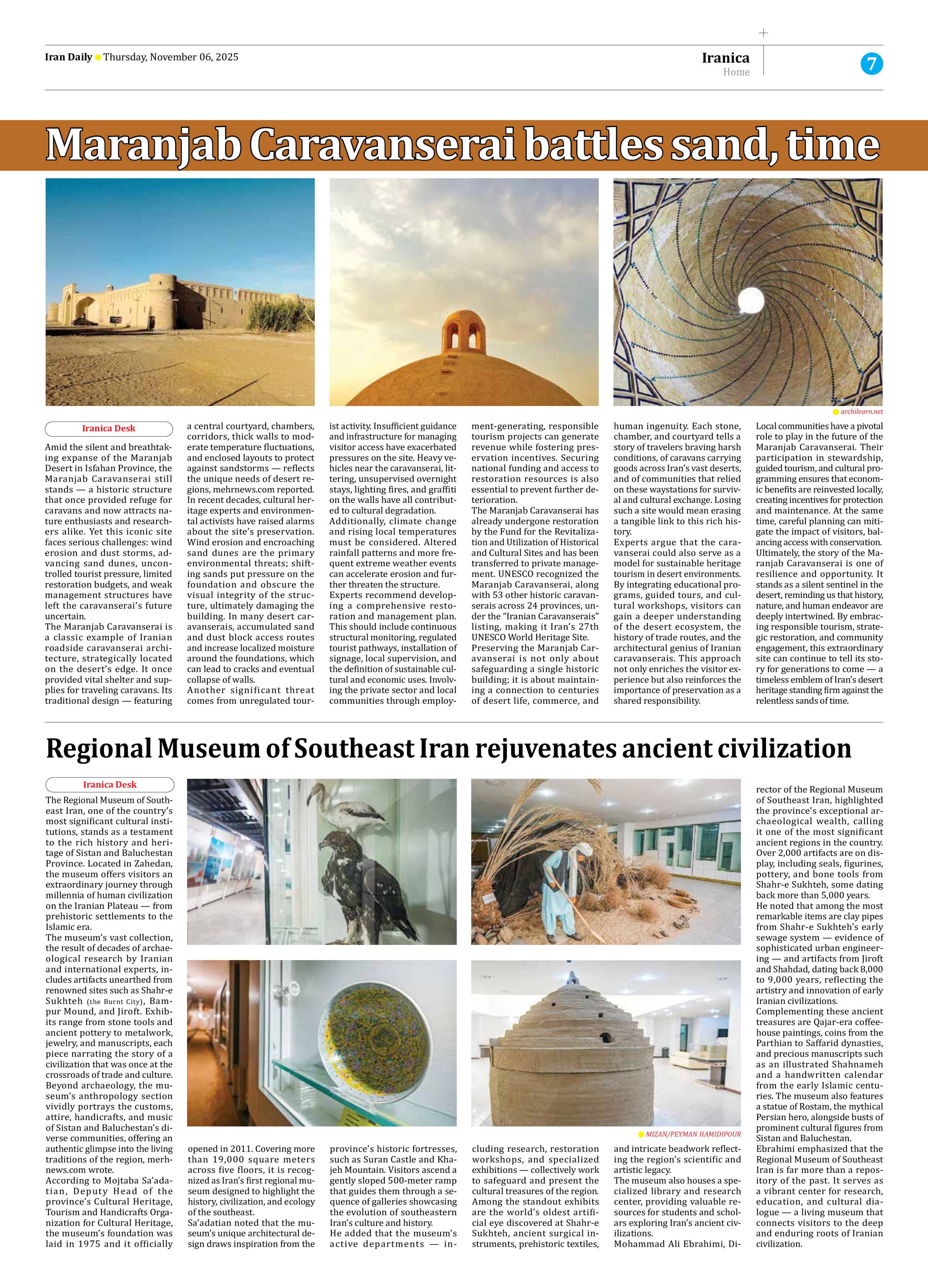


Maranjab Caravanserai battles sand, time
Amid the silent and breathtaking expanse of the Maranjab Desert in Isfahan Province, the Maranjab Caravanserai still stands — a historic structure that once provided refuge for caravans and now attracts nature enthusiasts and researchers alike. Yet this iconic site faces serious challenges: wind erosion and dust storms, advancing sand dunes, uncontrolled tourist pressure, limited restoration budgets, and weak management structures have left the caravanserai’s future uncertain.
The Maranjab Caravanserai is a classic example of Iranian roadside caravanserai architecture, strategically located on the desert’s edge. It once provided vital shelter and supplies for traveling caravans. Its traditional design — featuring a central courtyard, chambers, corridors, thick walls to moderate temperature fluctuations, and enclosed layouts to protect against sandstorms — reflects the unique needs of desert regions, mehrnews.com reported.
In recent decades, cultural heritage experts and environmental activists have raised alarms about the site’s preservation. Wind erosion and encroaching sand dunes are the primary environmental threats; shifting sands put pressure on the foundation and obscure the visual integrity of the structure, ultimately damaging the building. In many desert caravanserais, accumulated sand and dust block access routes and increase localized moisture around the foundations, which can lead to cracks and eventual collapse of walls.
Another significant threat comes from unregulated tourist activity. Insufficient guidance and infrastructure for managing visitor access have exacerbated pressures on the site. Heavy vehicles near the caravanserai, littering, unsupervised overnight stays, lighting fires, and graffiti on the walls have all contributed to cultural degradation.
Additionally, climate change and rising local temperatures must be considered. Altered rainfall patterns and more frequent extreme weather events can accelerate erosion and further threaten the structure.
Experts recommend developing a comprehensive restoration and management plan. This should include continuous structural monitoring, regulated tourist pathways, installation of signage, local supervision, and the definition of sustainable cultural and economic uses. Involving the private sector and local communities through employment-generating, responsible tourism projects can generate revenue while fostering preservation incentives. Securing national funding and access to restoration resources is also essential to prevent further deterioration.
The Maranjab Caravanserai has already undergone restoration by the Fund for the Revitalization and Utilization of Historical and Cultural Sites and has been transferred to private management. UNESCO recognized the Maranjab Caravanserai, along with 53 other historic caravanserais across 24 provinces, under the “Iranian Caravanserais” listing, making it Iran’s 27th UNESCO World Heritage Site.
Preserving the Maranjab Caravanserai is not only about safeguarding a single historic building; it is about maintaining a connection to centuries of desert life, commerce, and human ingenuity. Each stone, chamber, and courtyard tells a story of travelers braving harsh conditions, of caravans carrying goods across Iran’s vast deserts, and of communities that relied on these waystations for survival and cultural exchange. Losing such a site would mean erasing a tangible link to this rich history.
Experts argue that the caravanserai could also serve as a model for sustainable heritage tourism in desert environments. By integrating educational programs, guided tours, and cultural workshops, visitors can gain a deeper understanding of the desert ecosystem, the history of trade routes, and the architectural genius of Iranian caravanserais. This approach not only enriches the visitor experience but also reinforces the importance of preservation as a shared responsibility.
Local communities have a pivotal role to play in the future of the Maranjab Caravanserai. Their participation in stewardship, guided tourism, and cultural programming ensures that economic benefits are reinvested locally, creating incentives for protection and maintenance. At the same time, careful planning can mitigate the impact of visitors, balancing access with conservation.
Ultimately, the story of the Maranjab Caravanserai is one of resilience and opportunity. It stands as a silent sentinel in the desert, reminding us that history, nature, and human endeavor are deeply intertwined. By embracing responsible tourism, strategic restoration, and community engagement, this extraordinary site can continue to tell its story for generations to come — a timeless emblem of Iran’s desert heritage standing firm against the relentless sands of time.