







Meybod crafts identity with Zilu tradition
Zilu is a remarkably beautiful yet simple and humble handwoven craft — a reflection of the modest elegance of the people who inhabit the desert borders of Iran. It is precisely this combination of beauty and simplicity that has made Zilu an enduring and original art form rooted deeply in the traditions of desert life.
Among the various regions known for this handicraft, Zilu Bafi of Meybod, located in Yazd Province, holds a special place. Quietly but proudly, the name of Meybod has become synonymous with this unique weaving tradition, recognized across Iran. At first glance, Zilu resembles a kilim in its structure and flat weave, often showcasing symmetrical square patterns and a limited yet harmonious palette of colors. Traditionally, these handwoven pieces serve as floor coverings in homes and, at times, in mosques, where their simplicity complements the calm and spiritual atmosphere, visitiran.ir wrote.
The main material used in Zilu weaving is cotton yarn, and preparing this yarn marks the first of many stages in the making of a Zilu. This reliance on cotton explains why the craft is most common in agricultural regions, where the yarn can be produced locally. Yazd Province, with its hot and arid climate, has long been a natural birthplace for this art form. Beyond their aesthetic charm, Zilu weaves are practical: they provide cool, lightweight floor coverings ideally suited to the region’s desert environment. Historical records indicate that the oldest surviving piece of Zilu belongs to the Jaame Mosque of Meybod, offering a living link to Iran’s centuries-old artistic heritage.
The loom used for Zilu weaving closely resembles that of carpet-making, and many of its motifs and patterns share common ground with carpets and kilims. However, Zilu stands apart for incorporating certain designs inspired by Iranian architecture, blending geometry with a sense of spiritual symmetry.
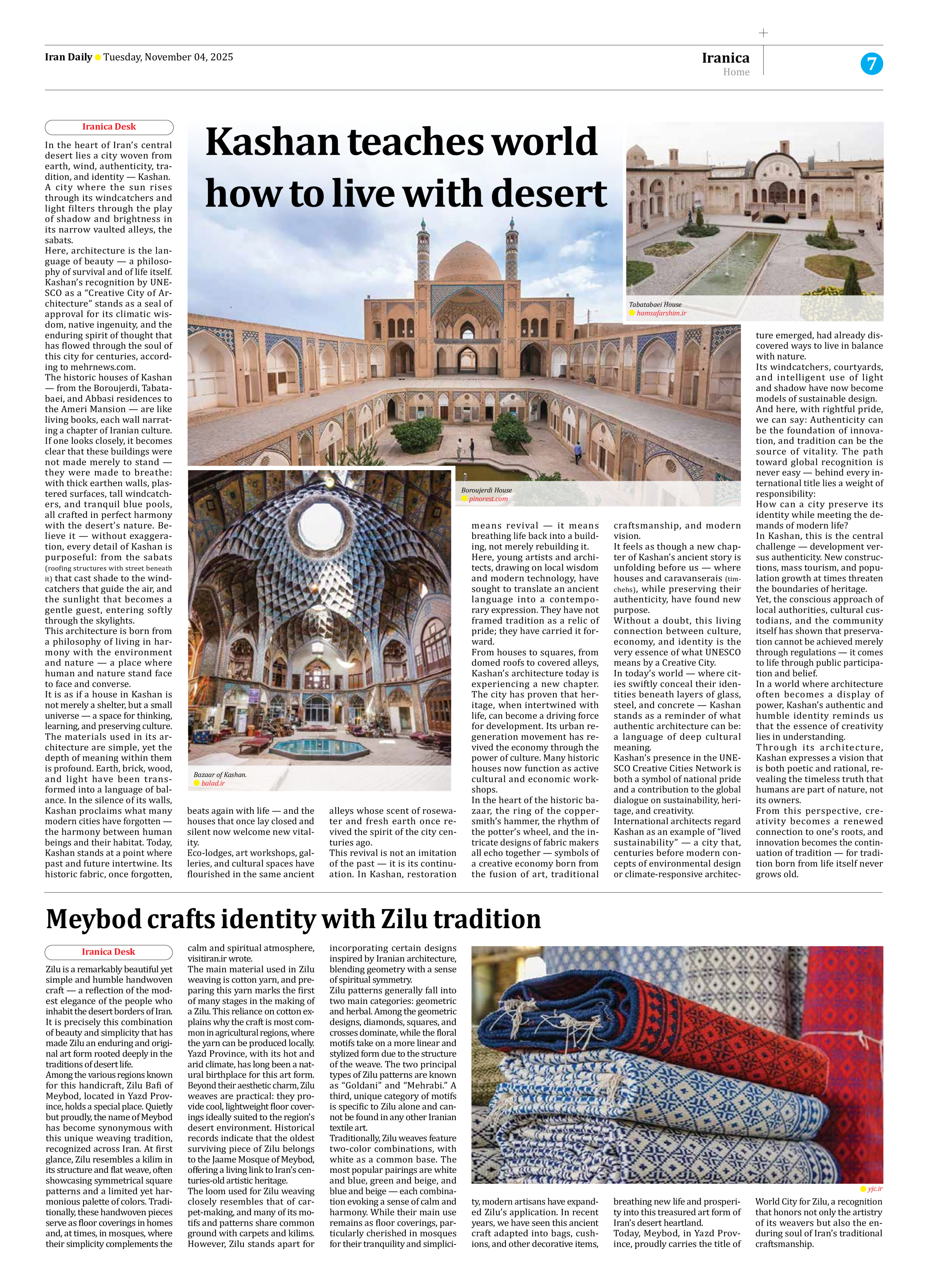
Zilu patterns generally fall into two main categories: geometric and herbal. Among the geometric designs, diamonds, squares, and crosses dominate, while the floral motifs take on a more linear and stylized form due to the structure of the weave. The two principal types of Zilu patterns are known as “Goldani” and “Mehrabi.” A third, unique category of motifs is specific to Zilu alone and cannot be found in any other Iranian textile art.
Traditionally, Zilu weaves feature two-color combinations, with white as a common base. The most popular pairings are white and blue, green and beige, and blue and beige — each combination evoking a sense of calm and harmony. While their main use remains as floor coverings, particularly cherished in mosques for their tranquility and simplicity, modern artisans have expanded Zilu’s application. In recent years, we have seen this ancient craft adapted into bags, cushions, and other decorative items, breathing new life and prosperity into this treasured art form of Iran’s desert heartland.
Today, Meybod, in Yazd Province, proudly carries the title of World City for Zilu, a recognition that honors not only the artistry of its weavers but also the enduring soul of Iran’s traditional craftsmanship.