







Introduction to the book:
Vernacular Architecture along the Northern Coastal Regions and Ports of the Persian Gulf
Living with heat and humidity
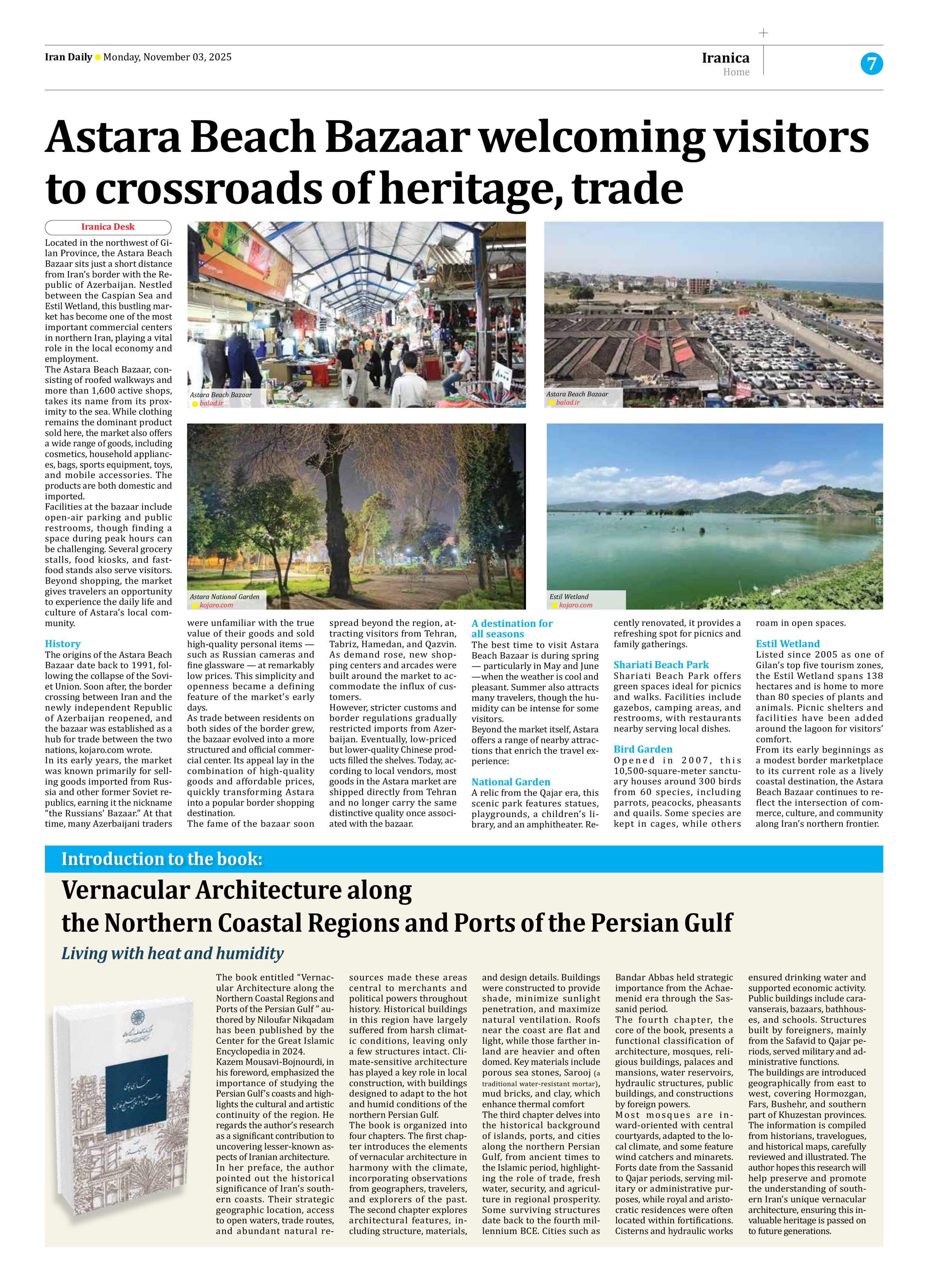
The book entitled “Vernacular Architecture along the Northern Coastal Regions and Ports of the Persian Gulf ” authored by Niloufar Nikqadam has been published by the Center for the Great Islamic Encyclopedia in 2024.
Kazem Mousavi-Bojnourdi, in his foreword, emphasized the importance of studying the Persian Gulf’s coasts and highlights the cultural and artistic continuity of the region. He regards the author’s research as a significant contribution to uncovering lesser-known aspects of Iranian architecture.
In her preface, the author pointed out the historical significance of Iran’s southern coasts. Their strategic geographic location, access to open waters, trade routes, and abundant natural resources made these areas central to merchants and political powers throughout history. Historical buildings in this region have largely suffered from harsh climatic conditions, leaving only a few structures intact. Climate-sensitive architecture has played a key role in local construction, with buildings designed to adapt to the hot and humid conditions of the northern Persian Gulf.
The book is organized into four chapters. The first chapter introduces the elements of vernacular architecture in harmony with the climate, incorporating observations from geographers, travelers, and explorers of the past. The second chapter explores architectural features, including structure, materials, and design details. Buildings were constructed to provide shade, minimize sunlight penetration, and maximize natural ventilation. Roofs near the coast are flat and light, while those farther inland are heavier and often domed. Key materials include porous sea stones, Sarooj (a traditional water-resistant mortar), mud bricks, and clay, which enhance thermal comfort
The third chapter delves into the historical background of islands, ports, and cities along the northern Persian Gulf, from ancient times to the Islamic period, highlighting the role of trade, fresh water, security, and agriculture in regional prosperity. Some surviving structures date back to the fourth millennium BCE. Cities such as Bandar Abbas held strategic importance from the Achaemenid era through the Sassanid period.
The fourth chapter, the core of the book, presents a functional classification of architecture, mosques, religious buildings, palaces and mansions, water reservoirs, hydraulic structures, public buildings, and constructions by foreign powers.
Most mosques are inward-oriented with central courtyards, adapted to the local climate, and some feature wind catchers and minarets. Forts date from the Sassanid to Qajar periods, serving military or administrative purposes, while royal and aristocratic residences were often located within fortifications. Cisterns and hydraulic works ensured drinking water and supported economic activity. Public buildings include caravanserais, bazaars, bathhouses, and schools. Structures built by foreigners, mainly from the Safavid to Qajar periods, served military and administrative functions.
The buildings are introduced geographically from east to west, covering Hormozgan, Fars, Bushehr, and southern part of Khuzestan provinces. The information is compiled from historians, travelogues, and historical maps, carefully reviewed and illustrated. The author hopes this research will help preserve and promote the understanding of southern Iran’s unique vernacular architecture, ensuring this invaluable heritage is passed on to future generations.