







Astara Beach Bazaar welcoming visitors to crossroads of heritage, trade
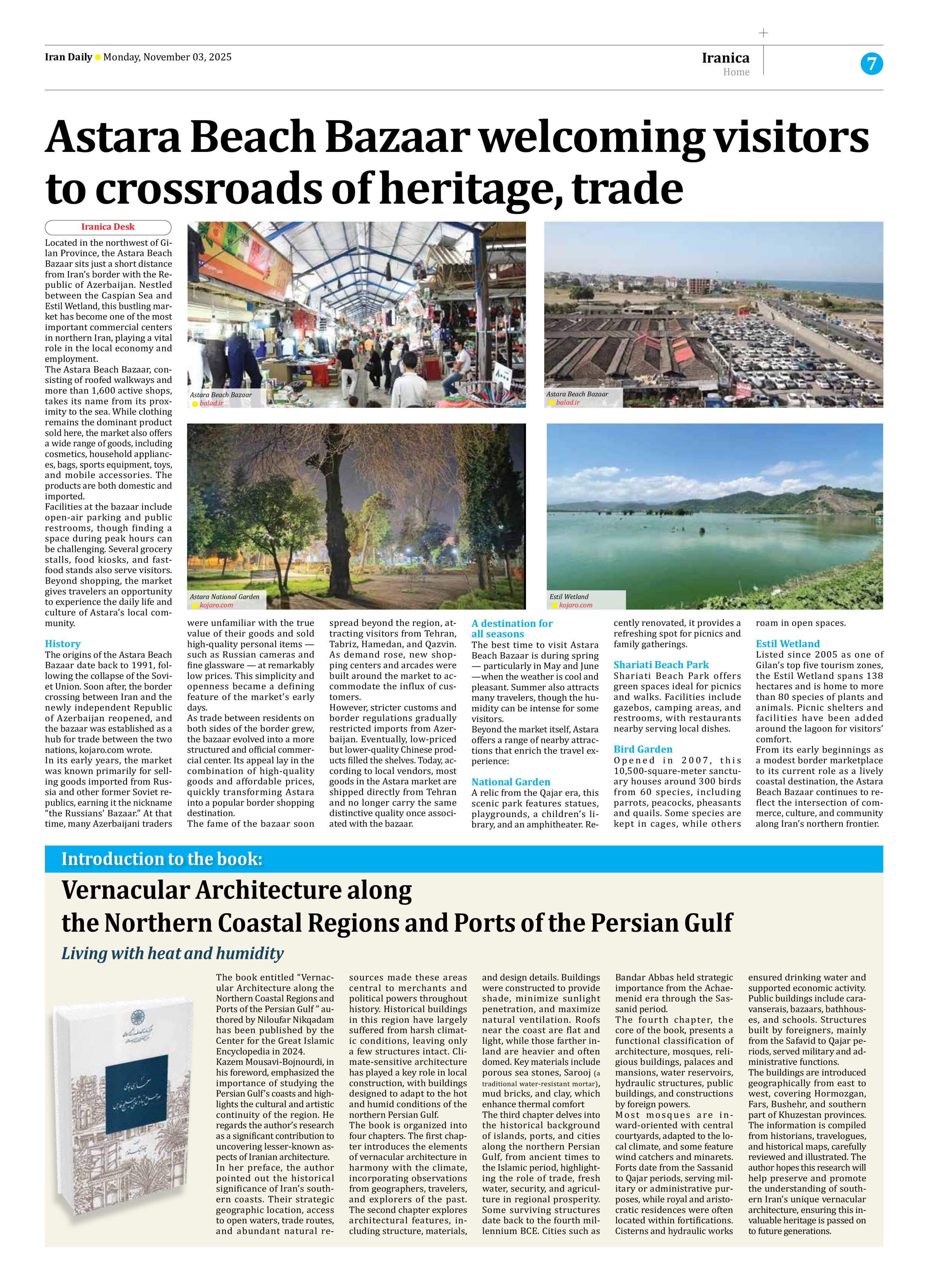
Located in the northwest of Gilan Province, the Astara Beach Bazaar sits just a short distance from Iran’s border with the Republic of Azerbaijan. Nestled between the Caspian Sea and Estil Wetland, this bustling market has become one of the most important commercial centers in northern Iran, playing a vital role in the local economy and employment.
The Astara Beach Bazaar, consisting of roofed walkways and more than 1,600 active shops, takes its name from its proximity to the sea. While clothing remains the dominant product sold here, the market also offers a wide range of goods, including cosmetics, household appliances, bags, sports equipment, toys, and mobile accessories. The products are both domestic and imported.
Facilities at the bazaar include open-air parking and public restrooms, though finding a space during peak hours can be challenging. Several grocery stalls, food kiosks, and fast-food stands also serve visitors. Beyond shopping, the market gives travelers an opportunity to experience the daily life and culture of Astara’s local community.
History
The origins of the Astara Beach Bazaar date back to 1991, following the collapse of the Soviet Union. Soon after, the border crossing between Iran and the newly independent Republic of Azerbaijan reopened, and the bazaar was established as a hub for trade between the two nations, kojaro.com wrote.
In its early years, the market was known primarily for selling goods imported from Russia and other former Soviet republics, earning it the nickname “the Russians’ Bazaar.” At that time, many Azerbaijani traders were unfamiliar with the true value of their goods and sold high-quality personal items — such as Russian cameras and fine glassware — at remarkably low prices. This simplicity and openness became a defining feature of the market’s early days.
As trade between residents on both sides of the border grew, the bazaar evolved into a more structured and official commercial center. Its appeal lay in the combination of high-quality goods and affordable prices, quickly transforming Astara into a popular border shopping destination.
The fame of the bazaar soon spread beyond the region, attracting visitors from Tehran, Tabriz, Hamedan, and Qazvin. As demand rose, new shopping centers and arcades were built around the market to accommodate the influx of customers.
However, stricter customs and border regulations gradually restricted imports from Azerbaijan. Eventually, low-priced but lower-quality Chinese products filled the shelves. Today, according to local vendors, most goods in the Astara market are shipped directly from Tehran and no longer carry the same distinctive quality once associated with the bazaar.
A destination for
all seasons
The best time to visit Astara Beach Bazaar is during spring — particularly in May and June —when the weather is cool and pleasant. Summer also attracts many travelers, though the humidity can be intense for some visitors.
Beyond the market itself, Astara offers a range of nearby attractions that enrich the travel experience:
National Garden
A relic from the Qajar era, this scenic park features statues, playgrounds, a children’s library, and an amphitheater. Recently renovated, it provides a refreshing spot for picnics and family gatherings.
Shariati Beach Park
Shariati Beach Park offers green spaces ideal for picnics and walks. Facilities include gazebos, camping areas, and restrooms, with restaurants nearby serving local dishes.
Bird Garden
Opened in 2007, this 10,500-square-meter sanctuary houses around 300 birds from 60 species, including parrots, peacocks, pheasants and quails. Some species are kept in cages, while others roam in open spaces.
Estil Wetland
Listed since 2005 as one of Gilan’s top five tourism zones, the Estil Wetland spans 138 hectares and is home to more than 80 species of plants and animals. Picnic shelters and facilities have been added around the lagoon for visitors’ comfort.
From its early beginnings as a modest border marketplace to its current role as a lively coastal destination, the Astara Beach Bazaar continues to reflect the intersection of commerce, culture, and community along Iran’s northern frontier.