







Kafarin Gorge inspires new vision for eco-tourism in Ilam Province
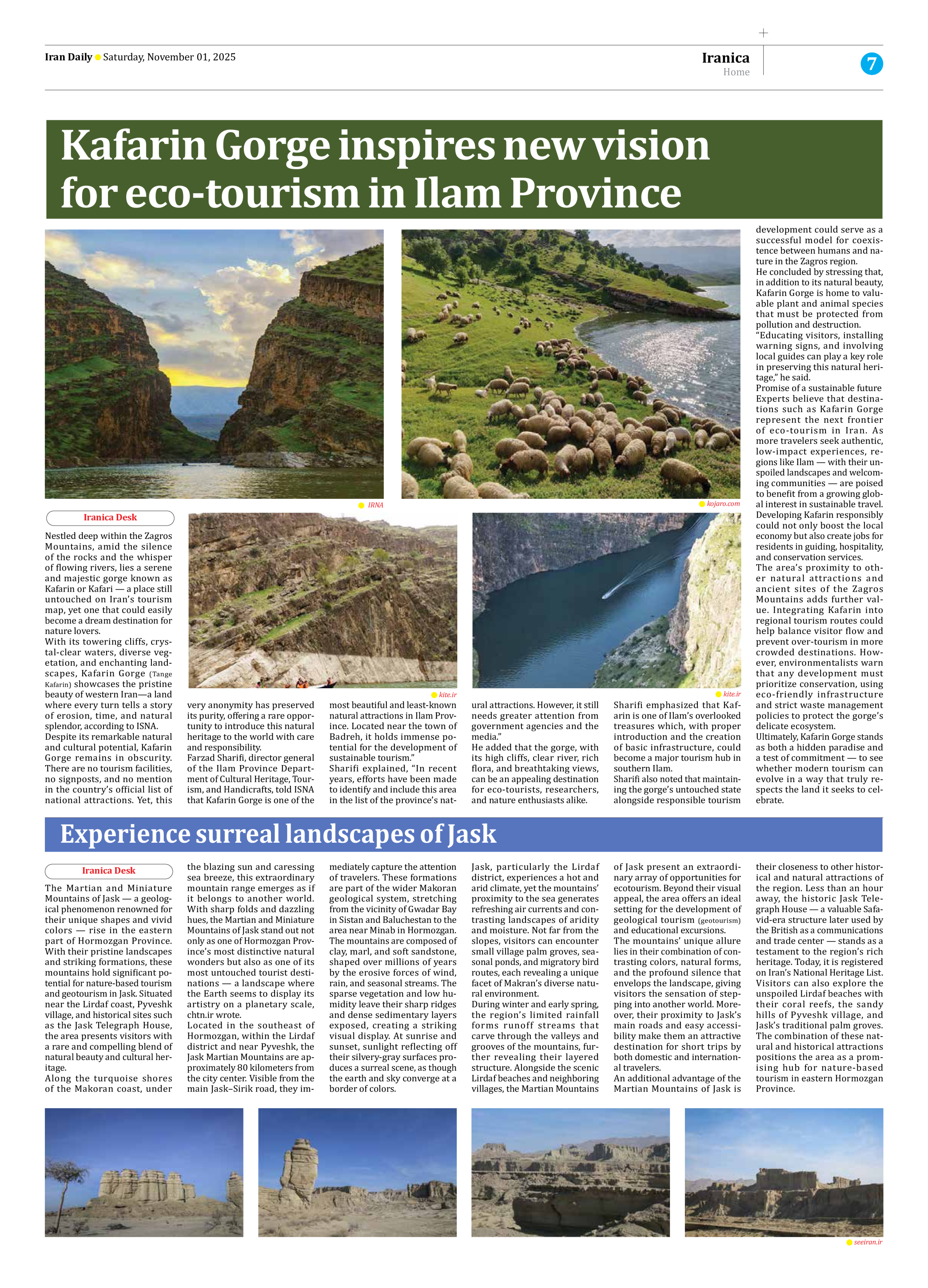
Nestled deep within the Zagros Mountains, amid the silence of the rocks and the whisper of flowing rivers, lies a serene and majestic gorge known as Kafarin or Kafari — a place still untouched on Iran’s tourism map, yet one that could easily become a dream destination for nature lovers.
With its towering cliffs, crystal-clear waters, diverse vegetation, and enchanting landscapes, Kafarin Gorge (Tange Kafarin) showcases the pristine beauty of western Iran—a land where every turn tells a story of erosion, time, and natural splendor, according to ISNA.
Despite its remarkable natural and cultural potential, Kafarin Gorge remains in obscurity. There are no tourism facilities, no signposts, and no mention in the country’s official list of national attractions. Yet, this very anonymity has preserved its purity, offering a rare opportunity to introduce this natural heritage to the world with care and responsibility.
Farzad Sharifi, director general of the Ilam Province Department of Cultural Heritage, Tourism, and Handicrafts, told ISNA that Kafarin Gorge is one of the most beautiful and least-known natural attractions in Ilam Province. Located near the town of Badreh, it holds immense potential for the development of sustainable tourism.”
Sharifi explained, “In recent years, efforts have been made to identify and include this area in the list of the province’s natural attractions. However, it still needs greater attention from government agencies and the media.”
He added that the gorge, with its high cliffs, clear river, rich flora, and breathtaking views, can be an appealing destination for eco-tourists, researchers, and nature enthusiasts alike.
Sharifi emphasized that Kafarin is one of Ilam’s overlooked treasures which, with proper introduction and the creation of basic infrastructure, could become a major tourism hub in southern Ilam.
Sharifi also noted that maintaining the gorge’s untouched state alongside responsible tourism development could serve as a successful model for coexistence between humans and nature in the Zagros region.
He concluded by stressing that, in addition to its natural beauty, Kafarin Gorge is home to valuable plant and animal species that must be protected from pollution and destruction.
“Educating visitors, installing warning signs, and involving local guides can play a key role in preserving this natural heritage,” he said.
Promise of a sustainable future
Experts believe that destinations such as Kafarin Gorge represent the next frontier of eco-tourism in Iran. As more travelers seek authentic, low-impact experiences, regions like Ilam — with their unspoiled landscapes and welcoming communities — are poised to benefit from a growing global interest in sustainable travel. Developing Kafarin responsibly could not only boost the local economy but also create jobs for residents in guiding, hospitality, and conservation services.
The area’s proximity to other natural attractions and ancient sites of the Zagros Mountains adds further value. Integrating Kafarin into regional tourism routes could help balance visitor flow and prevent over-tourism in more crowded destinations. However, environmentalists warn that any development must prioritize conservation, using eco-friendly infrastructure and strict waste management policies to protect the gorge’s delicate ecosystem.
Ultimately, Kafarin Gorge stands as both a hidden paradise and a test of commitment — to see whether modern tourism can evolve in a way that truly respects the land it seeks to celebrate.