







Zargar offers rare glimpse into unusual Iranian village
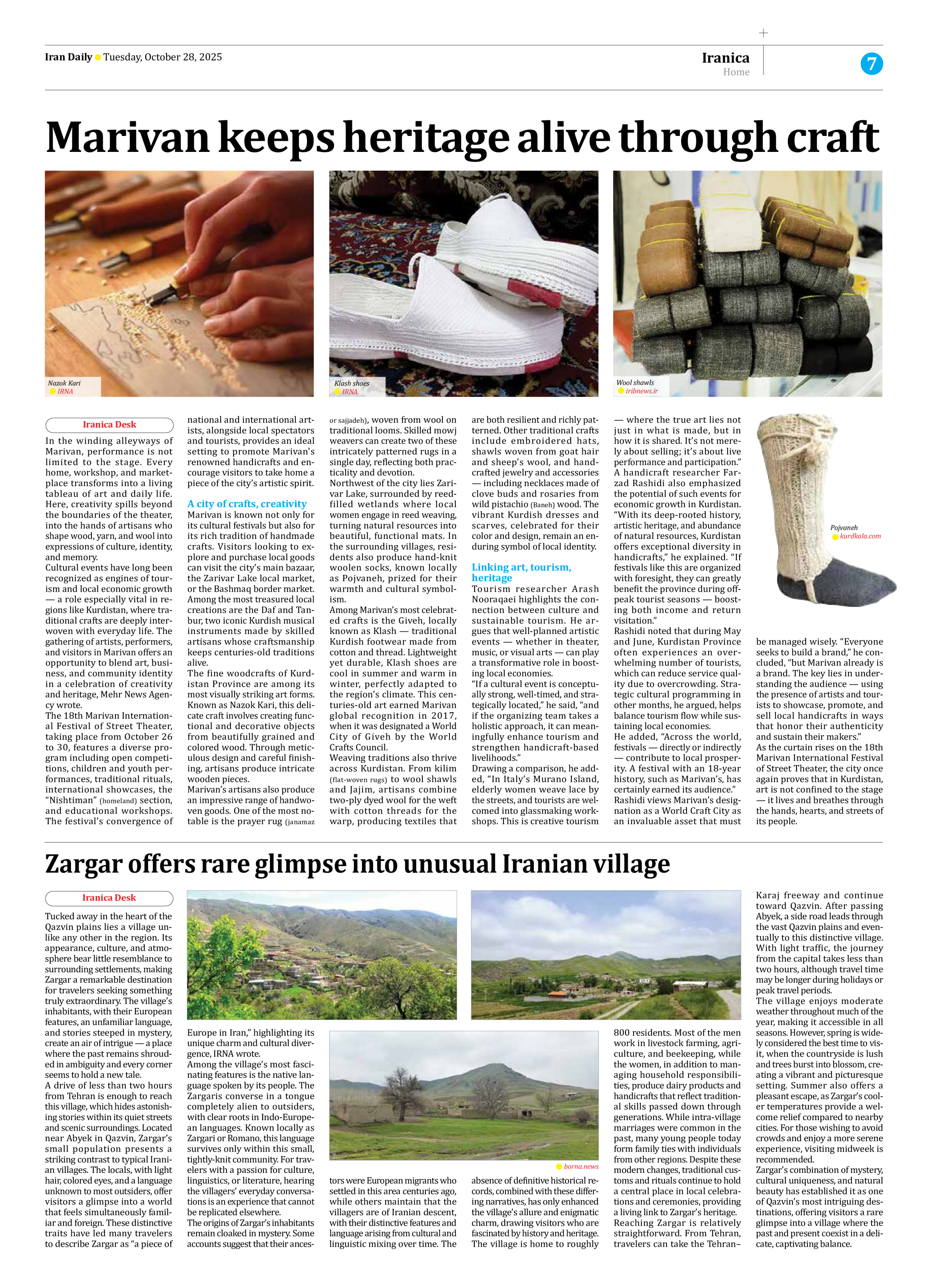
Tucked away in the heart of the Qazvin plains lies a village unlike any other in the region. Its appearance, culture, and atmosphere bear little resemblance to surrounding settlements, making Zargar a remarkable destination for travelers seeking something truly extraordinary. The village’s inhabitants, with their European features, an unfamiliar language, and stories steeped in mystery, create an air of intrigue — a place where the past remains shrouded in ambiguity and every corner seems to hold a new tale.
A drive of less than two hours from Tehran is enough to reach this village, which hides astonishing stories within its quiet streets and scenic surroundings. Located near Abyek in Qazvin, Zargar’s small population presents a striking contrast to typical Iranian villages. The locals, with light hair, colored eyes, and a language unknown to most outsiders, offer visitors a glimpse into a world that feels simultaneously familiar and foreign. These distinctive traits have led many travelers to describe Zargar as “a piece of Europe in Iran,” highlighting its unique charm and cultural divergence, IRNA wrote.
Among the village’s most fascinating features is the native language spoken by its people. The Zargaris converse in a tongue completely alien to outsiders, with clear roots in Indo-European languages. Known locally as Zargari or Romano, this language survives only within this small, tightly-knit community. For travelers with a passion for culture, linguistics, or literature, hearing the villagers’ everyday conversations is an experience that cannot be replicated elsewhere.
The origins of Zargar’s inhabitants remain cloaked in mystery. Some accounts suggest that their ancestors were European migrants who settled in this area centuries ago, while others maintain that the villagers are of Iranian descent, with their distinctive features and language arising from cultural and linguistic mixing over time. The absence of definitive historical records, combined with these differing narratives, has only enhanced the village’s allure and enigmatic charm, drawing visitors who are fascinated by history and heritage.
The village is home to roughly 800 residents. Most of the men work in livestock farming, agriculture, and beekeeping, while the women, in addition to managing household responsibilities, produce dairy products and handicrafts that reflect traditional skills passed down through generations. While intra-village marriages were common in the past, many young people today form family ties with individuals from other regions. Despite these modern changes, traditional customs and rituals continue to hold a central place in local celebrations and ceremonies, providing a living link to Zargar’s heritage.
Reaching Zargar is relatively straightforward. From Tehran, travelers can take the Tehran–Karaj freeway and continue toward Qazvin. After passing Abyek, a side road leads through the vast Qazvin plains and eventually to this distinctive village. With light traffic, the journey from the capital takes less than two hours, although travel time may be longer during holidays or peak travel periods.
The village enjoys moderate weather throughout much of the year, making it accessible in all seasons. However, spring is widely considered the best time to visit, when the countryside is lush and trees burst into blossom, creating a vibrant and picturesque setting. Summer also offers a pleasant escape, as Zargar’s cooler temperatures provide a welcome relief compared to nearby cities. For those wishing to avoid crowds and enjoy a more serene experience, visiting midweek is recommended.
Zargar’s combination of mystery, cultural uniqueness, and natural beauty has established it as one of Qazvin’s most intriguing destinations, offering visitors a rare glimpse into a village where the past and present coexist in a delicate, captivating balance.