







Gabbeh keeps heritage of Chaharmahal and Bakhtiari Province alive
Handicrafts are among the most meaningful expressions of human creativity — born from artistic imagination, technical skill, natural materials, and deep-rooted cultural beliefs shaped by the environment. In Chaharmahal and Bakhtiari Province, traditional handicrafts and folk arts reflect the region’s historical background, natural surroundings, and the values of both makers and users. These creations are not merely functional objects; they are cultural artifacts that carry the identity, traditions, and stories of the local people.
The distinctive qualities of Chaharmahal and Bakhtiari’s crafts have made them an essential part of the province’s rural and urban economy. Supporting and promoting these crafts — both in domestic and international markets — is vital to ensuring the continuation of production and the survival of the region’s ancient artistic and cultural heritage, chn.ir wrote.
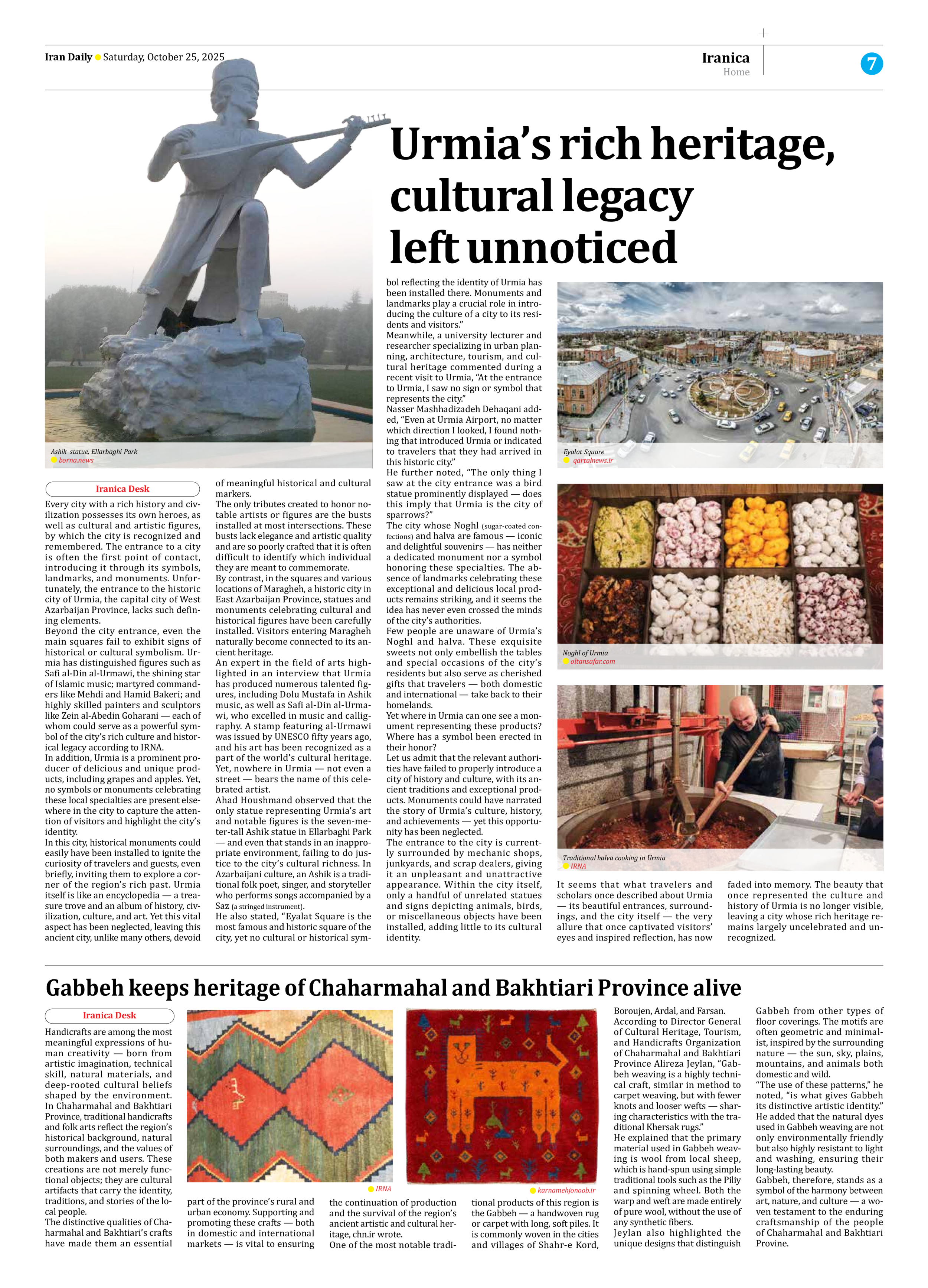
One of the most notable traditional products of this region is the Gabbeh — a handwoven rug or carpet with long, soft piles. It is commonly woven in the cities and villages of Shahr-e Kord, Boroujen, Ardal, and Farsan.
According to Director General of Cultural Heritage, Tourism, and Handicrafts Organization of Chaharmahal and Bakhtiari Province Alireza Jeylan, “Gabbeh weaving is a highly technical craft, similar in method to carpet weaving, but with fewer knots and looser wefts — sharing characteristics with the traditional Khersak rugs.”
He explained that the primary material used in Gabbeh weaving is wool from local sheep, which is hand-spun using simple traditional tools such as the Piliy and spinning wheel. Both the warp and weft are made entirely of pure wool, without the use of any synthetic fibers.
Jeylan also highlighted the unique designs that distinguish Gabbeh from other types of floor coverings. The motifs are often geometric and minimalist, inspired by the surrounding nature — the sun, sky, plains, mountains, and animals both domestic and wild.
“The use of these patterns,” he noted, “is what gives Gabbeh its distinctive artistic identity.” He added that the natural dyes used in Gabbeh weaving are not only environmentally friendly but also highly resistant to light and washing, ensuring their long-lasting beauty.
Gabbeh, therefore, stands as a symbol of the harmony between art, nature, and culture — a woven testament to the enduring craftsmanship of the people of Chaharmahal and Bakhtiari Provine.