







At GECF meeting in Doha
Oil minister warns sanctions, ‘extreme’ anti-fossil policies endanger energy security
Iran’s Oil Minister Mohsen Paknejad on Thursday warned that sanctions and “extreme” policies to phase out fossil fuels were undermining energy security, calling on the Gas Exporting Countries Forum (GECF) to be upgraded into a full-fledged organization to bolster cooperation among major gas producers.
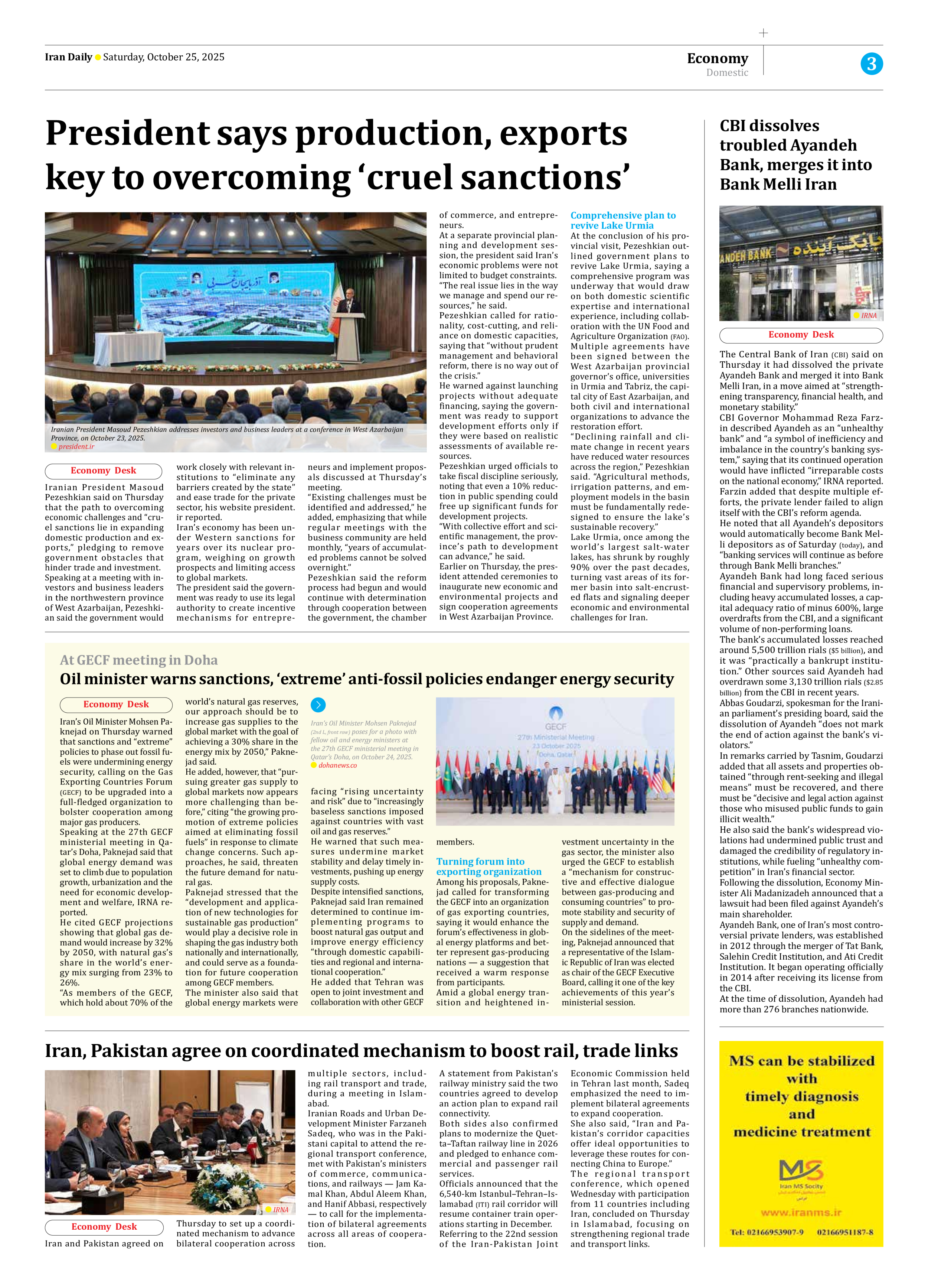
Speaking at the 27th GECF ministerial meeting in Qatar’s Doha, Paknejad said that global energy demand was set to climb due to population growth, urbanization and the need for economic development and welfare, IRNA reported.
He cited GECF projections showing that global gas demand would increase by 32% by 2050, with natural gas’s share in the world’s energy mix surging from 23% to 26%.
“As members of the GECF, which hold about 70% of the world’s natural gas reserves, our approach should be to increase gas supplies to the global market with the goal of achieving a 30% share in the energy mix by 2050,” Paknejad said.
He added, however, that “pursuing greater gas supply to global markets now appears more challenging than before,” citing “the growing promotion of extreme policies aimed at eliminating fossil fuels” in response to climate change concerns. Such approaches, he said, threaten the future demand for natural gas.
Paknejad stressed that the “development and application of new technologies for sustainable gas production” would play a decisive role in shaping the gas industry both nationally and internationally, and could serve as a foundation for future cooperation among GECF members.
The minister also said that global energy markets were facing “rising uncertainty and risk” due to “increasingly baseless sanctions imposed against countries with vast oil and gas reserves.”
He warned that such measures undermine market stability and delay timely investments, pushing up energy supply costs.
Despite intensified sanctions, Paknejad said Iran remained determined to continue implementing programs to boost natural gas output and improve energy efficiency “through domestic capabilities and regional and international cooperation.”
He added that Tehran was open to joint investment and collaboration with other GECF members.
Turning forum into exporting organization
Among his proposals, Paknejad called for transforming the GECF into an organization of gas exporting countries, saying it would enhance the forum’s effectiveness in global energy platforms and better represent gas-producing nations — a suggestion that received a warm response from participants.
Amid a global energy transition and heightened investment uncertainty in the gas sector, the minister also urged the GECF to establish a “mechanism for constructive and effective dialogue between gas-producing and consuming countries” to promote stability and security of supply and demand.
On the sidelines of the meeting, Paknejad announced that a representative of the Islamic Republic of Iran was elected as chair of the GECF Executive Board, calling it one of the key achievements of this year’s ministerial session.