







Copy in clipboard...
Iran, China to co-build mini refinery in southwest
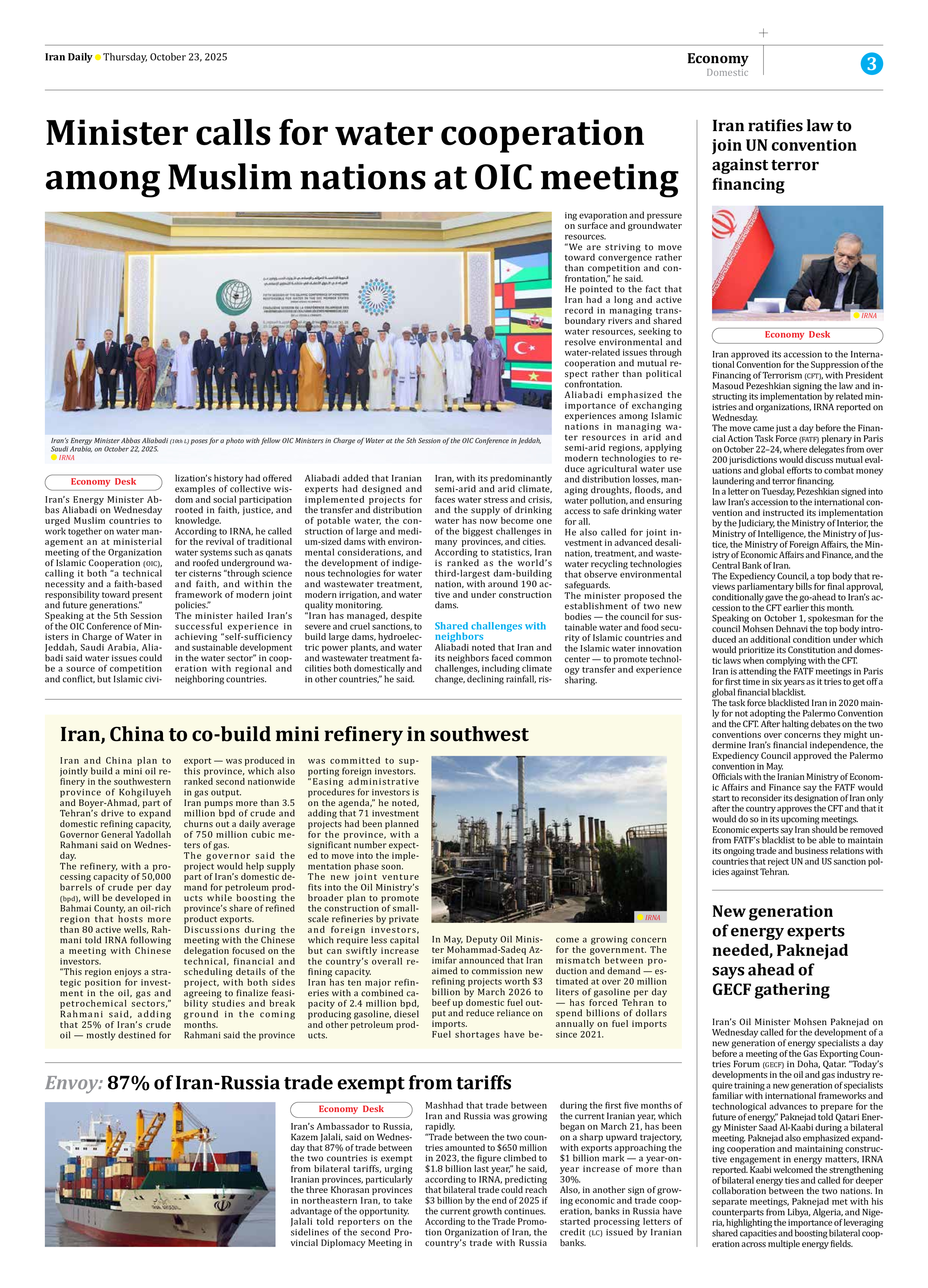
The refinery, with a processing capacity of 50,000 barrels of crude per day (bpd), will be developed in Bahmai County, an oil-rich region that hosts more than 80 active wells, Rahmani told IRNA following a meeting with Chinese investors.
“This region enjoys a strategic position for investment in the oil, gas and petrochemical sectors,” Rahmani said, adding that 25% of Iran’s crude oil — mostly destined for export — was produced in this province, which also ranked second nationwide in gas output.
Iran pumps more than 3.5 million bpd of crude and churns out a daily average of 750 million cubic meters of gas.
The governor said the project would help supply part of Iran’s domestic demand for petroleum products while boosting the province’s share of refined product exports.
Discussions during the meeting with the Chinese delegation focused on the technical, financial and scheduling details of the project, with both sides agreeing to finalize feasibility studies and break ground in the coming months.
Rahmani said the province was committed to supporting foreign investors.
“Easing administrative procedures for investors is on the agenda,” he noted, adding that 71 investment projects had been planned for the province, with a significant number expected to move into the implementation phase soon.
The new joint venture fits into the Oil Ministry’s broader plan to promote the construction of small-scale refineries by private and foreign investors, which require less capital but can swiftly increase the country’s overall refining capacity.
Iran has ten major refineries with a combined capacity of 2.4 million bpd, producing gasoline, diesel and other petroleum products.
In May, Deputy Oil Minister Mohammad-Sadeq Azimifar announced that Iran aimed to commission new refining projects worth $3 billion by March 2026 to beef up domestic fuel output and reduce reliance on imports.
Fuel shortages have become a growing concern for the government. The mismatch between production and demand — estimated at over 20 million liters of gasoline per day — has forced Tehran to spend billions of dollars annually on fuel imports since 2021.