







Iran won’t return to nuclear talks as long as US makes ‘unreasonable demands’: FM
Iran’s Foreign Minister Abbas Araghchi said on Wednesday that Iran would not return to the negotiating table as long as the United States makes “excessive” and “unreasonable” demands.
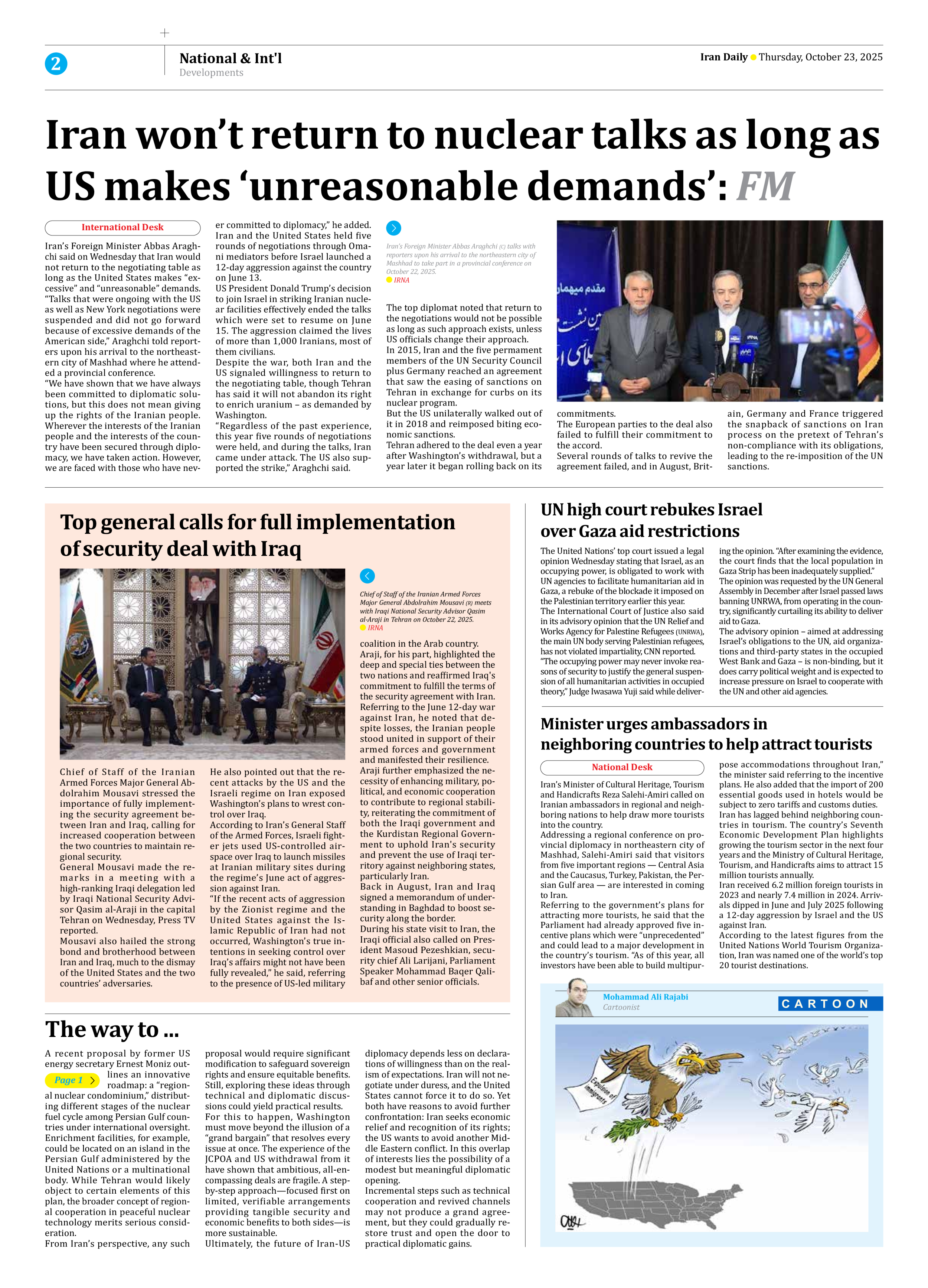
“Talks that were ongoing with the US as well as New York negotiations were suspended and did not go forward because of excessive demands of the American side,” Araghchi told reporters upon his arrival to the northeastern city of Mashhad where he attended a provincial conference.
“We have shown that we have always been committed to diplomatic solutions, but this does not mean giving up the rights of the Iranian people. Wherever the interests of the Iranian people and the interests of the country have been secured through diplomacy, we have taken action. However, we are faced with those who have never committed to diplomacy,” he added.
Iran and the United States held five rounds of negotiations through Omani mediators before Israel launched a 12-day aggression against the country on June 13.
US President Donald Trump’s decision to join Israel in striking Iranian nuclear facilities effectively ended the talks which were set to resume on June 15. The aggression claimed the lives of more than 1,000 Iranians, most of them civilians.
Despite the war, both Iran and the US signaled willingness to return to the negotiating table, though Tehran has said it will not abandon its right to enrich uranium – as demanded by Washington.
“Regardless of the past experience, this year five rounds of negotiations were held, and during the talks, Iran came under attack. The US also supported the strike,” Araghchi said.
The top diplomat noted that return to the negotiations would not be possible as long as such approach exists, unless US officials change their approach.
In 2015, Iran and the five permament members of the UN Security Council plus Germany reached an agreement that saw the easing of sanctions on Tehran in exchange for curbs on its nuclear program.
But the US unilaterally walked out of it in 2018 and reimposed biting economic sanctions.
Tehran adhered to the deal even a year after Washington’s withdrawal, but a year later it began rolling back on its commitments.
The European parties to the deal also failed to fulfill their commitment to the accord.
Several rounds of talks to revive the agreement failed, and in August, Britain, Germany and France triggered the snapback of sanctions on Iran process on the pretext of Tehran’s non-compliance with its obligations, leading to the re-imposition of the UN sanctions.