







Global recognition of Iranian villages drives smart rural development
The inscription of the three villages — Soheili on Qeshm Island, Kandolus in Mazandaran Province, and Shafiabad in Kerman Province — on the list of the United Nations World Tourism Organization (UN Tourism) is not merely a symbolic honor for Iran; it represents an effective step toward mapping a new path of smart destination development, sustainable growth, and the revival of local identities within the country’s tourism system.
Hani Rastegaran, advisor to the Deputy Minister of Cultural Heritage, Tourism, and Handicrafts for Tourism Affairs, wrote in a note published by IRNA: This event is a clear sign of Iran’s hidden capacities in rural and community-based tourism, which can become one of the driving forces of the national economy.
The inclusion of the names of these three Iranian villages on the global list is a historic opportunity to redefine the concept of “development from within the people.” These villages, by relying on their cultural, natural, and historical elements, managed to stand out among hundreds of international candidates as successful examples of coexistence between humans and nature.
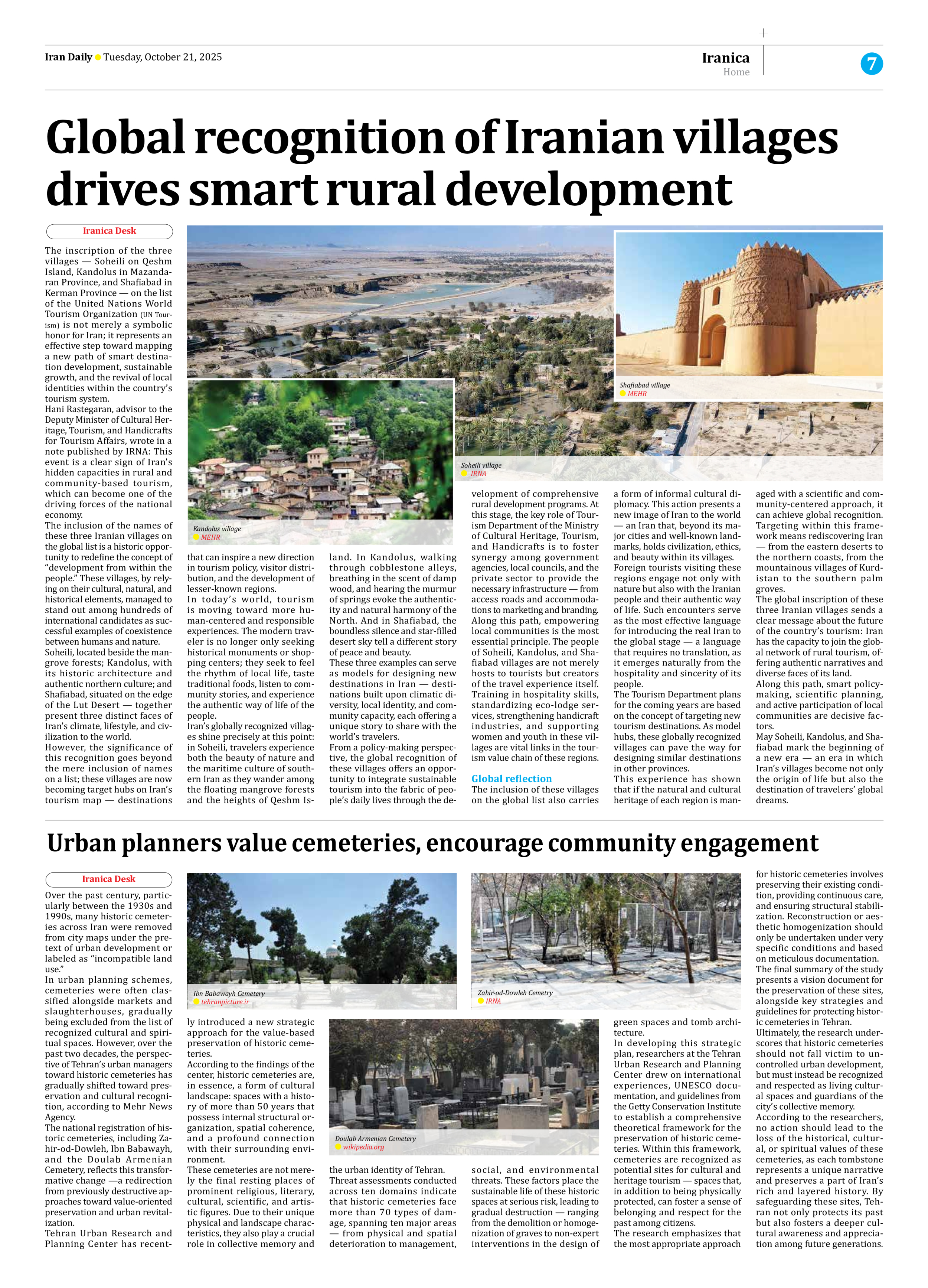
Soheili, located beside the mangrove forests; Kandolus, with its historic architecture and authentic northern culture; and Shafiabad, situated on the edge of the Lut Desert — together present three distinct faces of Iran’s climate, lifestyle, and civilization to the world.
However, the significance of this recognition goes beyond the mere inclusion of names on a list; these villages are now becoming target hubs on Iran’s tourism map — destinations that can inspire a new direction in tourism policy, visitor distribution, and the development of lesser-known regions.
In today’s world, tourism is moving toward more human-centered and responsible experiences. The modern traveler is no longer only seeking historical monuments or shopping centers; they seek to feel the rhythm of local life, taste traditional foods, listen to community stories, and experience the authentic way of life of the people.
Iran’s globally recognized villages shine precisely at this point: in Soheili, travelers experience both the beauty of nature and the maritime culture of southern Iran as they wander among the floating mangrove forests and the heights of Qeshm Island. In Kandolus, walking through cobblestone alleys, breathing in the scent of damp wood, and hearing the murmur of springs evoke the authenticity and natural harmony of the North. And in Shafiabad, the boundless silence and star-filled desert sky tell a different story of peace and beauty.
These three examples can serve as models for designing new destinations in Iran — destinations built upon climatic diversity, local identity, and community capacity, each offering a unique story to share with the world’s travelers.
From a policy-making perspective, the global recognition of these villages offers an opportunity to integrate sustainable tourism into the fabric of people’s daily lives through the development of comprehensive rural development programs. At this stage, the key role of Tourism Department of the Ministry of Cultural Heritage, Tourism, and Handicrafts is to foster synergy among government agencies, local councils, and the private sector to provide the necessary infrastructure — from access roads and accommodations to marketing and branding.
Along this path, empowering local communities is the most essential principle. The people of Soheili, Kandolus, and Shafiabad villages are not merely hosts to tourists but creators of the travel experience itself. Training in hospitality skills, standardizing eco-lodge services, strengthening handicraft industries, and supporting women and youth in these villages are vital links in the tourism value chain of these regions.
Global reflection
The inclusion of these villages on the global list also carries a form of informal cultural diplomacy. This action presents a new image of Iran to the world — an Iran that, beyond its major cities and well-known landmarks, holds civilization, ethics, and beauty within its villages.
Foreign tourists visiting these regions engage not only with nature but also with the Iranian people and their authentic way of life. Such encounters serve as the most effective language for introducing the real Iran to the global stage — a language that requires no translation, as it emerges naturally from the hospitality and sincerity of its people.
The Tourism Department plans for the coming years are based on the concept of targeting new tourism destinations. As model hubs, these globally recognized villages can pave the way for designing similar destinations in other provinces.
This experience has shown that if the natural and cultural heritage of each region is managed with a scientific and community-centered approach, it can achieve global recognition. Targeting within this framework means rediscovering Iran — from the eastern deserts to the northern coasts, from the mountainous villages of Kurdistan to the southern palm groves.
The global inscription of these three Iranian villages sends a clear message about the future of the country’s tourism: Iran has the capacity to join the global network of rural tourism, offering authentic narratives and diverse faces of its land.
Along this path, smart policymaking, scientific planning, and active participation of local communities are decisive factors.
May Soheili, Kandolus, and Shafiabad mark the beginning of a new era — an era in which Iran’s villages become not only the origin of life but also the destination of travelers’ global dreams.