





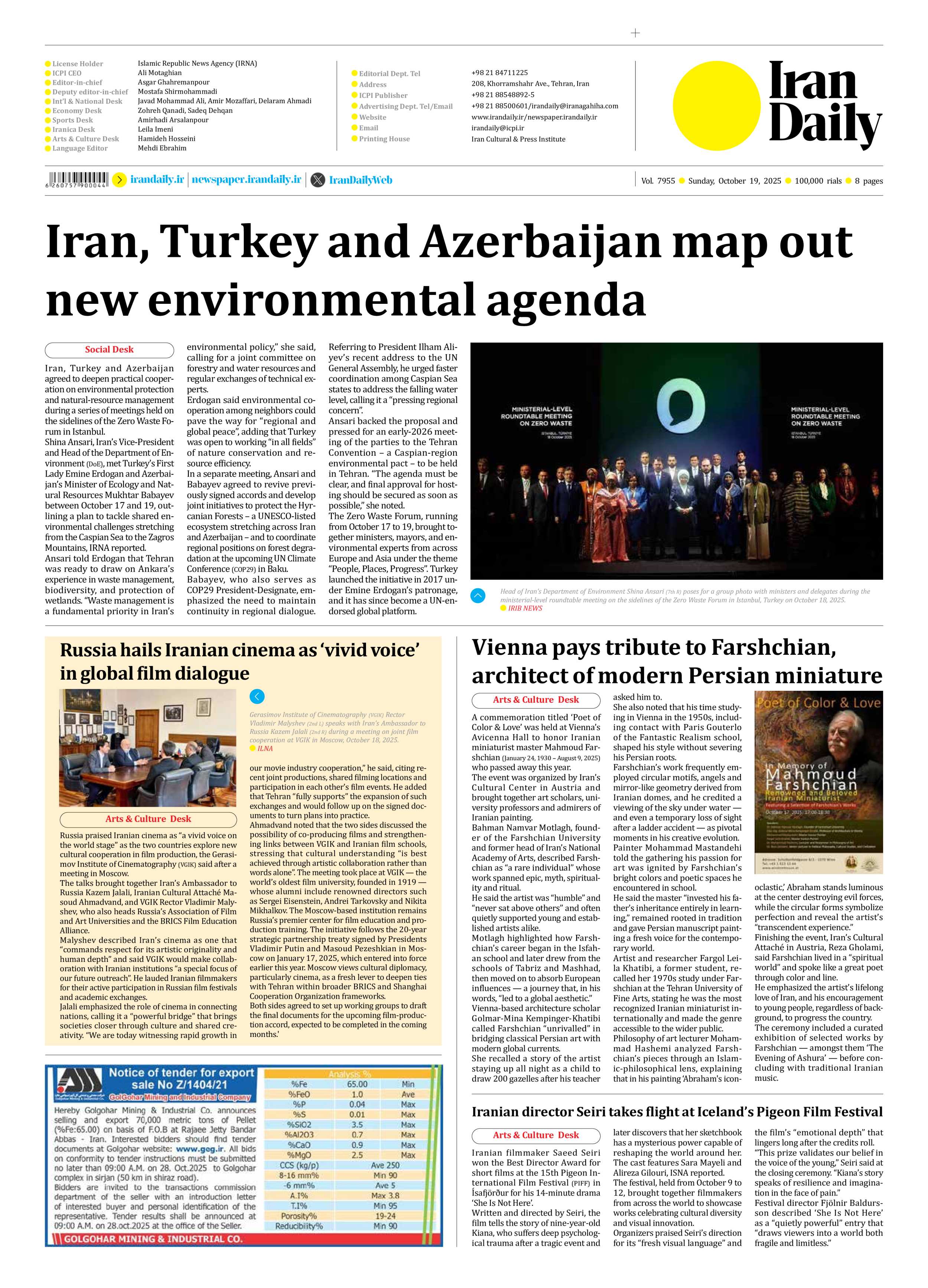


Russia hails Iranian cinema as ‘vivid voice’ in global film dialogue
Russia praised Iranian cinema as “a vivid voice on the world stage” as the two countries explore new cultural cooperation in film production, the Gerasimov Institute of Cinematography (VGIK) said after a meeting in Moscow.
The talks brought together Iran’s Ambassador to Russia Kazem Jalali, Iranian Cultural Attaché Masoud Ahmadvand, and VGIK Rector Vladimir Malyshev, who also heads Russia’s Association of Film and Art Universities and the BRICS Film Education Alliance.
Malyshev described Iran’s cinema as one that “commands respect for its artistic originality and human depth” and said VGIK would make collaboration with Iranian institutions “a special focus of our future outreach”. He lauded Iranian filmmakers for their active participation in Russian film festivals and academic exchanges.
Jalali emphasized the role of cinema in connecting nations, calling it a “powerful bridge” that brings societies closer through culture and shared creativity. “We are today witnessing rapid growth in our movie industry cooperation,” he said, citing recent joint productions, shared filming locations and participation in each other’s film events. He added that Tehran “fully supports” the expansion of such exchanges and would follow up on the signed documents to turn plans into practice.
Ahmadvand noted that the two sides discussed the possibility of co-producing films and strengthening links between VGIK and Iranian film schools, stressing that cultural understanding “is best achieved through artistic collaboration rather than words alone”. The meeting took place at VGIK — the world’s oldest film university, founded in 1919 — whose alumni include renowned directors such as Sergei Eisenstein, Andrei Tarkovsky and Nikita Mikhalkov. The Moscow-based institution remains Russia’s premier center for film education and production training. The initiative follows the 20-year strategic partnership treaty signed by Presidents Vladimir Putin and Masoud Pezeshkian in Moscow on January 17, 2025, which entered into force earlier this year. Moscow views cultural diplomacy, particularly cinema, as a fresh lever to deepen ties with Tehran within broader BRICS and Shanghai Cooperation Organization frameworks.
Both sides agreed to set up working groups to draft the final documents for the upcoming film-production accord, expected to be completed in the coming months.'