







Ancient fire temple inspires heritage preservation
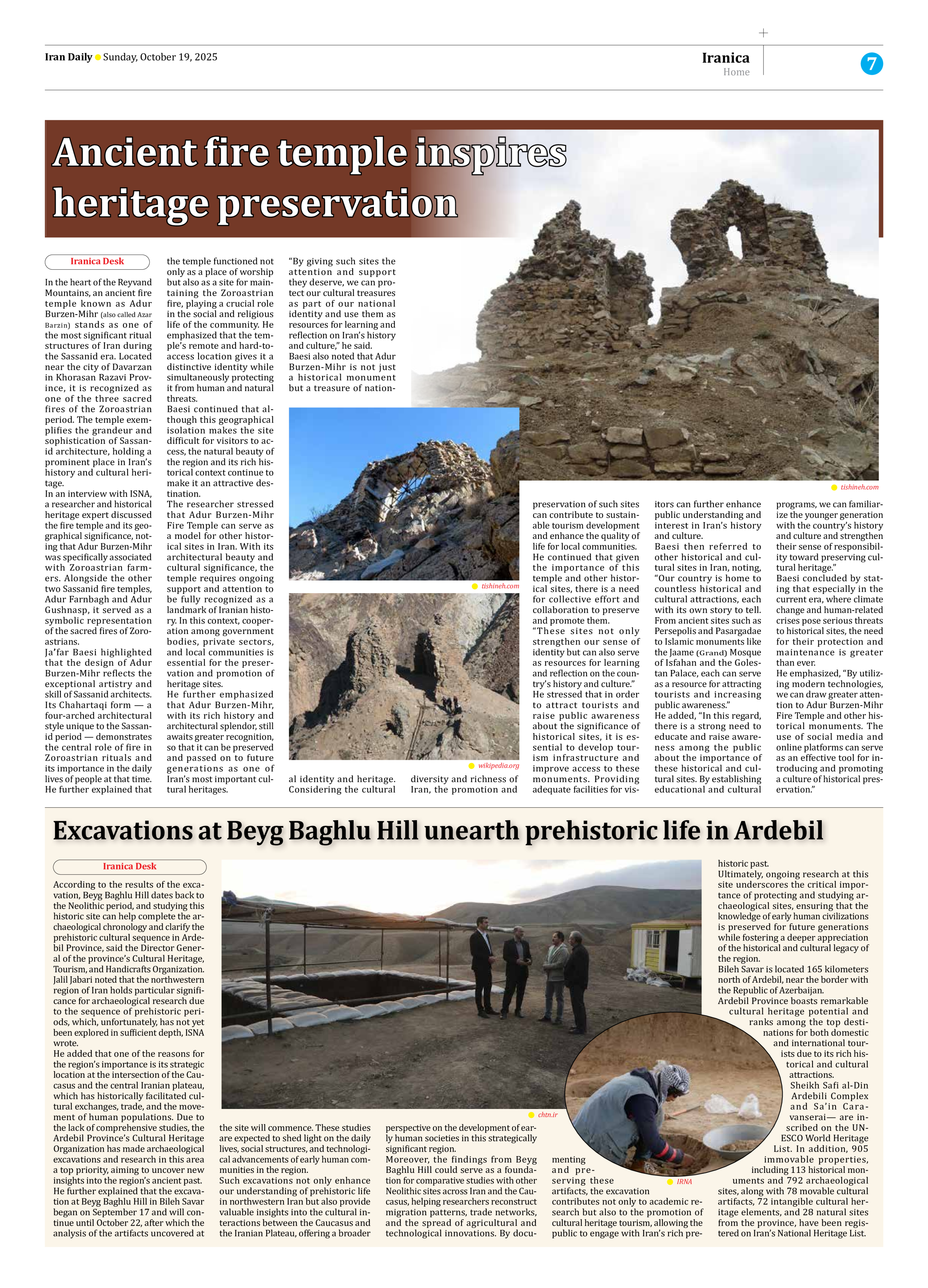
In the heart of the Reyvand Mountains, an ancient fire temple known as Adur Burzen-Mihr (also called Azar Barzin) stands as one of the most significant ritual structures of Iran during the Sassanid era. Located near the city of Davarzan in Khorasan Razavi Province, it is recognized as one of the three sacred fires of the Zoroastrian period. The temple exemplifies the grandeur and sophistication of Sassanid architecture, holding a prominent place in Iran’s history and cultural heritage.
In an interview with ISNA, a researcher and historical heritage expert discussed the fire temple and its geographical significance, noting that Adur Burzen-Mihr was specifically associated with Zoroastrian farmers. Alongside the other two Sassanid fire temples, Adur Farnbagh and Adur Gushnasp, it served as a symbolic representation of the sacred fires of Zoroastrians.
Jaʼfar Baesi highlighted that the design of Adur Burzen-Mihr reflects the exceptional artistry and skill of Sassanid architects. Its Chahartaqi form — a four-arched architectural style unique to the Sassanid period — demonstrates the central role of fire in Zoroastrian rituals and its importance in the daily lives of people at that time.
He further explained that the temple functioned not only as a place of worship but also as a site for maintaining the Zoroastrian fire, playing a crucial role in the social and religious life of the community. He emphasized that the temple’s remote and hard-to-access location gives it a distinctive identity while simultaneously protecting it from human and natural threats.
Baesi continued that although this geographical isolation makes the site difficult for visitors to access, the natural beauty of the region and its rich historical context continue to make it an attractive destination.
The researcher stressed that Adur Burzen-Mihr Fire Temple can serve as a model for other historical sites in Iran. With its architectural beauty and cultural significance, the temple requires ongoing support and attention to be fully recognized as a landmark of Iranian history. In this context, cooperation among government bodies, private sectors, and local communities is essential for the preservation and promotion of heritage sites.
He further emphasized that Adur Burzen-Mihr, with its rich history and architectural splendor, still awaits greater recognition, so that it can be preserved and passed on to future generations as one of Iran’s most important cultural heritages.
“By giving such sites the attention and support they deserve, we can protect our cultural treasures as part of our national identity and use them as resources for learning and reflection on Iran’s history and culture,” he said.
Baesi also noted that Adur Burzen-Mihr is not just a historical monument but a treasure of national identity and heritage. Considering the cultural diversity and richness of Iran, the promotion and preservation of such sites can contribute to sustainable tourism development and enhance the quality of life for local communities.
He continued that given the importance of this temple and other historical sites, there is a need for collective effort and collaboration to preserve and promote them.
“These sites not only strengthen our sense of identity but can also serve as resources for learning and reflection on the country’s history and culture.”
He stressed that in order to attract tourists and raise public awareness about the significance of historical sites, it is essential to develop tourism infrastructure and improve access to these monuments. Providing adequate facilities for visitors can further enhance public understanding and interest in Iran’s history and culture.
Baesi then referred to other historical and cultural sites in Iran, noting, “Our country is home to countless historical and cultural attractions, each with its own story to tell. From ancient sites such as Persepolis and Pasargadae to Islamic monuments like the Jaame (Grand) Mosque of Isfahan and the Golestan Palace, each can serve as a resource for attracting tourists and increasing public awareness.”
He added, “In this regard, there is a strong need to educate and raise awareness among the public about the importance of these historical and cultural sites. By establishing educational and cultural programs, we can familiarize the younger generation with the country’s history and culture and strengthen their sense of responsibility toward preserving cultural heritage.”
Baesi concluded by stating that especially in the current era, where climate change and human-related crises pose serious threats to historical sites, the need for their protection and maintenance is greater than ever.
He emphasized, “By utilizing modern technologies, we can draw greater attention to Adur Burzen-Mihr Fire Temple and other historical monuments. The use of social media and online platforms can serve as an effective tool for introducing and promoting a culture of historical preservation.”