







Iran edges toward FATF compliance as Parliament advances CFT accession
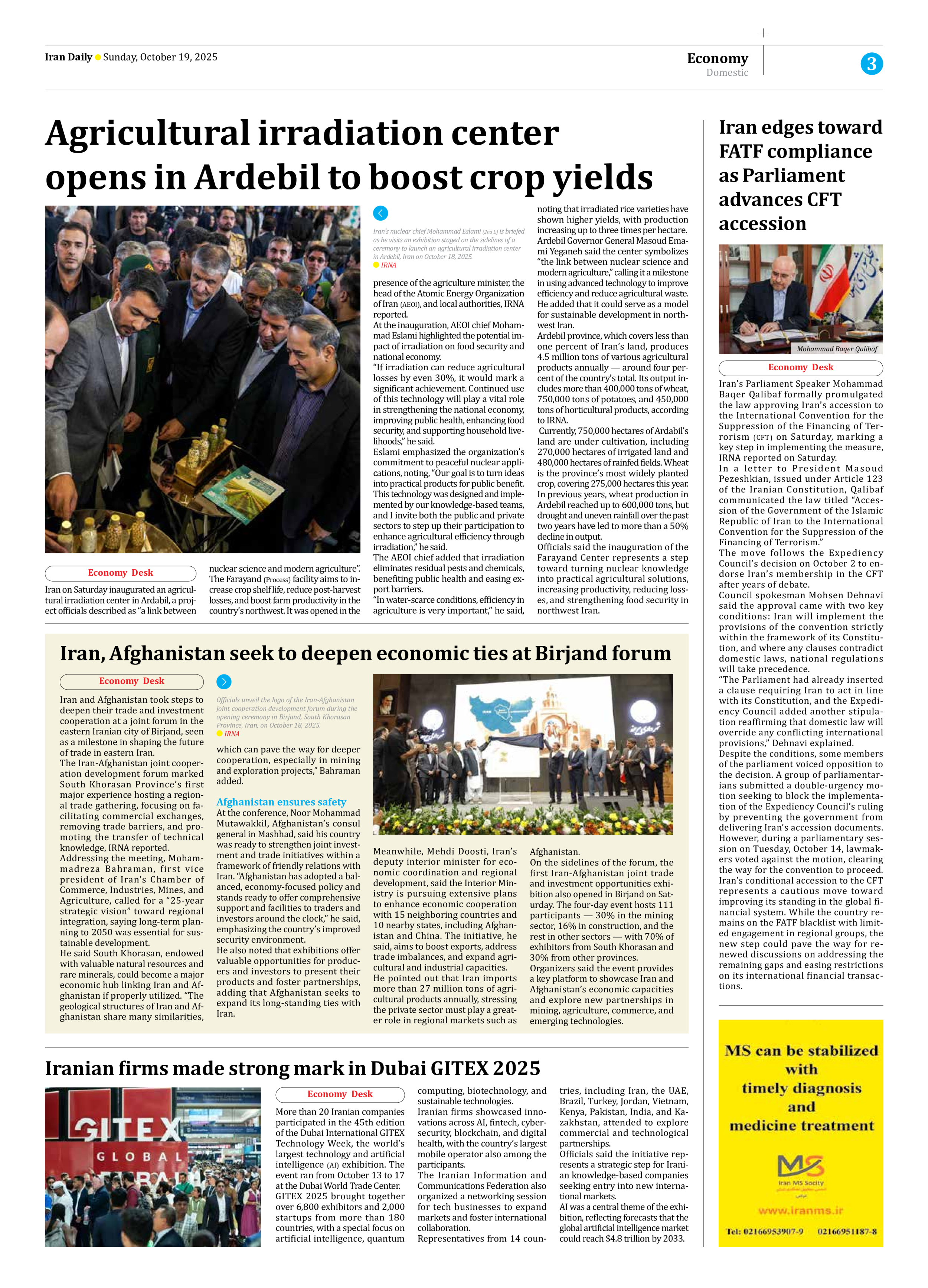
Iran’s Parliament Speaker Mohammad Baqer Qalibaf formally promulgated the law approving Iran’s accession to the International Convention for the Suppression of the Financing of Terrorism (CFT) on Saturday, marking a key step in implementing the measure, IRNA reported on Saturday.
In a letter to President Masoud Pezeshkian, issued under Article 123 of the Iranian Constitution, Qalibaf communicated the law titled “Accession of the Government of the Islamic Republic of Iran to the International Convention for the Suppression of the Financing of Terrorism.”
The move follows the Expediency Council’s decision on October 2 to endorse Iran’s membership in the CFT after years of debate.
Council spokesman Mohsen Dehnavi said the approval came with two key conditions: Iran will implement the provisions of the convention strictly within the framework of its Constitution, and where any clauses contradict domestic laws, national regulations will take precedence.
“The Parliament had already inserted a clause requiring Iran to act in line with its Constitution, and the Expediency Council added another stipulation reaffirming that domestic law will override any conflicting international provisions,” Dehnavi explained.
Despite the conditions, some members of the parliament voiced opposition to the decision. A group of parliamentarians submitted a double-urgency motion seeking to block the implementation of the Expediency Council’s ruling by preventing the government from delivering Iran’s accession documents.
However, during a parliamentary session on Tuesday, October 14, lawmakers voted against the motion, clearing the way for the convention to proceed.
Iran’s conditional accession to the CFT represents a cautious move toward improving its standing in the global financial system. While the country remains on the FATF blacklist with limited engagement in regional groups, the new step could pave the way for renewed discussions on addressing the remaining gaps and easing restrictions on its international financial transactions.