







Gari Kouh Tower preserves legacy of southern Iran
The city of Bastak, situated in the northwestern part of Hormozgan Province, boasts a rich history and a deep cultural heritage. It is home to a remarkable collection of historical relics, traditional architecture, and enduring structures that reflect the region’s long-standing significance. Historically, Bastak lay along one of the main routes connecting southern Iran to the central and western parts of the country. Its strategic geographical location contributed to the development of a diverse array of architectural and historical structures over various periods, leaving a lasting legacy on the region’s cultural landscape.
With its ancient urban fabric, castles, watchtowers, caravanserais, historic mosques, and traditional houses, Bastak stands as a valuable treasure that embodies the history and artistry of the people of southern Iran. The region’s distinctive architecture, constructed using local materials such as stone, wood, and sarooj (a traditional lime-based mortar), exemplifies the ingenious ways in which humans adapted to the hot and arid climate of southern Iran, combining functionality with aesthetic sensibility, chtn.ir wrote.
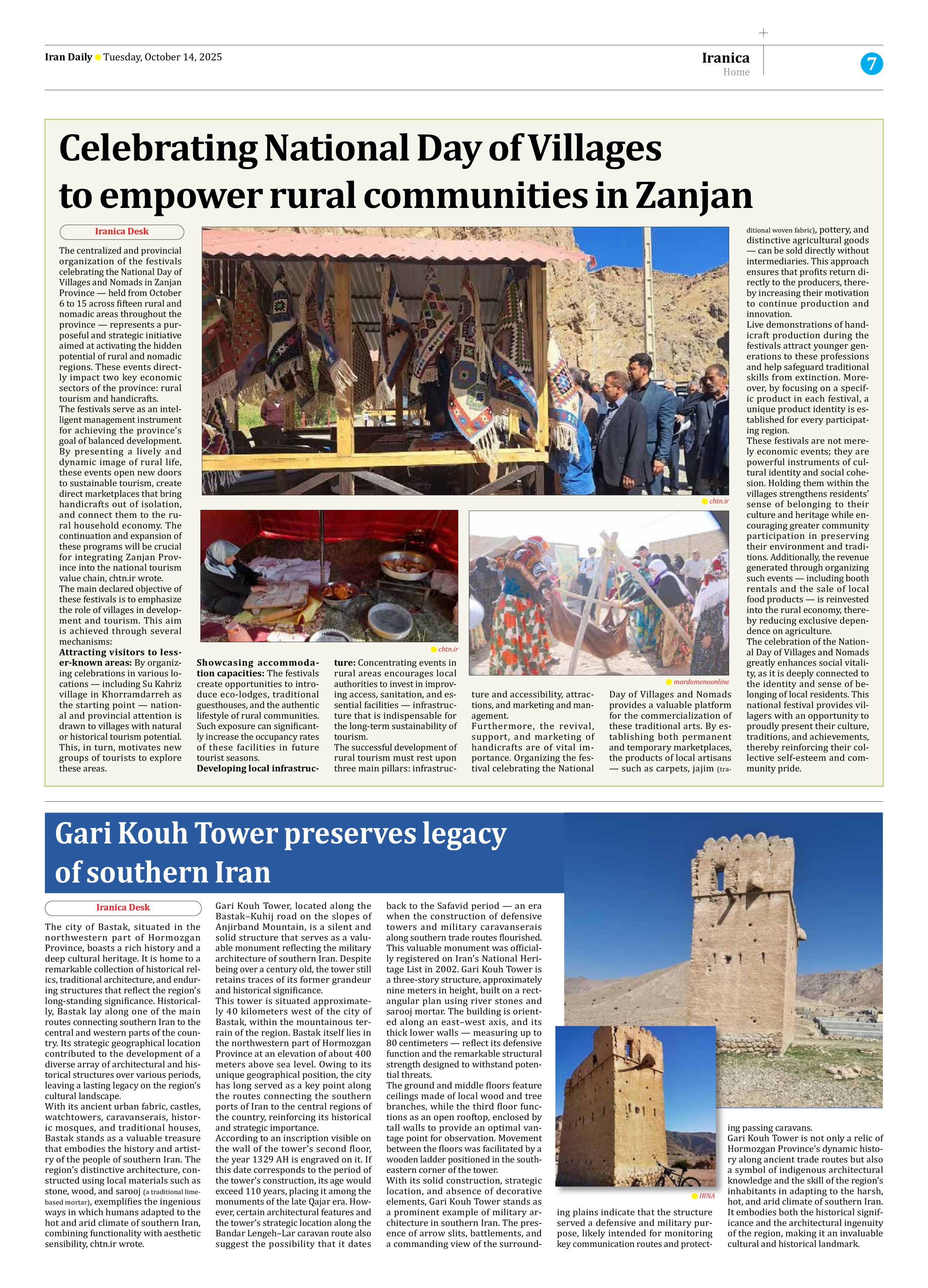
Gari Kouh Tower, located along the Bastak–Kuhij road on the slopes of Anjirband Mountain, is a silent and solid structure that serves as a valuable monument reflecting the military architecture of southern Iran. Despite being over a century old, the tower still retains traces of its former grandeur and historical significance.
This tower is situated approximately 40 kilometers west of the city of Bastak, within the mountainous terrain of the region. Bastak itself lies in the northwestern part of Hormozgan Province at an elevation of about 400 meters above sea level. Owing to its unique geographical position, the city has long served as a key point along the routes connecting the southern ports of Iran to the central regions of the country, reinforcing its historical and strategic importance.
According to an inscription visible on the wall of the tower’s second floor, the year 1329 AH is engraved on it. If this date corresponds to the period of the tower’s construction, its age would exceed 110 years, placing it among the monuments of the late Qajar era. However, certain architectural features and the tower’s strategic location along the Bandar Lengeh–Lar caravan route also suggest the possibility that it dates back to the Safavid period — an era when the construction of defensive towers and military caravanserais along southern trade routes flourished.
This valuable monument was officially registered on Iran’s National Heritage List in 2002. Gari Kouh Tower is a three-story structure, approximately nine meters in height, built on a rectangular plan using river stones and sarooj mortar. The building is oriented along an east–west axis, and its thick lower walls — measuring up to 80 centimeters — reflect its defensive function and the remarkable structural strength designed to withstand potential threats.
The ground and middle floors feature ceilings made of local wood and tree branches, while the third floor functions as an open rooftop, enclosed by tall walls to provide an optimal vantage point for observation. Movement between the floors was facilitated by a wooden ladder positioned in the southeastern corner of the tower.
With its solid construction, strategic location, and absence of decorative elements, Gari Kouh Tower stands as a prominent example of military architecture in southern Iran. The presence of arrow slits, battlements, and a commanding view of the surrounding plains indicate that the structure served a defensive and military purpose, likely intended for monitoring key communication routes and protecting passing caravans.
Gari Kouh Tower is not only a relic of Hormozgan Province’s dynamic history along ancient trade routes but also a symbol of indigenous architectural knowledge and the skill of the region’s inhabitants in adapting to the harsh, hot, and arid climate of southern Iran. It embodies both the historical significance and the architectural ingenuity of the region, making it an invaluable cultural and historical landmark.