







Celebrating National Day of Villages to empower rural communities in Zanjan
The centralized and provincial organization of the festivals celebrating the National Day of Villages and Nomads in Zanjan Province — held from October 6 to 15 across fifteen rural and nomadic areas throughout the province — represents a purposeful and strategic initiative aimed at activating the hidden potential of rural and nomadic regions. These events directly impact two key economic sectors of the province: rural tourism and handicrafts.
The festivals serve as an intelligent management instrument for achieving the province’s goal of balanced development. By presenting a lively and dynamic image of rural life, these events open new doors to sustainable tourism, create direct marketplaces that bring handicrafts out of isolation, and connect them to the rural household economy. The continuation and expansion of these programs will be crucial for integrating Zanjan Province into the national tourism value chain, chtn.ir wrote.
The main declared objective of these festivals is to emphasize the role of villages in development and tourism. This aim is achieved through several mechanisms:
Attracting visitors to lesser-known areas: By organizing celebrations in various locations — including Su Kahriz village in Khorramdarreh as the starting point — national and provincial attention is drawn to villages with natural or historical tourism potential. This, in turn, motivates new groups of tourists to explore these areas.
Showcasing accommodation capacities: The festivals create opportunities to introduce eco-lodges, traditional guesthouses, and the authentic lifestyle of rural communities. Such exposure can significantly increase the occupancy rates of these facilities in future tourist seasons.
Developing local infrastructure: Concentrating events in rural areas encourages local authorities to invest in improving access, sanitation, and essential facilities — infrastructure that is indispensable for the long-term sustainability of tourism.
The successful development of rural tourism must rest upon three main pillars: infrastructure and accessibility, attractions, and marketing and management.
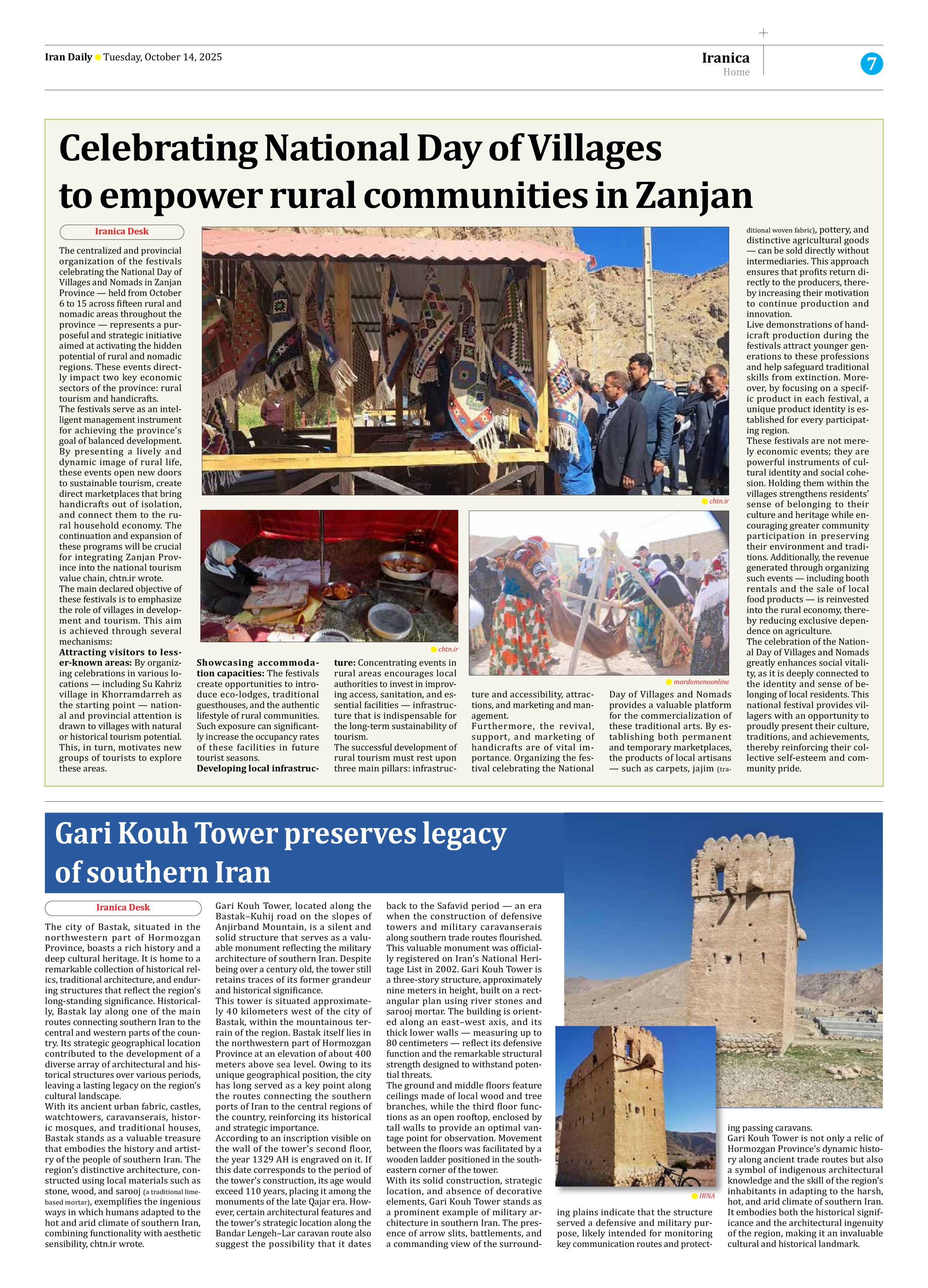
Furthermore, the revival, support, and marketing of handicrafts are of vital importance. Organizing the festival celebrating the National Day of Villages and Nomads provides a valuable platform for the commercialization of these traditional arts. By establishing both permanent and temporary marketplaces, the products of local artisans — such as carpets, jajim (traditional woven fabric), pottery, and distinctive agricultural goods — can be sold directly without intermediaries. This approach ensures that profits return directly to the producers, thereby increasing their motivation to continue production and innovation.
Live demonstrations of handicraft production during the festivals attract younger generations to these professions and help safeguard traditional skills from extinction. Moreover, by focusing on a specific product in each festival, a unique product identity is established for every participating region.
These festivals are not merely economic events; they are powerful instruments of cultural identity and social cohesion. Holding them within the villages strengthens residents’ sense of belonging to their culture and heritage while encouraging greater community participation in preserving their environment and traditions. Additionally, the revenue generated through organizing such events — including booth rentals and the sale of local food products — is reinvested into the rural economy, thereby reducing exclusive dependence on agriculture.
The celebration of the National Day of Villages and Nomads greatly enhances social vitality, as it is deeply connected to the identity and sense of belonging of local residents. This national festival provides villagers with an opportunity to proudly present their culture, traditions, and achievements, thereby reinforcing their collective self-esteem and community pride.