







Qeshm Island ushers in new tourism future through music
Music tourism, as a new, creative, and interdisciplinary concept, offers a promising solution to increase employment, generate income, and attract both domestic and international tourists to Qeshm Island. This initiative can make a significant contribution to the sustainable development of cultural and artistic tourism in the region, said the Head of the Cultural Heritage, Tourism, and Handicrafts Department of the Qeshm Free Zone Organization.
Azadeh Abedinzadeh told IRNA that music tourism is one of the sub-branches of cultural and artistic tourism, in which tourists travel to specific destinations motivated by the desire to experience, listen to, or participate in musical events and rituals.
She emphasized that Qeshm Island is a shining gem of Iranian culture due to its ritual and traditional music. With its rich musical heritage, the island serves as a center for intercultural exchange and a stage for both large and small groups of traditional Iranian musicians.
“This untapped potential, which had remained dormant for decades, has now transformed into an economic asset within the field of artistic tourism through the identification of talented artists in the Qeshm Boom Festival, the organization of the Oud Music Festival, and the introduction of the Oud to fellow Iranians,” Abedinzadeh explained.
She noted that Qeshm Island — as one of the most culturally and ethnically diverse regions in southern Iran — possesses rich musical capacities that cater to a wide range of tastes and interests. The island, she added, has the potential to become one of the main destinations for music tourism. Proper and effective promotion of this unique attraction, alongside Qeshm’s other natural and cultural treasures, can help boost tourism while improving the livelihoods and income of coastal residents.
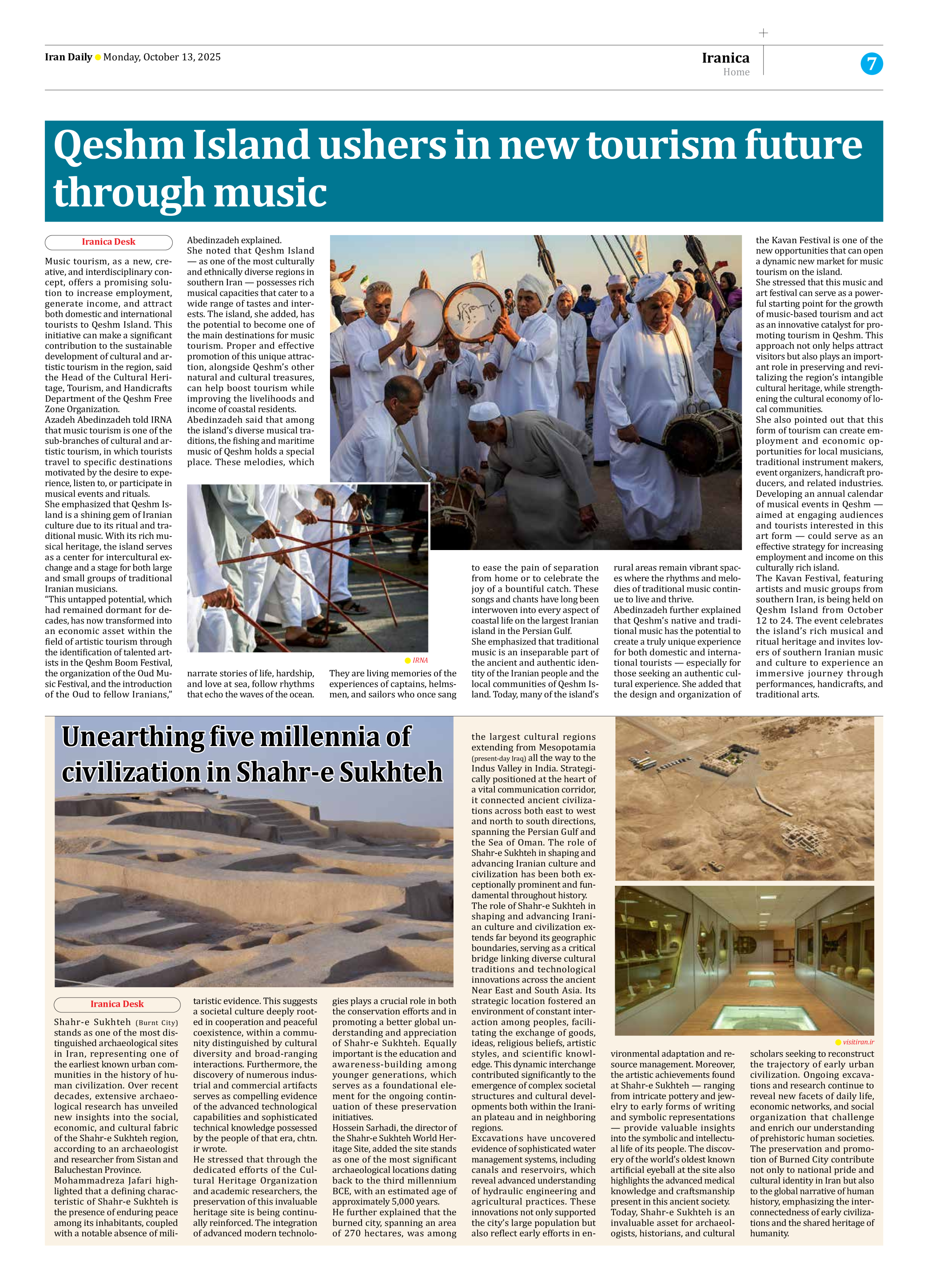
Abedinzadeh said that among the island’s diverse musical traditions, the fishing and maritime music of Qeshm holds a special place. These melodies, which narrate stories of life, hardship, and love at sea, follow rhythms that echo the waves of the ocean. They are living memories of the experiences of captains, helmsmen, and sailors who once sang to ease the pain of separation from home or to celebrate the joy of a bountiful catch. These songs and chants have long been interwoven into every aspect of coastal life on the largest Iranian island in the Persian Gulf.
She emphasized that traditional music is an inseparable part of the ancient and authentic identity of the Iranian people and the local communities of Qeshm Island. Today, many of the island’s rural areas remain vibrant spaces where the rhythms and melodies of traditional music continue to live and thrive.
Abedinzadeh further explained that Qeshm’s native and traditional music has the potential to create a truly unique experience for both domestic and international tourists — especially for those seeking an authentic cultural experience. She added that the design and organization of the Kavan Festival is one of the new opportunities that can open a dynamic new market for music tourism on the island.
She stressed that this music and art festival can serve as a powerful starting point for the growth of music-based tourism and act as an innovative catalyst for promoting tourism in Qeshm. This approach not only helps attract visitors but also plays an important role in preserving and revitalizing the region’s intangible cultural heritage, while strengthening the cultural economy of local communities.
She also pointed out that this form of tourism can create employment and economic opportunities for local musicians, traditional instrument makers, event organizers, handicraft producers, and related industries. Developing an annual calendar of musical events in Qeshm — aimed at engaging audiences and tourists interested in this art form — could serve as an effective strategy for increasing employment and income on this culturally rich island.
The Kavan Festival, featuring artists and music groups from southern Iran, is being held on Qeshm Island from October 12 to 24. The event celebrates the island’s rich musical and ritual heritage and invites lovers of southern Iranian music and culture to experience an immersive journey through performances, handicrafts, and traditional arts.