







Iran, Iraq ink tourism deal to channel 10m visitors per year
Iran and Iraq signed an agreement on October 8 to facilitate the movement of 10 million tourists between the two countries.
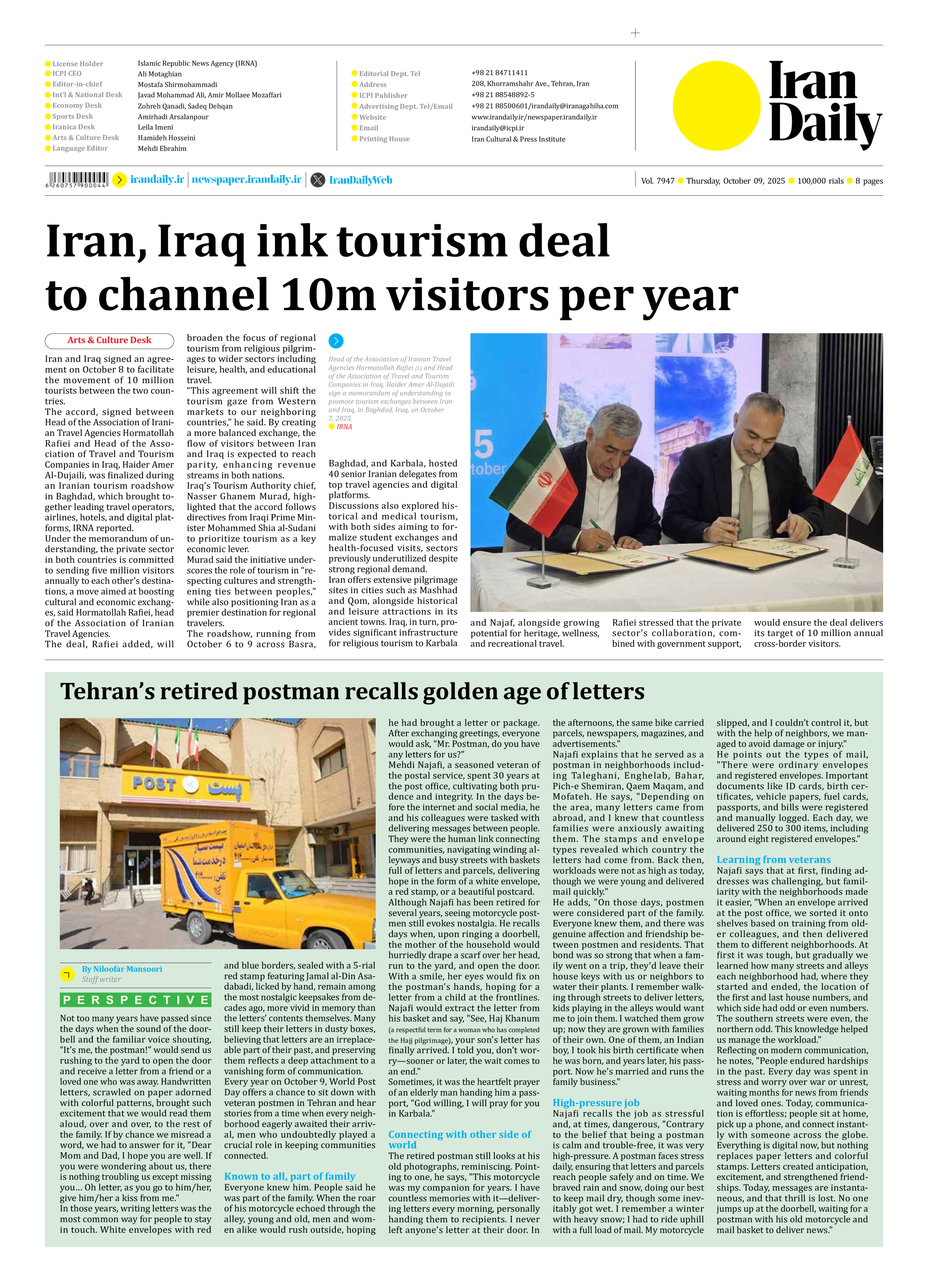
The accord, signed between Head of the Association of Iranian Travel Agencies Hormatollah Rafiei and Head of the Association of Travel and Tourism Companies in Iraq, Haider Amer Al-Dujaili, was finalized during an Iranian tourism roadshow in Baghdad, which brought together leading travel operators, airlines, hotels, and digital platforms, IRNA reported.
Under the memorandum of understanding, the private sector in both countries is committed to sending five million visitors annually to each other’s destinations, a move aimed at boosting cultural and economic exchanges, said Hormatollah Rafiei, head of the Association of Iranian Travel Agencies.
The deal, Rafiei added, will broaden the focus of regional tourism from religious pilgrimages to wider sectors including leisure, health, and educational travel.
“This agreement will shift the tourism gaze from Western markets to our neighboring countries,” he said. By creating a more balanced exchange, the flow of visitors between Iran and Iraq is expected to reach parity, enhancing revenue streams in both nations.
Iraq’s Tourism Authority chief, Nasser Ghanem Murad, highlighted that the accord follows directives from Iraqi Prime Minister Mohammed Shia al-Sudani to prioritize tourism as a key economic lever.
Murad said the initiative underscores the role of tourism in “respecting cultures and strengthening ties between peoples,” while also positioning Iran as a premier destination for regional travelers.
The roadshow, running from October 6 to 9 across Basra, Baghdad, and Karbala, hosted 40 senior Iranian delegates from top travel agencies and digital platforms.
Discussions also explored historical and medical tourism, with both sides aiming to formalize student exchanges and health-focused visits, sectors previously underutilized despite strong regional demand.
Iran offers extensive pilgrimage sites in cities such as Mashhad and Qom, alongside historical and leisure attractions in its ancient towns. Iraq, in turn, provides significant infrastructure for religious tourism to Karbala and Najaf, alongside growing potential for heritage, wellness, and recreational travel.
Rafiei stressed that the private sector’s collaboration, combined with government support, would ensure the deal delivers its target of 10 million annual cross-border visitors.