







Barberry inspires creativity in Persian cuisine, local recipes
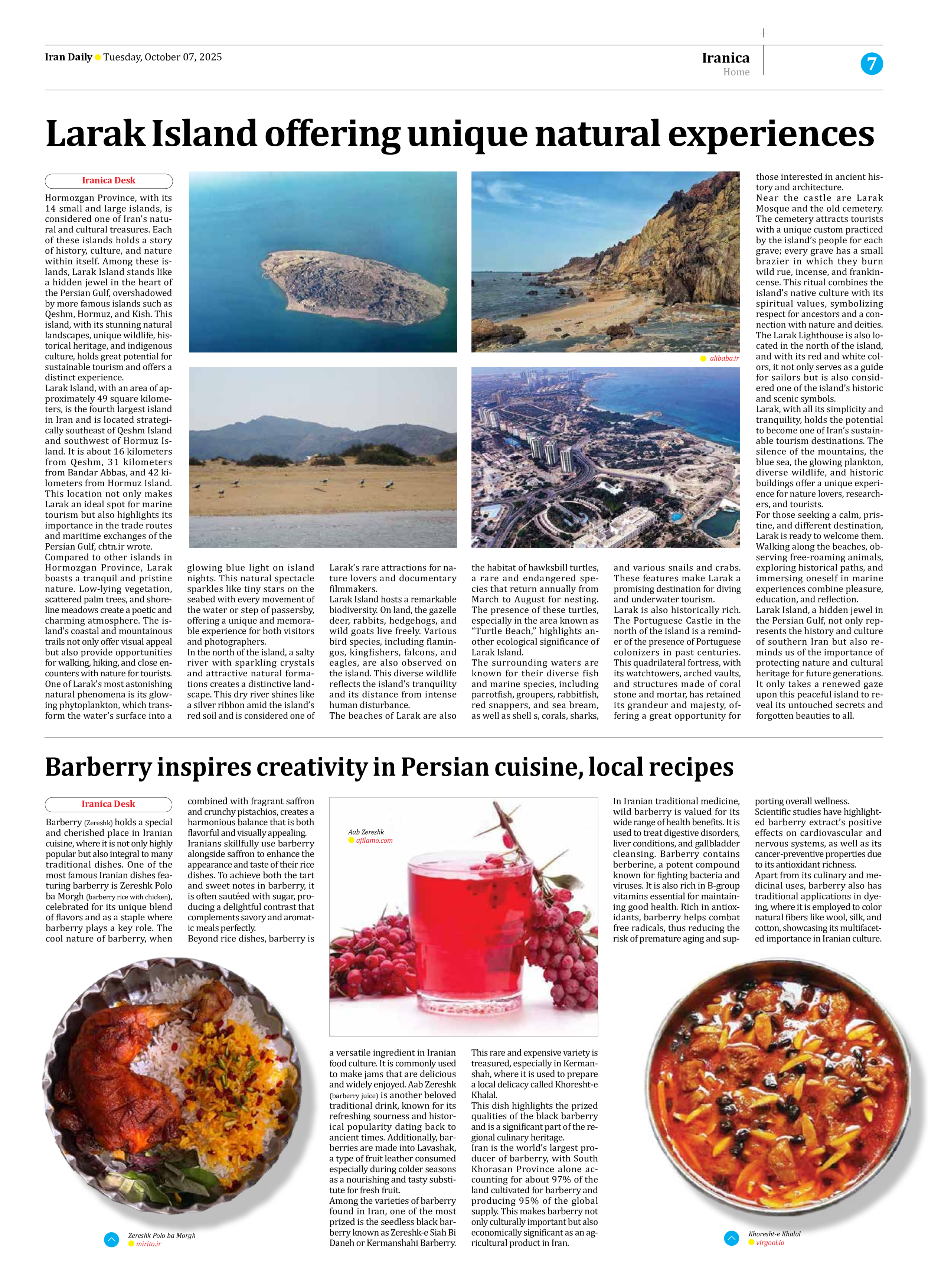
Barberry (Zereshk) holds a special and cherished place in Iranian cuisine, where it is not only highly popular but also integral to many traditional dishes. One of the most famous Iranian dishes featuring barberry is Zereshk Polo ba Morgh (barberry rice with chicken), celebrated for its unique blend of flavors and as a staple where barberry plays a key role. The cool nature of barberry, when combined with fragrant saffron and crunchy pistachios, creates a harmonious balance that is both flavorful and visually appealing.
Iranians skillfully use barberry alongside saffron to enhance the appearance and taste of their rice dishes. To achieve both the tart and sweet notes in barberry, it is often sautéed with sugar, producing a delightful contrast that complements savory and aromatic meals perfectly.
Beyond rice dishes, barberry is a versatile ingredient in Iranian food culture. It is commonly used to make jams that are delicious and widely enjoyed. Aab Zereshk (barberry juice) is another beloved traditional drink, known for its refreshing sourness and historical popularity dating back to ancient times. Additionally, barberries are made into Lavashak, a type of fruit leather consumed especially during colder seasons as a nourishing and tasty substitute for fresh fruit.
Among the varieties of barberry found in Iran, one of the most prized is the seedless black barberry known as Zereshk-e Siah Bi Daneh or Kermanshahi Barberry. This rare and expensive variety is treasured, especially in Kermanshah, where it is used to prepare a local delicacy called Khoresht-e Khalal.
This dish highlights the prized qualities of the black barberry and is a significant part of the regional culinary heritage.
Iran is the world’s largest producer of barberry, with South Khorasan Province alone accounting for about 97% of the land cultivated for barberry and producing 95% of the global supply. This makes barberry not only culturally important but also economically significant as an agricultural product in Iran.
In Iranian traditional medicine, wild barberry is valued for its wide range of health benefits. It is used to treat digestive disorders, liver conditions, and gallbladder cleansing. Barberry contains berberine, a potent compound known for fighting bacteria and viruses. It is also rich in B-group vitamins essential for maintaining good health. Rich in antioxidants, barberry helps combat free radicals, thus reducing the risk of premature aging and supporting overall wellness.
Scientific studies have highlighted barberry extract’s positive effects on cardiovascular and nervous systems, as well as its cancer-preventive properties due to its antioxidant richness.
Apart from its culinary and medicinal uses, barberry also has traditional applications in dyeing, where it is employed to color natural fibers like wool, silk, and cotton, showcasing its multifaceted importance in Iranian culture.