







Larak Island offering unique natural experiences
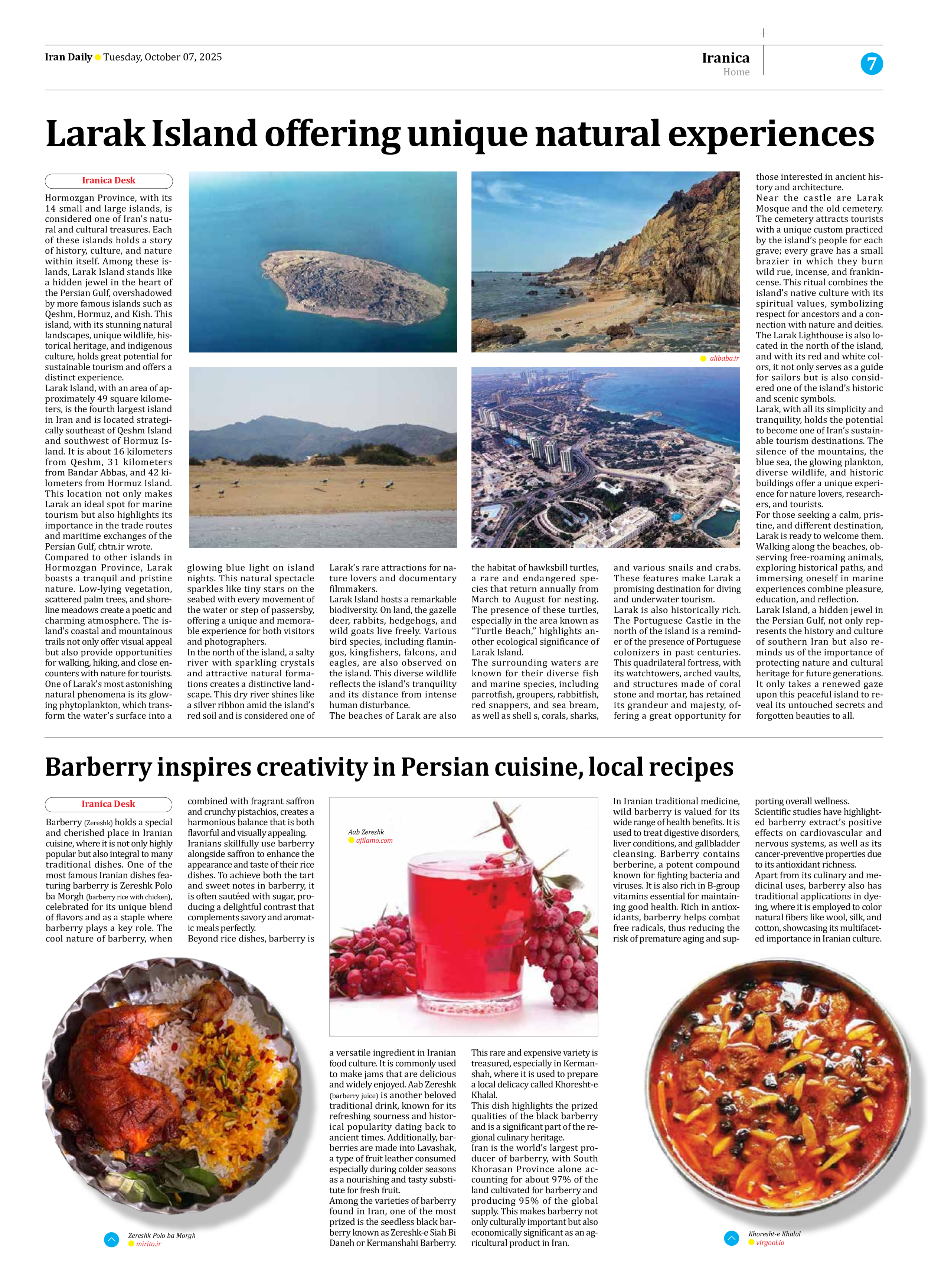
Hormozgan Province, with its 14 small and large islands, is considered one of Iran’s natural and cultural treasures. Each of these islands holds a story of history, culture, and nature within itself. Among these islands, Larak Island stands like a hidden jewel in the heart of the Persian Gulf, overshadowed by more famous islands such as Qeshm, Hormuz, and Kish. This island, with its stunning natural landscapes, unique wildlife, historical heritage, and indigenous culture, holds great potential for sustainable tourism and offers a distinct experience.
Larak Island, with an area of approximately 49 square kilometers, is the fourth largest island in Iran and is located strategically southeast of Qeshm Island and southwest of Hormuz Island. It is about 16 kilometers from Qeshm, 31 kilometers from Bandar Abbas, and 42 kilometers from Hormuz Island. This location not only makes Larak an ideal spot for marine tourism but also highlights its importance in the trade routes and maritime exchanges of the Persian Gulf, chtn.ir wrote.
Compared to other islands in Hormozgan Province, Larak boasts a tranquil and pristine nature. Low-lying vegetation, scattered palm trees, and shoreline meadows create a poetic and charming atmosphere. The island’s coastal and mountainous trails not only offer visual appeal but also provide opportunities for walking, hiking, and close encounters with nature for tourists.
One of Larak’s most astonishing natural phenomena is its glowing phytoplankton, which transform the water’s surface into a glowing blue light on island nights. This natural spectacle sparkles like tiny stars on the seabed with every movement of the water or step of passersby, offering a unique and memorable experience for both visitors and photographers.
In the north of the island, a salty river with sparkling crystals and attractive natural formations creates a distinctive landscape. This dry river shines like a silver ribbon amid the island’s red soil and is considered one of Larak’s rare attractions for nature lovers and documentary filmmakers.
Larak Island hosts a remarkable biodiversity. On land, the gazelle deer, rabbits, hedgehogs, and wild goats live freely. Various bird species, including flamingos, kingfishers, falcons, and eagles, are also observed on the island. This diverse wildlife reflects the island’s tranquility and its distance from intense human disturbance.
The beaches of Larak are also the habitat of hawksbill turtles, a rare and endangered species that return annually from March to August for nesting. The presence of these turtles, especially in the area known as “Turtle Beach,” highlights another ecological significance of Larak Island.
The surrounding waters are known for their diverse fish and marine species, including parrotfish, groupers, rabbitfish, red snappers, and sea bream, as well as shell s, corals, sharks, and various snails and crabs. These features make Larak a promising destination for diving and underwater tourism.
Larak is also historically rich. The Portuguese Castle in the north of the island is a reminder of the presence of Portuguese colonizers in past centuries. This quadrilateral fortress, with its watchtowers, arched vaults, and structures made of coral stone and mortar, has retained its grandeur and majesty, offering a great opportunity for those interested in ancient history and architecture.
Near the castle are Larak Mosque and the old cemetery. The cemetery attracts tourists with a unique custom practiced by the island’s people for each grave; every grave has a small brazier in which they burn wild rue, incense, and frankincense. This ritual combines the island’s native culture with its spiritual values, symbolizing respect for ancestors and a connection with nature and deities.
The Larak Lighthouse is also located in the north of the island, and with its red and white colors, it not only serves as a guide for sailors but is also considered one of the island’s historic and scenic symbols.
Larak, with all its simplicity and tranquility, holds the potential to become one of Iran’s sustainable tourism destinations. The silence of the mountains, the blue sea, the glowing plankton, diverse wildlife, and historic buildings offer a unique experience for nature lovers, researchers, and tourists.
For those seeking a calm, pristine, and different destination, Larak is ready to welcome them. Walking along the beaches, observing free-roaming animals, exploring historical paths, and immersing oneself in marine experiences combine pleasure, education, and reflection.
Larak Island, a hidden jewel in the Persian Gulf, not only represents the history and culture of southern Iran but also reminds us of the importance of protecting nature and cultural heritage for future generations. It only takes a renewed gaze upon this peaceful island to reveal its untouched secrets and forgotten beauties to all.