







Araghchi: Iran-IAEA deal ‘no longer relevant’ after UN sanctions
Nuclear issue should be resolved ‘via diplomacy’
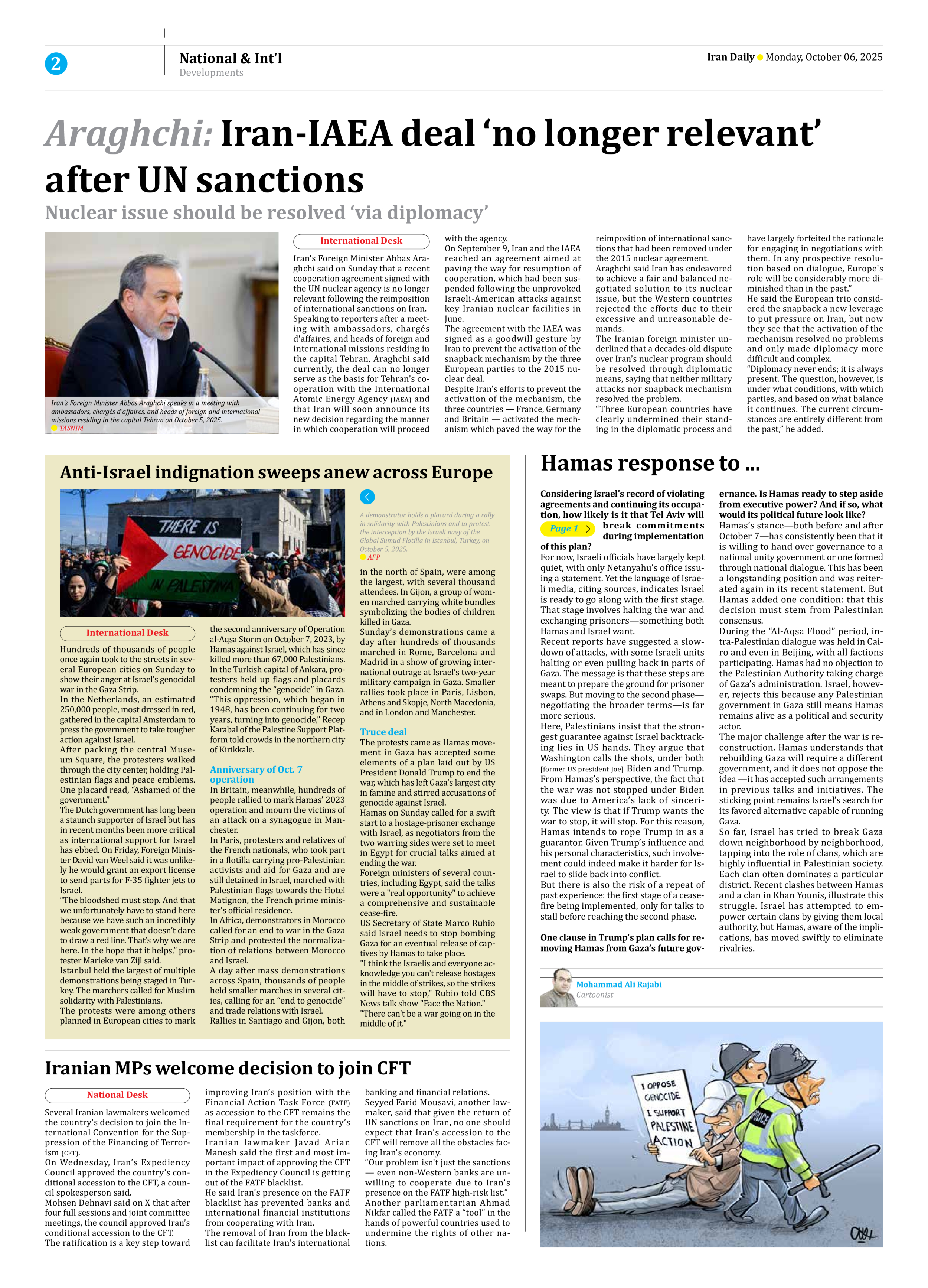
Iran's Foreign Minister Abbas Araghchi said on Sunday that a recent cooperation agreement signed with the UN nuclear agency is no longer relevant following the reimposition of international sanctions on Iran.
Speaking to reporters after a meeting with ambassadors, chargés d'affaires, and heads of foreign and international missions residing in the capital Tehran, Araghchi said currently, the deal can no longer serve as the basis for Tehran’s cooperation with the International Atomic Energy Agency (IAEA) and that Iran will soon announce its new decision regarding the manner in which cooperation will proceed with the agency.
On September 9, Iran and the IAEA reached an agreement aimed at paving the way for resumption of cooperation, which had been suspended following the unprovoked Israeli-American attacks against key Iranian nuclear facilities in June.
The agreement with the IAEA was signed as a goodwill gesture by Iran to prevent the activation of the snapback mechanism by the three European parties to the 2015 nuclear deal.
Despite Iran’s efforts to prevent the activation of the mechanism, the three countries — France, Germany and Britain — activated the mechanism which paved the way for the reimposition of international sanctions that had been removed under the 2015 nuclear agreement.
Araghchi said Iran has endeavored to achieve a fair and balanced negotiated solution to its nuclear issue, but the Western countries rejected the efforts due to their excessive and unreasonable demands.
The Iranian foreign minister underlined that a decades-old dispute over Iran’s nuclear program should be resolved through diplomatic means, saying that neither military attacks nor snapback mechanism resolved the problem.
“Three European countries have clearly undermined their standing in the diplomatic process and have largely forfeited the rationale for engaging in negotiations with them. In any prospective resolution based on dialogue, Europe's role will be considerably more diminished than in the past.”
He said the European trio considered the snapback a new leverage to put pressure on Iran, but now they see that the activation of the mechanism resolved no problems and only made diplomacy more difficult and complex.
“Diplomacy never ends; it is always present. The question, however, is under what conditions, with which parties, and based on what balance it continues. The current circumstances are entirely different from the past,” he added.