







Tehran eyes steady power trade with Moscow via Baku
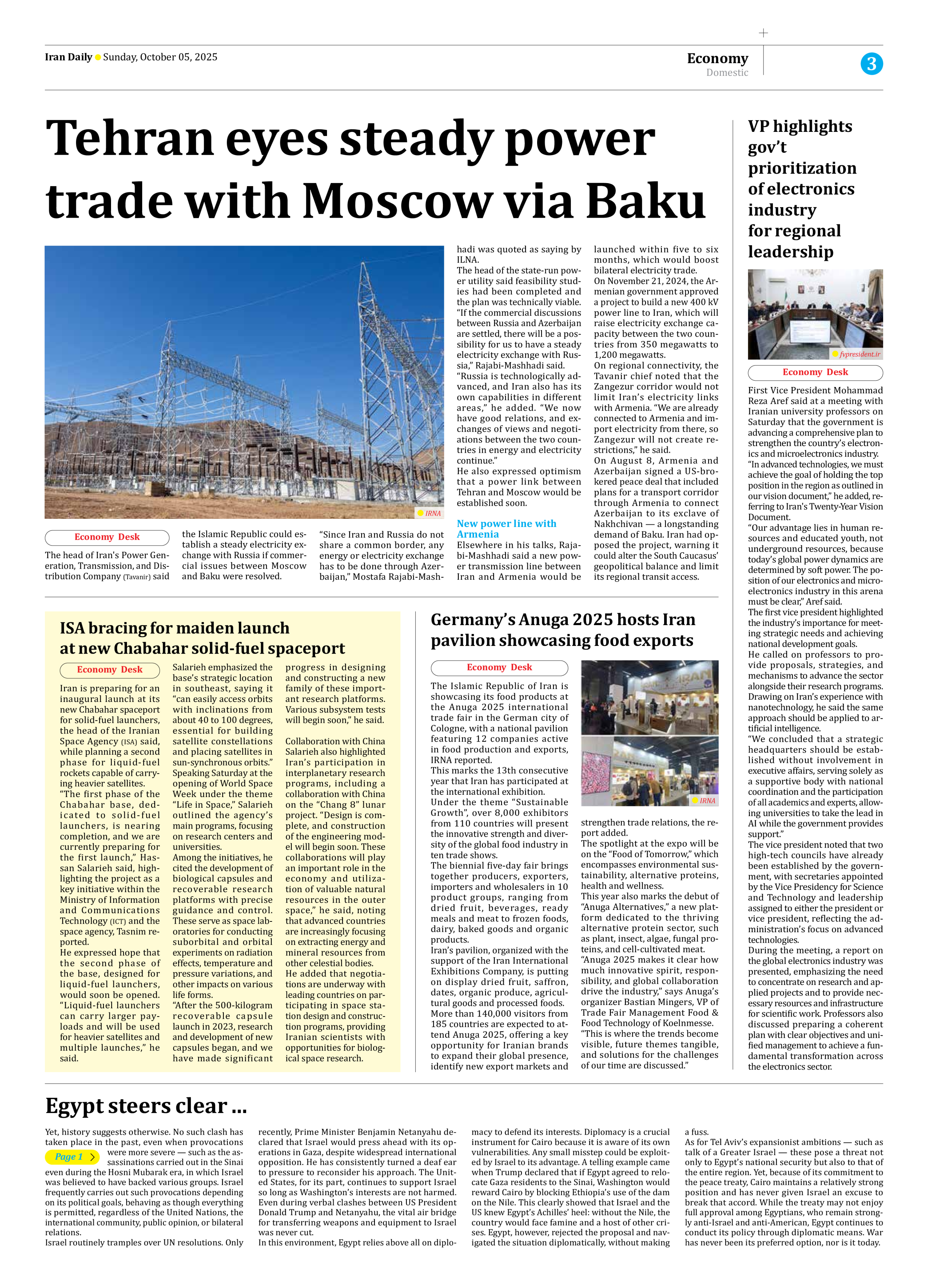
The head of Iran's Power Generation, Transmission, and Distribution Company (Tavanir) said the Islamic Republic could establish a steady electricity exchange with Russia if commercial issues between Moscow and Baku were resolved.
“Since Iran and Russia do not share a common border, any energy or electricity exchange has to be done through Azerbaijan,” Mostafa Rajabi-Mashhadi was quoted as saying by ILNA.
The head of the state-run power utility said feasibility studies had been completed and the plan was technically viable.
“If the commercial discussions between Russia and Azerbaijan are settled, there will be a possibility for us to have a steady electricity exchange with Russia,” Rajabi-Mashhadi said.
“Russia is technologically advanced, and Iran also has its own capabilities in different areas,” he added. “We now have good relations, and exchanges of views and negotiations between the two countries in energy and electricity continue.”
He also expressed optimism that a power link between Tehran and Moscow would be established soon.
New power line with Armenia
Elsewhere in his talks, Rajabi-Mashhadi said a new power transmission line between Iran and Armenia would be launched within five to six months, which would boost bilateral electricity trade.
On November 21, 2024, the Armenian government approved a project to build a new 400 kV power line to Iran, which will raise electricity exchange capacity between the two countries from 350 megawatts to 1,200 megawatts.
On regional connectivity, the Tavanir chief noted that the Zangezur corridor would not limit Iran’s electricity links with Armenia. “We are already connected to Armenia and import electricity from there, so Zangezur will not create restrictions,” he said.
On August 8, Armenia and Azerbaijan signed a US-brokered peace deal that included plans for a transport corridor through Armenia to connect Azerbaijan to its exclave of Nakhchivan — a longstanding demand of Baku. Iran had opposed the project, warning it could alter the South Caucasus’ geopolitical balance and limit its regional transit access.