







Kolm village in Ilam Province showcasing mountain life, history
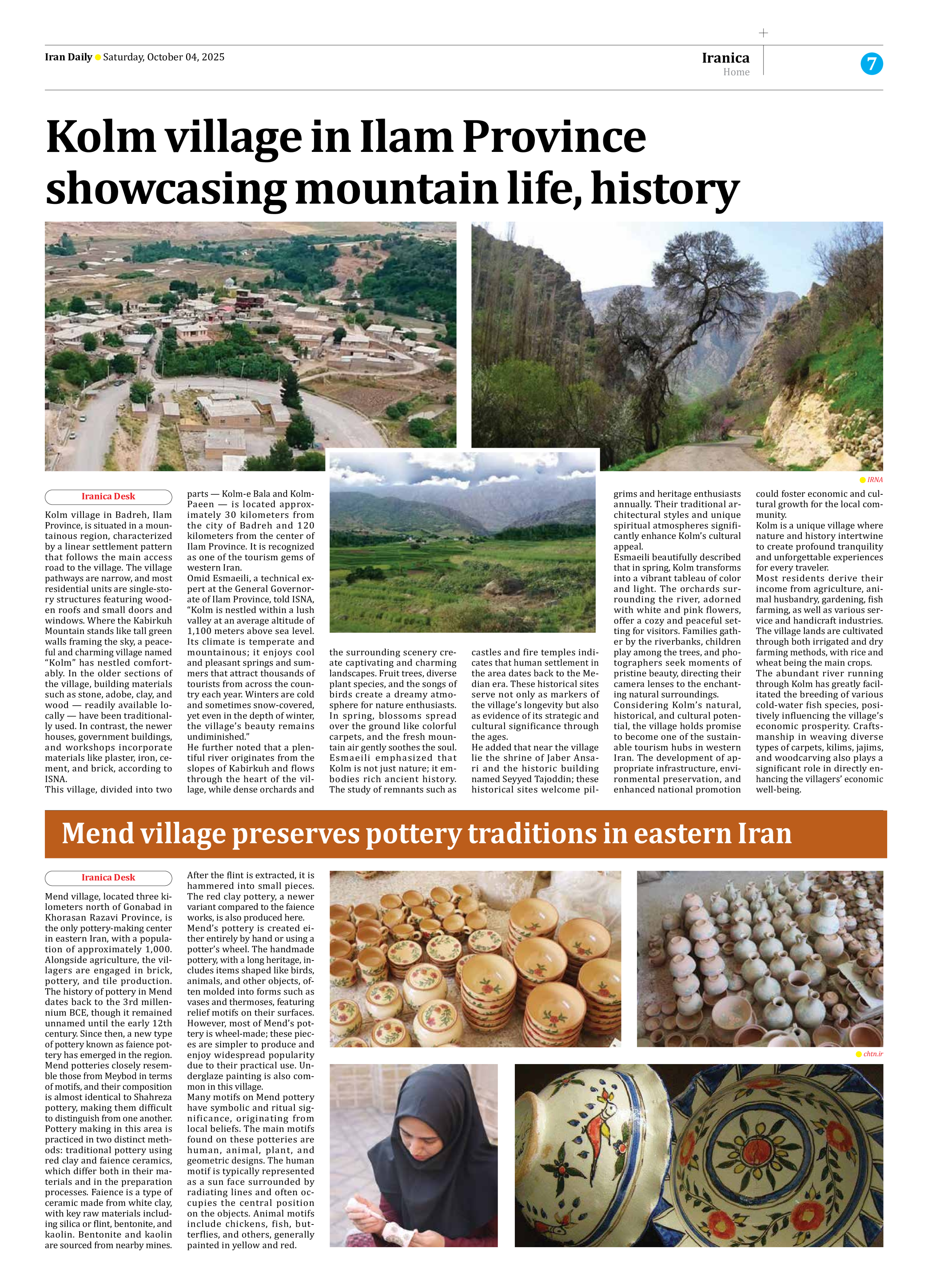
Kolm village in Badreh, Ilam Province, is situated in a mountainous region, characterized by a linear settlement pattern that follows the main access road to the village. The village pathways are narrow, and most residential units are single-story structures featuring wooden roofs and small doors and windows. Where the Kabirkuh Mountain stands like tall green walls framing the sky, a peaceful and charming village named “Kolm” has nestled comfortably. In the older sections of the village, building materials such as stone, adobe, clay, and wood — readily available locally — have been traditionally used. In contrast, the newer houses, government buildings, and workshops incorporate materials like plaster, iron, cement, and brick, according to ISNA.
This village, divided into two parts — Kolm-e Bala and Kolm-Paeen — is located approximately 30 kilometers from the city of Badreh and 120 kilometers from the center of Ilam Province. It is recognized as one of the tourism gems of western Iran.
Omid Esmaeili, a technical expert at the General Governorate of Ilam Province, told ISNA, “Kolm is nestled within a lush valley at an average altitude of 1,100 meters above sea level. Its climate is temperate and mountainous; it enjoys cool and pleasant springs and summers that attract thousands of tourists from across the country each year. Winters are cold and sometimes snow-covered, yet even in the depth of winter, the village’s beauty remains undiminished.”
He further noted that a plentiful river originates from the slopes of Kabirkuh and flows through the heart of the village, while dense orchards and the surrounding scenery create captivating and charming landscapes. Fruit trees, diverse plant species, and the songs of birds create a dreamy atmosphere for nature enthusiasts. In spring, blossoms spread over the ground like colorful carpets, and the fresh mountain air gently soothes the soul.
Esmaeili emphasized that Kolm is not just nature; it embodies rich ancient history. The study of remnants such as castles and fire temples indicates that human settlement in the area dates back to the Median era. These historical sites serve not only as markers of the village’s longevity but also as evidence of its strategic and cultural significance through the ages.
He added that near the village lie the shrine of Jaber Ansari and the historic building named Seyyed Tajoddin; these historical sites welcome pilgrims and heritage enthusiasts annually. Their traditional architectural styles and unique spiritual atmospheres significantly enhance Kolm’s cultural appeal.
Esmaeili beautifully described that in spring, Kolm transforms into a vibrant tableau of color and light. The orchards surrounding the river, adorned with white and pink flowers, offer a cozy and peaceful setting for visitors. Families gather by the riverbanks, children play among the trees, and photographers seek moments of pristine beauty, directing their camera lenses to the enchanting natural surroundings.
Considering Kolm’s natural, historical, and cultural potential, the village holds promise to become one of the sustainable tourism hubs in western Iran. The development of appropriate infrastructure, environmental preservation, and enhanced national promotion could foster economic and cultural growth for the local community.
Kolm is a unique village where nature and history intertwine to create profound tranquility and unforgettable experiences for every traveler.
Most residents derive their income from agriculture, animal husbandry, gardening, fish farming, as well as various service and handicraft industries. The village lands are cultivated through both irrigated and dry farming methods, with rice and wheat being the main crops.
The abundant river running through Kolm has greatly facilitated the breeding of various cold-water fish species, positively influencing the village’s economic prosperity. Craftsmanship in weaving diverse types of carpets, kilims, jajims, and woodcarving also plays a significant role in directly enhancing the villagers’ economic well-being.