







International Day for Older Persons
Iran, China collaborate to improve elderly care services
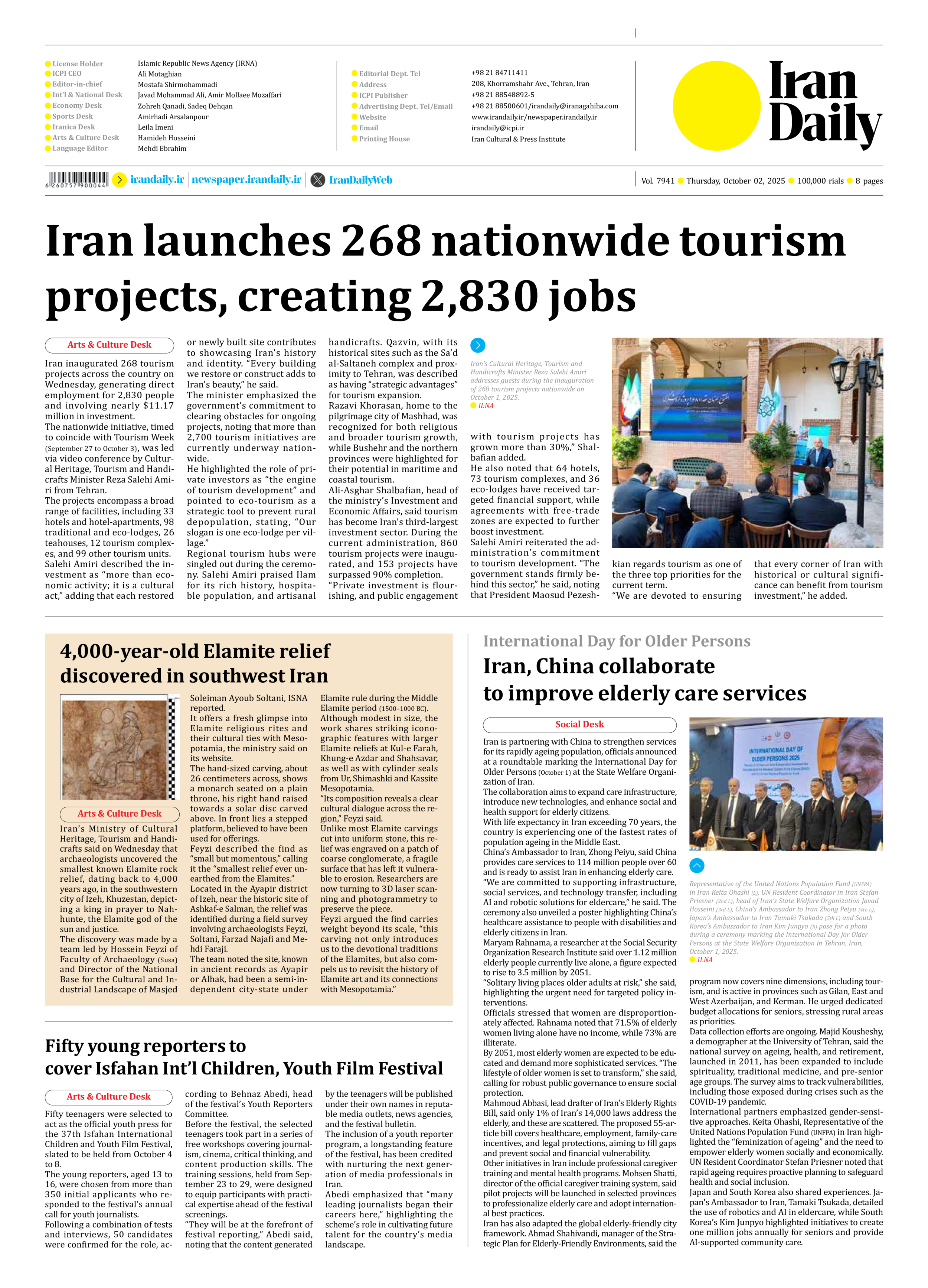
Iran is partnering with China to strengthen services for its rapidly ageing population, officials announced at a roundtable marking the International Day for Older Persons (October 1) at the State Welfare Organization of Iran.
The collaboration aims to expand care infrastructure, introduce new technologies, and enhance social and health support for elderly citizens.
With life expectancy in Iran exceeding 70 years, the country is experiencing one of the fastest rates of population ageing in the Middle East.
China’s Ambassador to Iran, Zhong Peiyu, said China provides care services to 114 million people over 60 and is ready to assist Iran in enhancing elderly care.
“We are committed to supporting infrastructure, social services, and technology transfer, including AI and robotic solutions for eldercare,” he said. The ceremony also unveiled a poster highlighting China’s healthcare assistance to people with disabilities and elderly citizens in Iran.
Maryam Rahnama, a researcher at the Social Security Organization Research Institute said over 1.12 million elderly people currently live alone, a figure expected to rise to 3.5 million by 2051.
“Solitary living places older adults at risk,” she said, highlighting the urgent need for targeted policy interventions.
Officials stressed that women are disproportionately affected. Rahnama noted that 71.5% of elderly women living alone have no income, while 73% are illiterate.
By 2051, most elderly women are expected to be educated and demand more sophisticated services. “The lifestyle of older women is set to transform,” she said, calling for robust public governance to ensure social protection.
Mahmoud Abbasi, lead drafter of Iran’s Elderly Rights Bill, said only 1% of Iran’s 14,000 laws address the elderly, and these are scattered. The proposed 55-article bill covers healthcare, employment, family-care incentives, and legal protections, aiming to fill gaps and prevent social and financial vulnerability.
Other initiatives in Iran include professional caregiver training and mental health programs. Mohsen Shatti, director of the official caregiver training system, said pilot projects will be launched in selected provinces to professionalize elderly care and adopt international best practices.
Iran has also adapted the global elderly-friendly city framework. Ahmad Shahivandi, manager of the Strategic Plan for Elderly-Friendly Environments, said the program now covers nine dimensions, including tourism, and is active in provinces such as Gilan, East and West Azerbaijan, and Kerman. He urged dedicated budget allocations for seniors, stressing rural areas as priorities.
Data collection efforts are ongoing. Majid Kousheshy, a demographer at the University of Tehran, said the national survey on ageing, health, and retirement, launched in 2011, has been expanded to include spirituality, traditional medicine, and pre-senior age groups. The survey aims to track vulnerabilities, including those exposed during crises such as the COVID-19 pandemic.
International partners emphasized gender-sensitive approaches. Keita Ohashi, Representative of the United Nations Population Fund (UNFPA) in Iran highlighted the “feminization of ageing” and the need to empower elderly women socially and economically. UN Resident Coordinator Stefan Priesner noted that rapid ageing requires proactive planning to safeguard health and social inclusion.
Japan and South Korea also shared experiences. Japan's Ambassador to Iran, Tamaki Tsukada, detailed the use of robotics and AI in eldercare, while South Korea’s Kim Junpyo highlighted initiatives to create one million jobs annually for seniors and provide AI-supported community care.