







Blue Mosque embodies Islamic world’s turquoise heritage
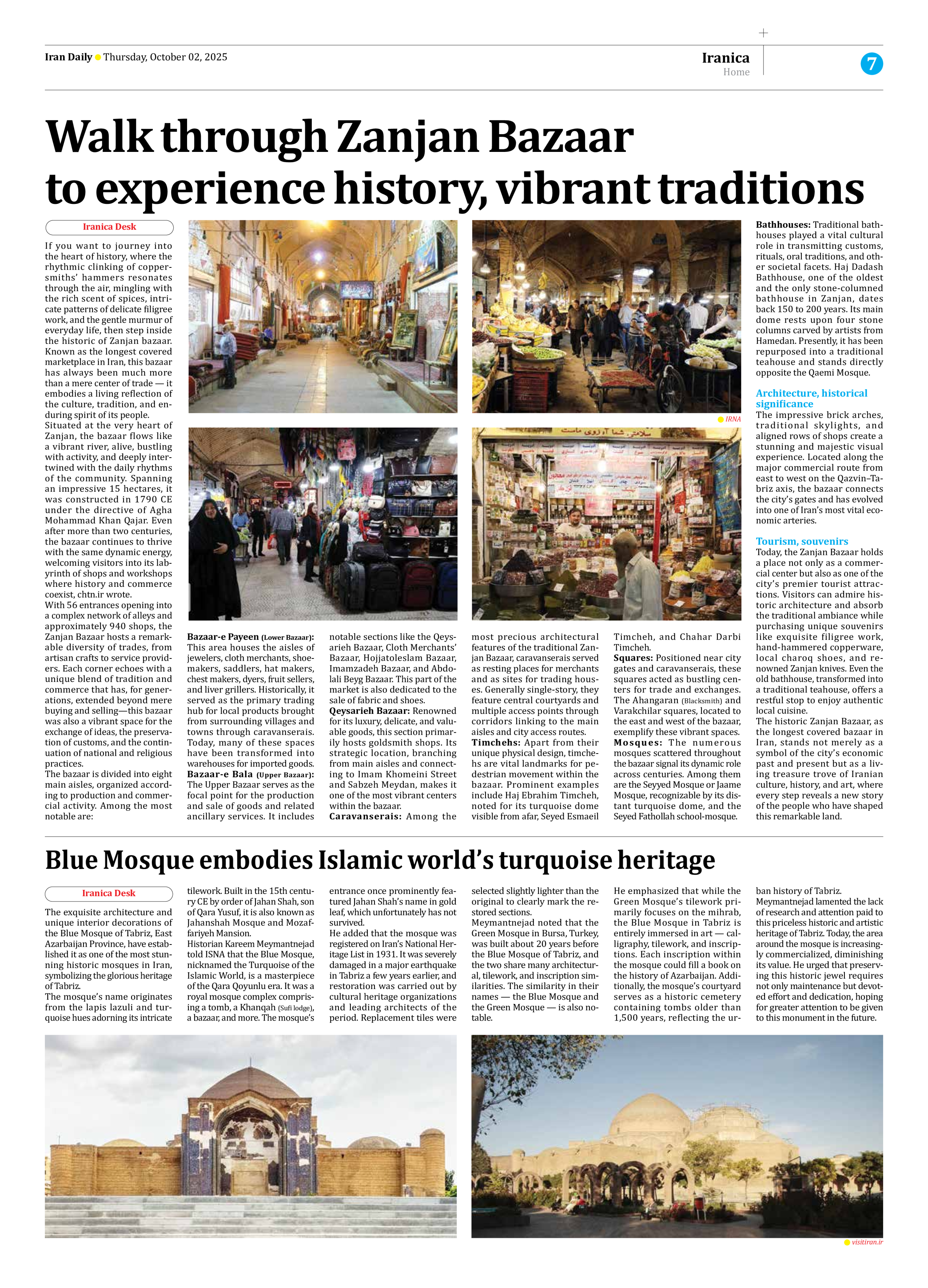
The exquisite architecture and unique interior decorations of the Blue Mosque of Tabriz, East Azarbaijan Province, have established it as one of the most stunning historic mosques in Iran, symbolizing the glorious heritage of Tabriz.
The mosque’s name originates from the lapis lazuli and turquoise hues adorning its intricate tilework. Built in the 15th century CE by order of Jahan Shah, son of Qara Yusuf, it is also known as Jahanshah Mosque and Mozaffariyeh Mansion.
Historian Kareem Meymantnejad told ISNA that the Blue Mosque, nicknamed the Turquoise of the Islamic World, is a masterpiece of the Qara Qoyunlu era. It was a royal mosque complex comprising a tomb, a Khanqah (Sufi lodge), a bazaar, and more. The mosque’s entrance once prominently featured Jahan Shah’s name in gold leaf, which unfortunately has not survived.
He added that the mosque was registered on Iran’s National Heritage List in 1931. It was severely damaged in a major earthquake in Tabriz a few years earlier, and restoration was carried out by cultural heritage organizations and leading architects of the period. Replacement tiles were selected slightly lighter than the original to clearly mark the restored sections.
Meymantnejad noted that the Green Mosque in Bursa, Turkey, was built about 20 years before the Blue Mosque of Tabriz, and the two share many architectural, tilework, and inscription similarities. The similarity in their names — the Blue Mosque and the Green Mosque — is also notable.
He emphasized that while the Green Mosque’s tilework primarily focuses on the mihrab, the Blue Mosque in Tabriz is entirely immersed in art — calligraphy, tilework, and inscriptions. Each inscription within the mosque could fill a book on the history of Azarbaijan. Additionally, the mosque’s courtyard serves as a historic cemetery containing tombs older than 1,500 years, reflecting the urban history of Tabriz.
Meymantnejad lamented the lack of research and attention paid to this priceless historic and artistic heritage of Tabriz. Today, the area around the mosque is increasingly commercialized, diminishing its value. He urged that preserving this historic jewel requires not only maintenance but devoted effort and dedication, hoping for greater attention to be given to this monument in the future.