







Copy in clipboard...
Explore story of historic Sardar Jalil House in Sari
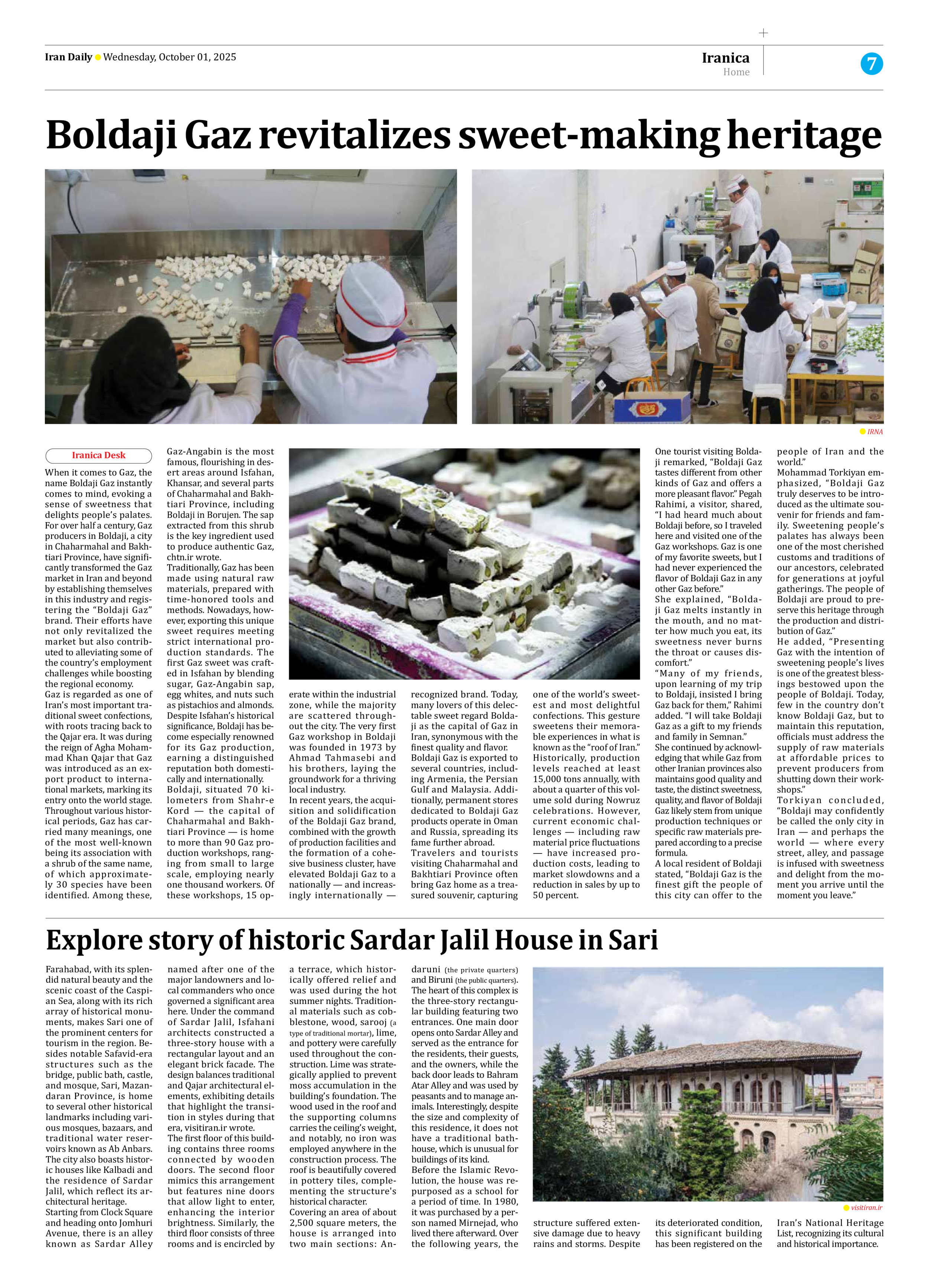
Starting from Clock Square and heading onto Jomhuri Avenue, there is an alley known as Sardar Alley named after one of the major landowners and local commanders who once governed a significant area here. Under the command of Sardar Jalil, Isfahani architects constructed a three-story house with a rectangular layout and an elegant brick facade. The design balances traditional and Qajar architectural elements, exhibiting details that highlight the transition in styles during that era, visitiran.ir wrote.
The first floor of this building contains three rooms connected by wooden doors. The second floor mimics this arrangement but features nine doors that allow light to enter, enhancing the interior brightness. Similarly, the third floor consists of three rooms and is encircled by a terrace, which historically offered relief and was used during the hot summer nights. Traditional materials such as cobblestone, wood, sarooj (a type of traditional mortar), lime, and pottery were carefully used throughout the construction. Lime was strategically applied to prevent moss accumulation in the building’s foundation. The wood used in the roof and the supporting columns carries the ceiling’s weight, and notably, no iron was employed anywhere in the construction process. The roof is beautifully covered in pottery tiles, complementing the structure's historical character.
Covering an area of about 2,500 square meters, the house is arranged into two main sections: Andaruni (the private quarters) and Biruni (the public quarters). The heart of this complex is the three-story rectangular building featuring two entrances. One main door opens onto Sardar Alley and served as the entrance for the residents, their guests, and the owners, while the back door leads to Bahram Atar Alley and was used by peasants and to manage animals. Interestingly, despite the size and complexity of this residence, it does not have a traditional bathhouse, which is unusual for buildings of its kind.
Before the Islamic Revolution, the house was repurposed as a school for a period of time. In 1980, it was purchased by a person named Mirnejad, who lived there afterward. Over the following years, the structure suffered extensive damage due to heavy rains and storms. Despite its deteriorated condition, this significant building has been registered on the Iran’s National Heritage List, recognizing its cultural and historical importance.