







Mehdishahr’s natural-colored carpet preserves ancient nomadic art
The natural-colored carpet of Mehdishahr, a city in Semnan Province, is one of the world’s most authentic hand-woven carpets, woven with remarkable delicacy and emotion rooted in the ancient arts of the city’s tribal nomads.
In this pure form of carpet weaving, no dyes are applied to the warp and weft. Every color visible is the natural hue of the carpet’s threads, as if nature itself has infused the carpet beneath your feet with its own palette, IRNA wrote.
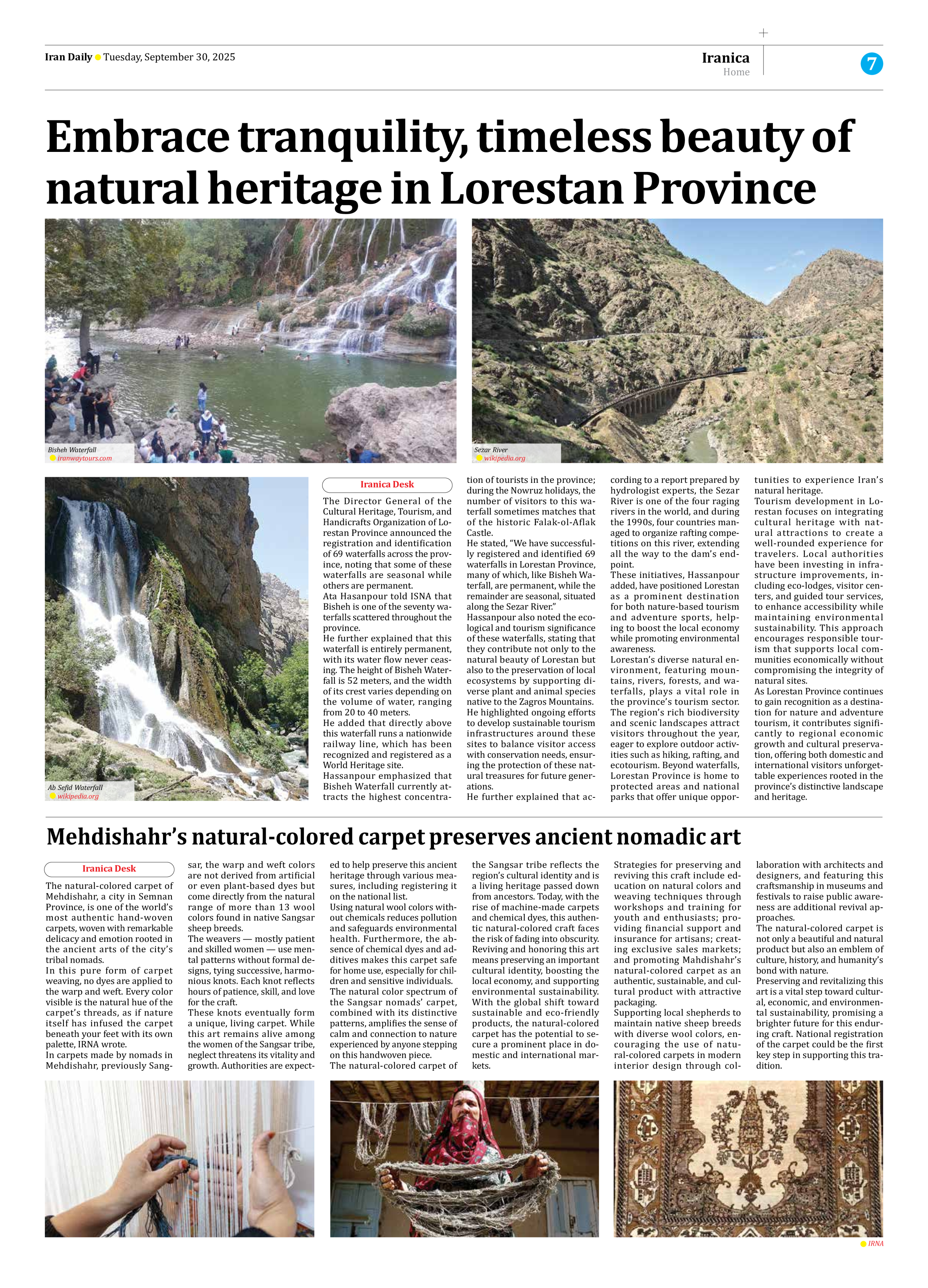
In carpets made by nomads in Mehdishahr, previously Sangsar, the warp and weft colors are not derived from artificial or even plant-based dyes but come directly from the natural range of more than 13 wool colors found in native Sangsar sheep breeds.
The weavers — mostly patient and skilled women — use mental patterns without formal designs, tying successive, harmonious knots. Each knot reflects hours of patience, skill, and love for the craft.
These knots eventually form a unique, living carpet. While this art remains alive among the women of the Sangsar tribe, neglect threatens its vitality and growth. Authorities are expected to help preserve this ancient heritage through various measures, including registering it on the national list.
Using natural wool colors without chemicals reduces pollution and safeguards environmental health. Furthermore, the absence of chemical dyes and additives makes this carpet safe for home use, especially for children and sensitive individuals.
The natural color spectrum of the Sangsar nomads’ carpet, combined with its distinctive patterns, amplifies the sense of calm and connection to nature experienced by anyone stepping on this handwoven piece.
The natural-colored carpet of the Sangsar tribe reflects the region’s cultural identity and is a living heritage passed down from ancestors. Today, with the rise of machine-made carpets and chemical dyes, this authentic natural-colored craft faces the risk of fading into obscurity.
Reviving and honoring this art means preserving an important cultural identity, boosting the local economy, and supporting environmental sustainability. With the global shift toward sustainable and eco-friendly products, the natural-colored carpet has the potential to secure a prominent place in domestic and international markets.
Strategies for preserving and reviving this craft include education on natural colors and weaving techniques through workshops and training for youth and enthusiasts; providing financial support and insurance for artisans; creating exclusive sales markets; and promoting Mahdishahr’s natural-colored carpet as an authentic, sustainable, and cultural product with attractive packaging.
Supporting local shepherds to maintain native sheep breeds with diverse wool colors, encouraging the use of natural-colored carpets in modern interior design through collaboration with architects and designers, and featuring this craftsmanship in museums and festivals to raise public awareness are additional revival approaches.
The natural-colored carpet is not only a beautiful and natural product but also an emblem of culture, history, and humanity’s bond with nature.
Preserving and revitalizing this art is a vital step toward cultural, economic, and environmental sustainability, promising a brighter future for this enduring craft. National registration of the carpet could be the first key step in supporting this tradition.