







Khameh Duzi weaves tradition with silk in Sistan and Baluchestan Province
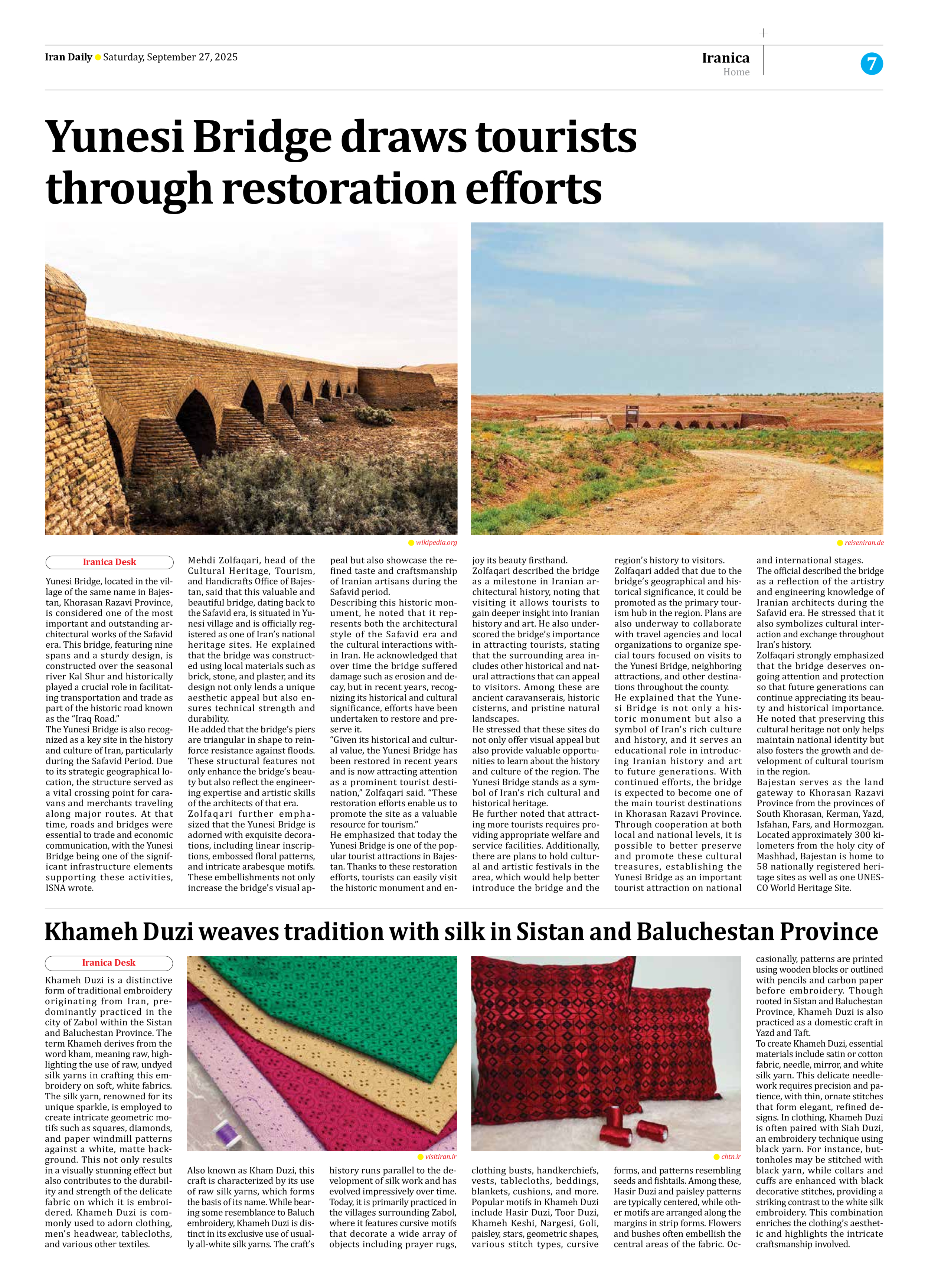
Khameh Duzi is a distinctive form of traditional embroidery originating from Iran, predominantly practiced in the city of Zabol within the Sistan and Baluchestan Province. The term Khameh derives from the word kham, meaning raw, highlighting the use of raw, undyed silk yarns in crafting this embroidery on soft, white fabrics. The silk yarn, renowned for its unique sparkle, is employed to create intricate geometric motifs such as squares, diamonds, and paper windmill patterns against a white, matte background. This not only results in a visually stunning effect but also contributes to the durability and strength of the delicate fabric on which it is embroidered. Khameh Duzi is commonly used to adorn clothing, men’s headwear, tablecloths, and various other textiles.
Also known as Kham Duzi, this craft is characterized by its use of raw silk yarns, which forms the basis of its name. While bearing some resemblance to Baluch embroidery, Khameh Duzi is distinct in its exclusive use of usually all-white silk yarns. The craft’s history runs parallel to the development of silk work and has evolved impressively over time. Today, it is primarily practiced in the villages surrounding Zabol, where it features cursive motifs that decorate a wide array of objects including prayer rugs, clothing busts, handkerchiefs, vests, tablecloths, beddings, blankets, cushions, and more. Popular motifs in Khameh Duzi include Hasir Duzi, Toor Duzi, Khameh Keshi, Nargesi, Goli, paisley, stars, geometric shapes, various stitch types, cursive forms, and patterns resembling seeds and fishtails. Among these, Hasir Duzi and paisley patterns are typically centered, while other motifs are arranged along the margins in strip forms. Flowers and bushes often embellish the central areas of the fabric. Occasionally, patterns are printed using wooden blocks or outlined with pencils and carbon paper before embroidery. Though rooted in Sistan and Baluchestan Province, Khameh Duzi is also practiced as a domestic craft in Yazd and Taft.
To create Khameh Duzi, essential materials include satin or cotton fabric, needle, mirror, and white silk yarn. This delicate needlework requires precision and patience, with thin, ornate stitches that form elegant, refined designs. In clothing, Khameh Duzi is often paired with Siah Duzi, an embroidery technique using black yarn. For instance, buttonholes may be stitched with black yarn, while collars and cuffs are enhanced with black decorative stitches, providing a striking contrast to the white silk embroidery. This combination enriches the clothing’s aesthetic and highlights the intricate craftsmanship involved.