







Yunesi Bridge draws tourists through restoration efforts
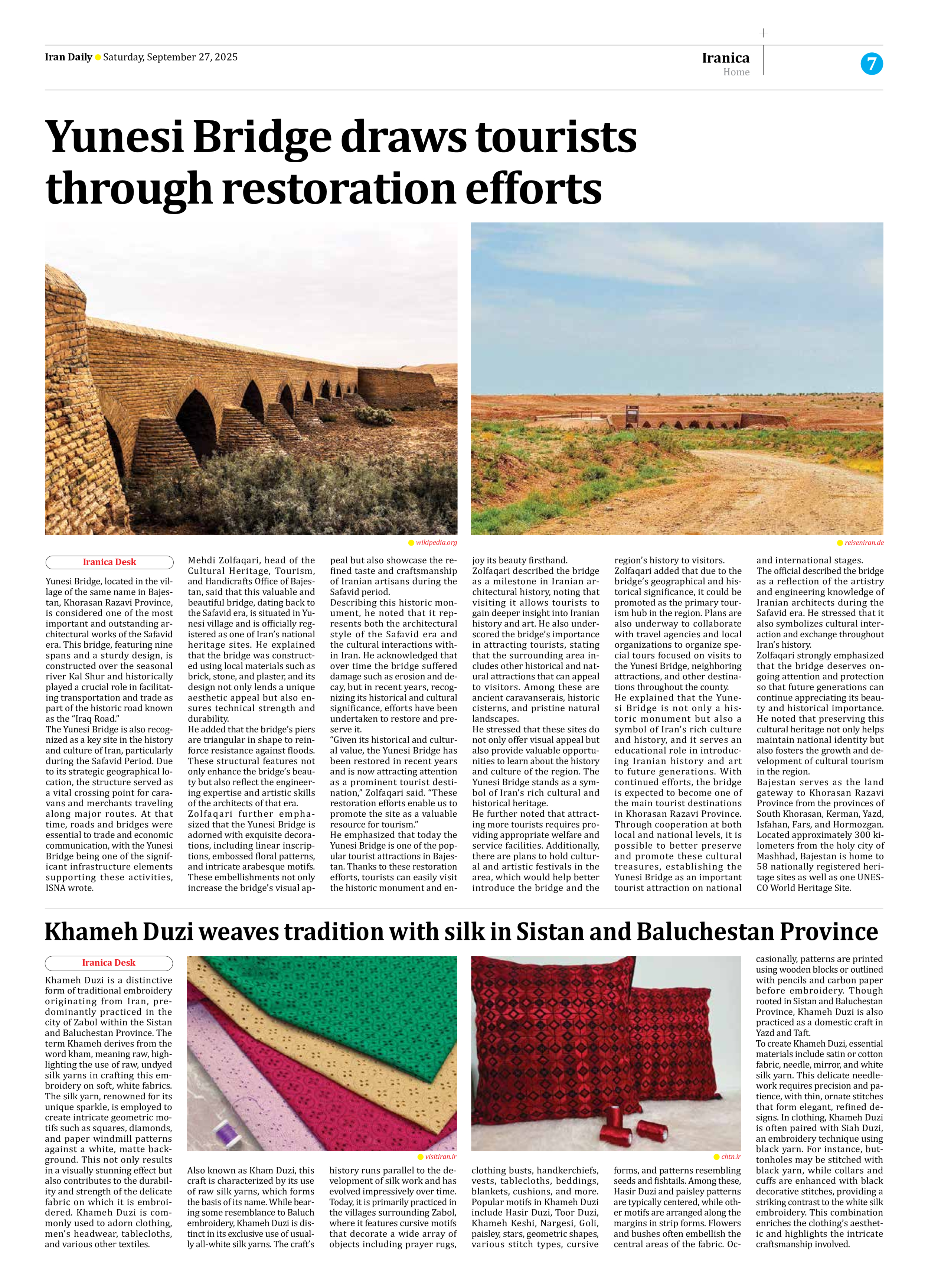
Yunesi Bridge, located in the village of the same name in Bajestan, Khorasan Razavi Province, is considered one of the most important and outstanding architectural works of the Safavid era. This bridge, featuring nine spans and a sturdy design, is constructed over the seasonal river Kal Shur and historically played a crucial role in facilitating transportation and trade as part of the historic road known as the “Iraq Road.”
The Yunesi Bridge is also recognized as a key site in the history and culture of Iran, particularly during the Safavid Period. Due to its strategic geographical location, the structure served as a vital crossing point for caravans and merchants traveling along major routes. At that time, roads and bridges were essential to trade and economic communication, with the Yunesi Bridge being one of the significant infrastructure elements supporting these activities, ISNA wrote.
Mehdi Zolfaqari, head of the Cultural Heritage, Tourism, and Handicrafts Office of Bajestan, said that this valuable and beautiful bridge, dating back to the Safavid era, is situated in Yunesi village and is officially registered as one of Iran’s national heritage sites. He explained that the bridge was constructed using local materials such as brick, stone, and plaster, and its design not only lends a unique aesthetic appeal but also ensures technical strength and durability.
He added that the bridge’s piers are triangular in shape to reinforce resistance against floods. These structural features not only enhance the bridge’s beauty but also reflect the engineering expertise and artistic skills of the architects of that era.
Zolfaqari further emphasized that the Yunesi Bridge is adorned with exquisite decorations, including linear inscriptions, embossed floral patterns, and intricate arabesque motifs. These embellishments not only increase the bridge’s visual appeal but also showcase the refined taste and craftsmanship of Iranian artisans during the Safavid period.
Describing this historic monument, he noted that it represents both the architectural style of the Safavid era and the cultural interactions within Iran. He acknowledged that over time the bridge suffered damage such as erosion and decay, but in recent years, recognizing its historical and cultural significance, efforts have been undertaken to restore and preserve it.
“Given its historical and cultural value, the Yunesi Bridge has been restored in recent years and is now attracting attention as a prominent tourist destination,” Zolfaqari said. “These restoration efforts enable us to promote the site as a valuable resource for tourism.”
He emphasized that today the Yunesi Bridge is one of the popular tourist attractions in Bajestan. Thanks to these restoration efforts, tourists can easily visit the historic monument and enjoy its beauty firsthand.
Zolfaqari described the bridge as a milestone in Iranian architectural history, noting that visiting it allows tourists to gain deeper insight into Iranian history and art. He also underscored the bridge’s importance in attracting tourists, stating that the surrounding area includes other historical and natural attractions that can appeal to visitors. Among these are ancient caravanserais, historic cisterns, and pristine natural landscapes.
He stressed that these sites do not only offer visual appeal but also provide valuable opportunities to learn about the history and culture of the region. The Yunesi Bridge stands as a symbol of Iran’s rich cultural and historical heritage.
He further noted that attracting more tourists requires providing appropriate welfare and service facilities. Additionally, there are plans to hold cultural and artistic festivals in the area, which would help better introduce the bridge and the region’s history to visitors.
Zolfaqari added that due to the bridge’s geographical and historical significance, it could be promoted as the primary tourism hub in the region. Plans are also underway to collaborate with travel agencies and local organizations to organize special tours focused on visits to the Yunesi Bridge, neighboring attractions, and other destinations throughout the county.
He explained that the Yunesi Bridge is not only a historic monument but also a symbol of Iran’s rich culture and history, and it serves an educational role in introducing Iranian history and art to future generations. With continued efforts, the bridge is expected to become one of the main tourist destinations in Khorasan Razavi Province. Through cooperation at both local and national levels, it is possible to better preserve and promote these cultural treasures, establishing the Yunesi Bridge as an important tourist attraction on national and international stages.
The official described the bridge as a reflection of the artistry and engineering knowledge of Iranian architects during the Safavid era. He stressed that it also symbolizes cultural interaction and exchange throughout Iran’s history.
Zolfaqari strongly emphasized that the bridge deserves ongoing attention and protection so that future generations can continue appreciating its beauty and historical importance. He noted that preserving this cultural heritage not only helps maintain national identity but also fosters the growth and development of cultural tourism in the region.
Bajestan serves as the land gateway to Khorasan Razavi Province from the provinces of South Khorasan, Kerman, Yazd, Isfahan, Fars, and Hormozgan. Located approximately 300 kilometers from the holy city of Mashhad, Bajestan is home to 58 nationally registered heritage sites as well as one UNESCO World Heritage Site.