







First Iran-Tajikistan joint feature film unveiled
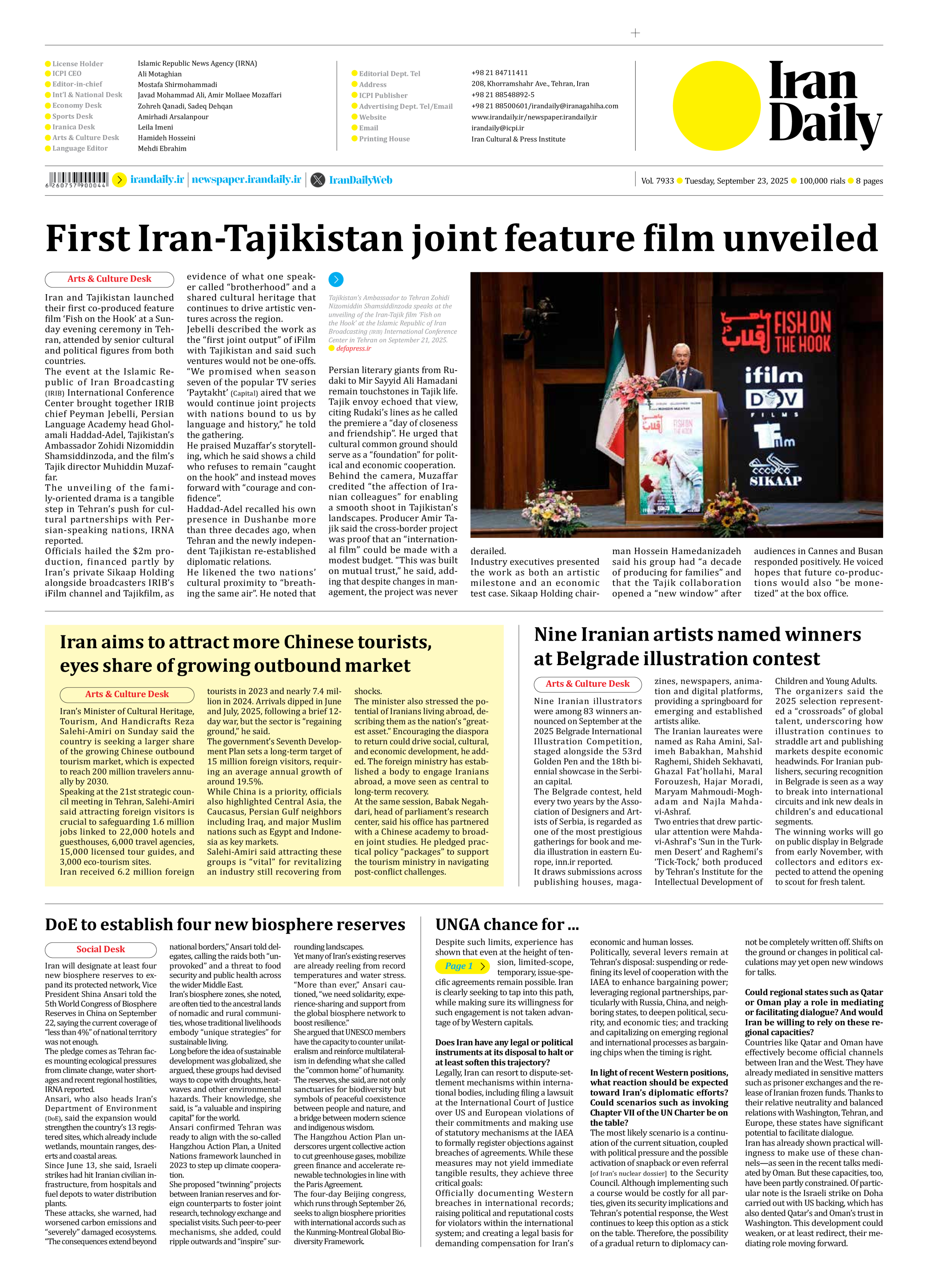
Iran and Tajikistan launched their first co-produced feature film ‘Fish on the Hook’ at a Sunday evening ceremony in Tehran, attended by senior cultural and political figures from both countries.
The event at the Islamic Republic of Iran Broadcasting (IRIB) International Conference Center brought together IRIB chief Peyman Jebelli, Persian Language Academy head Gholamali Haddad-Adel, Tajikistan’s Ambassador Zohidi Nizomiddin Shamsiddinzoda, and the film’s Tajik director Muhiddin Muzaffar.
The unveiling of the family-oriented drama is a tangible step in Tehran’s push for cultural partnerships with Persian-speaking nations, IRNA reported.
Officials hailed the $2m production, financed partly by Iran’s private Sikaap Holding alongside broadcasters IRIB’s iFilm channel and Tajikfilm, as evidence of what one speaker called “brotherhood” and a shared cultural heritage that continues to drive artistic ventures across the region.
Jebelli described the work as the “first joint output” of iFilm with Tajikistan and said such ventures would not be one-offs.
“We promised when season seven of the popular TV series ‘Paytakht’ (Capital) aired that we would continue joint projects with nations bound to us by language and history,” he told the gathering.
He praised Muzaffar’s storytelling, which he said shows a child who refuses to remain “caught on the hook” and instead moves forward with “courage and confidence”.
Haddad-Adel recalled his own presence in Dushanbe more than three decades ago, when Tehran and the newly independent Tajikistan re-established diplomatic relations.
He likened the two nations’ cultural proximity to “breathing the same air”. He noted that Persian literary giants from Rudaki to Mir Sayyid Ali Hamadani remain touchstones in Tajik life.
Tajik envoy echoed that view, citing Rudaki’s lines as he called the premiere a “day of closeness and friendship”. He urged that cultural common ground should serve as a “foundation” for political and economic cooperation.
Behind the camera, Muzaffar credited “the affection of Iranian colleagues” for enabling a smooth shoot in Tajikistan’s landscapes. Producer Amir Tajik said the cross-border project was proof that an “international film” could be made with a modest budget. “This was built on mutual trust,” he said, adding that despite changes in management, the project was never derailed.
Industry executives presented the work as both an artistic milestone and an economic test case. Sikaap Holding chairman Hossein Hamedanizadeh said his group had “a decade of producing for families” and that the Tajik collaboration opened a “new window” after audiences in Cannes and Busan responded positively. He voiced hopes that future co-productions would also “be monetized” at the box office.