







Enjoy rich tradition of Khoresh-e Mast cooking
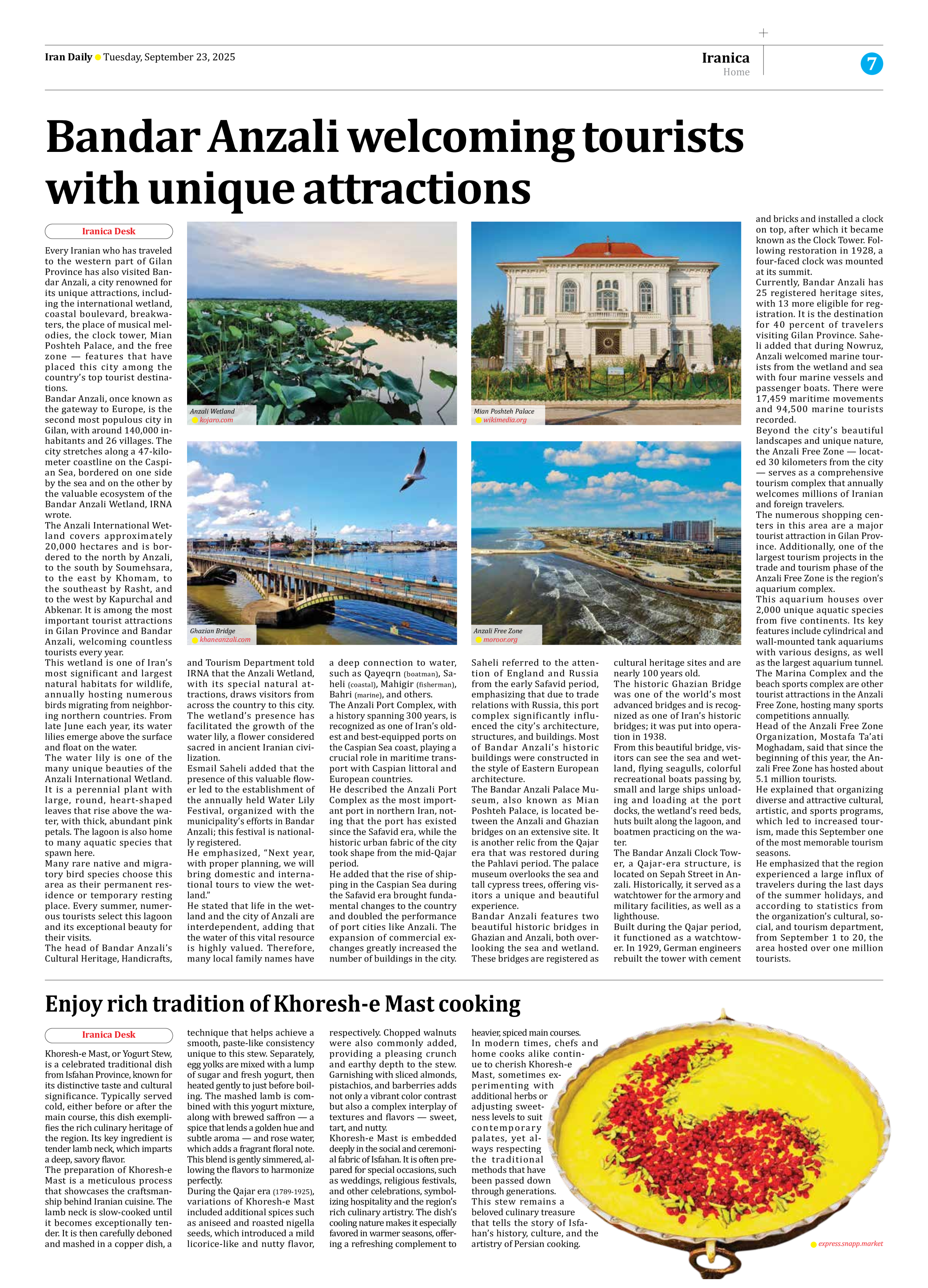
Khoresh-e Mast, or Yogurt Stew, is a celebrated traditional dish from Isfahan Province, known for its distinctive taste and cultural significance. Typically served cold, either before or after the main course, this dish exemplifies the rich culinary heritage of the region. Its key ingredient is tender lamb neck, which imparts a deep, savory flavor.
The preparation of Khoresh-e Mast is a meticulous process that showcases the craftsmanship behind Iranian cuisine. The lamb neck is slow-cooked until it becomes exceptionally tender. It is then carefully deboned and mashed in a copper dish, a technique that helps achieve a smooth, paste-like consistency unique to this stew. Separately, egg yolks are mixed with a lump of sugar and fresh yogurt, then heated gently to just before boiling. The mashed lamb is combined with this yogurt mixture, along with brewed saffron — a spice that lends a golden hue and subtle aroma — and rose water, which adds a fragrant floral note. This blend is gently simmered, allowing the flavors to harmonize perfectly.
During the Qajar era (1789-1925), variations of Khoresh-e Mast included additional spices such as aniseed and roasted nigella seeds, which introduced a mild licorice-like and nutty flavor, respectively. Chopped walnuts were also commonly added, providing a pleasing crunch and earthy depth to the stew. Garnishing with sliced almonds, pistachios, and barberries adds not only a vibrant color contrast but also a complex interplay of textures and flavors — sweet, tart, and nutty.
Khoresh-e Mast is embedded deeply in the social and ceremonial fabric of Isfahan. It is often prepared for special occasions, such as weddings, religious festivals, and other celebrations, symbolizing hospitality and the region’s rich culinary artistry. The dish’s cooling nature makes it especially favored in warmer seasons, offering a refreshing complement to heavier, spiced main courses.
In modern times, chefs and home cooks alike continue to cherish Khoresh-e Mast, sometimes experimenting with additional herbs or adjusting sweetness levels to suit contemporary palates, yet always respecting the traditional methods that have been passed down through generations. This stew remains a beloved culinary treasure that tells the story of Isfahan’s history, culture, and the artistry of Persian cooking.