







VP urges transparency, safeguards for national data
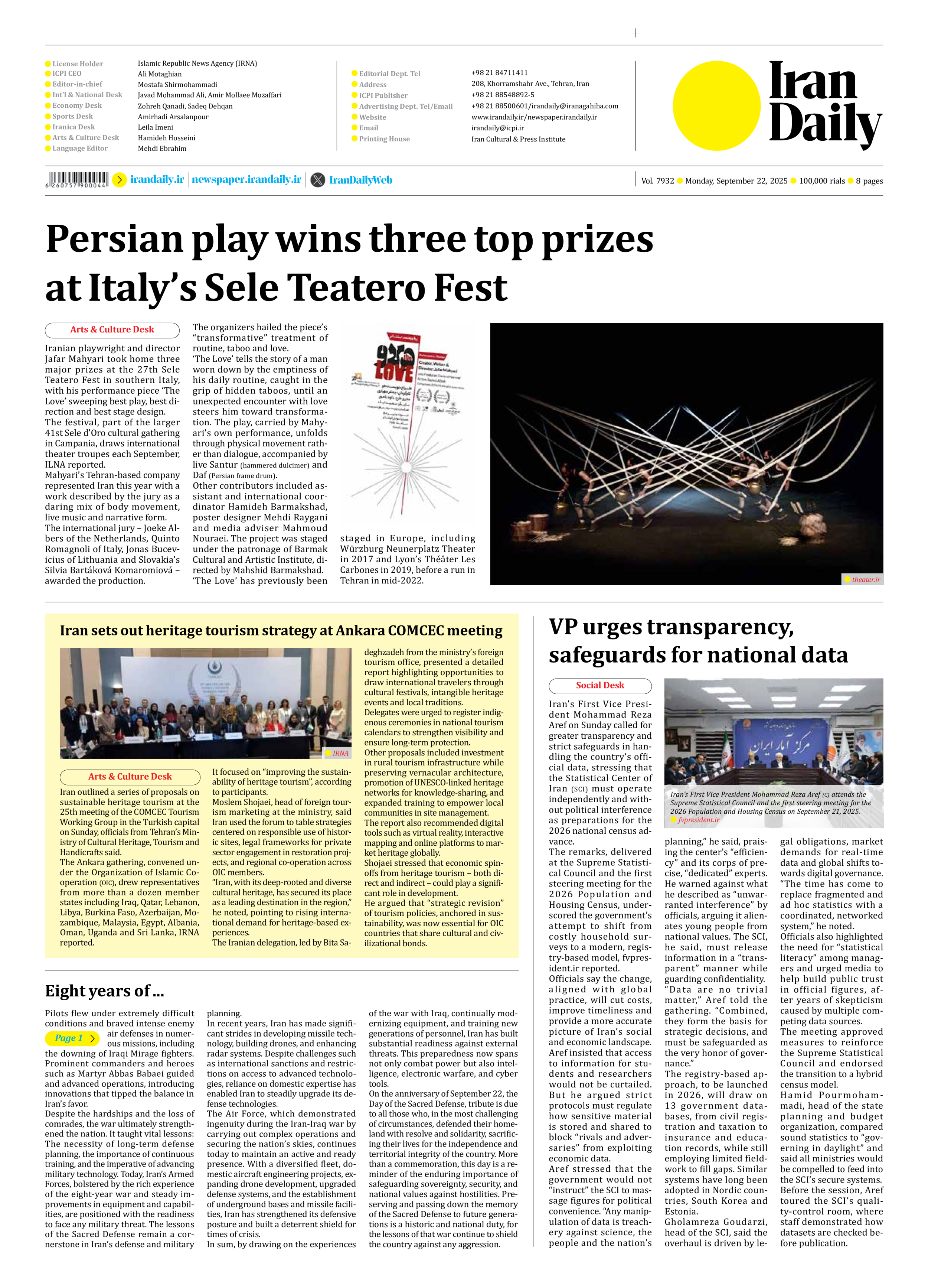
Iran’s First Vice President Mohammad Reza Aref on Sunday called for greater transparency and strict safeguards in handling the country’s official data, stressing that the Statistical Center of Iran (SCI) must operate independently and without political interference as preparations for the 2026 national census advance.
The remarks, delivered at the Supreme Statistical Council and the first steering meeting for the 2026 Population and Housing Census, underscored the government’s attempt to shift from costly household surveys to a modern, registry-based model, fvpresident.ir reported.
Officials say the change, aligned with global practice, will cut costs, improve timeliness and provide a more accurate picture of Iran’s social and economic landscape.
Aref insisted that access to information for students and researchers would not be curtailed. But he argued strict protocols must regulate how sensitive material is stored and shared to block “rivals and adversaries” from exploiting economic data.
Aref stressed that the government would not “instruct” the SCI to massage figures for political convenience. “Any manipulation of data is treachery against science, the people and the nation’s planning,” he said, praising the center’s “efficiency” and its corps of precise, “dedicated” experts.
He warned against what he described as “unwarranted interference” by officials, arguing it alienates young people from national values. The SCI, he said, must release information in a “transparent” manner while guarding confidentiality.
“Data are no trivial matter,” Aref told the gathering. “Combined, they form the basis for strategic decisions, and must be safeguarded as the very honor of governance.”
The registry-based approach, to be launched in 2026, will draw on 13 government databases, from civil registration and taxation to insurance and education records, while still employing limited fieldwork to fill gaps. Similar systems have long been adopted in Nordic countries, South Korea and Estonia.
Gholamreza Goudarzi, head of the SCI, said the overhaul is driven by legal obligations, market demands for real-time data and global shifts towards digital governance.
“The time has come to replace fragmented and ad hoc statistics with a coordinated, networked system,” he noted.
Officials also highlighted the need for “statistical literacy” among managers and urged media to help build public trust in official figures, after years of skepticism caused by multiple competing data sources.
The meeting approved measures to reinforce the Supreme Statistical Council and endorsed the transition to a hybrid census model.
Hamid Pourmohammadi, head of the state planning and budget organization, compared sound statistics to “governing in daylight” and said all ministries would be compelled to feed into the SCI’s secure systems.
Before the session, Aref toured the SCI’s quality-control room, where staff demonstrated how datasets are checked before publication.