





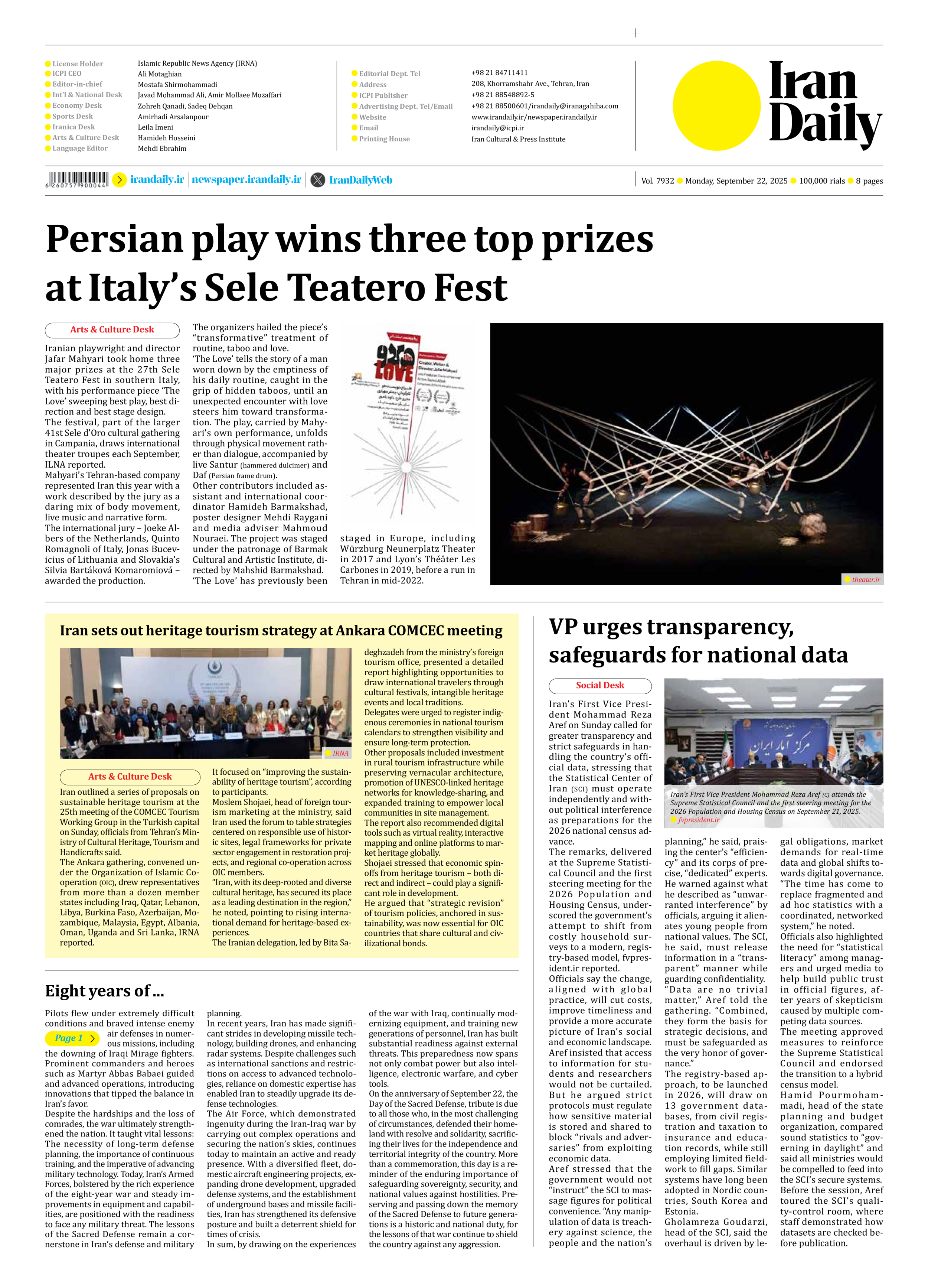


Iran sets out heritage tourism strategy at Ankara COMCEC meeting
Iran outlined a series of proposals on sustainable heritage tourism at the 25th meeting of the COMCEC Tourism Working Group in the Turkish capital on Sunday, officials from Tehran’s Ministry of Cultural Heritage, Tourism and Handicrafts said.
The Ankara gathering, convened under the Organization of Islamic Cooperation (OIC), drew representatives from more than a dozen member states including Iraq, Qatar, Lebanon, Libya, Burkina Faso, Azerbaijan, Mozambique, Malaysia, Egypt, Albania, Oman, Uganda and Sri Lanka, IRNA reported.
It focused on “improving the sustainability of heritage tourism”, according to participants.
Moslem Shojaei, head of foreign tourism marketing at the ministry, said Iran used the forum to table strategies centered on responsible use of historic sites, legal frameworks for private sector engagement in restoration projects, and regional co-operation across OIC members.
“Iran, with its deep-rooted and diverse cultural heritage, has secured its place as a leading destination in the region,” he noted, pointing to rising international demand for heritage-based experiences.
The Iranian delegation, led by Bita Sadeghzadeh from the ministry’s foreign tourism office, presented a detailed report highlighting opportunities to draw international travelers through cultural festivals, intangible heritage events and local traditions.
Delegates were urged to register indigenous ceremonies in national tourism calendars to strengthen visibility and ensure long-term protection.
Other proposals included investment in rural tourism infrastructure while preserving vernacular architecture, promotion of UNESCO-linked heritage networks for knowledge-sharing, and expanded training to empower local communities in site management.
The report also recommended digital tools such as virtual reality, interactive mapping and online platforms to market heritage globally.
Shojaei stressed that economic spin-offs from heritage tourism – both direct and indirect – could play a significant role in development.
He argued that “strategic revision” of tourism policies, anchored in sustainability, was now essential for OIC countries that share cultural and civilizational bonds.