







Khal’at Pooshan Tower embodies ceremonial monument
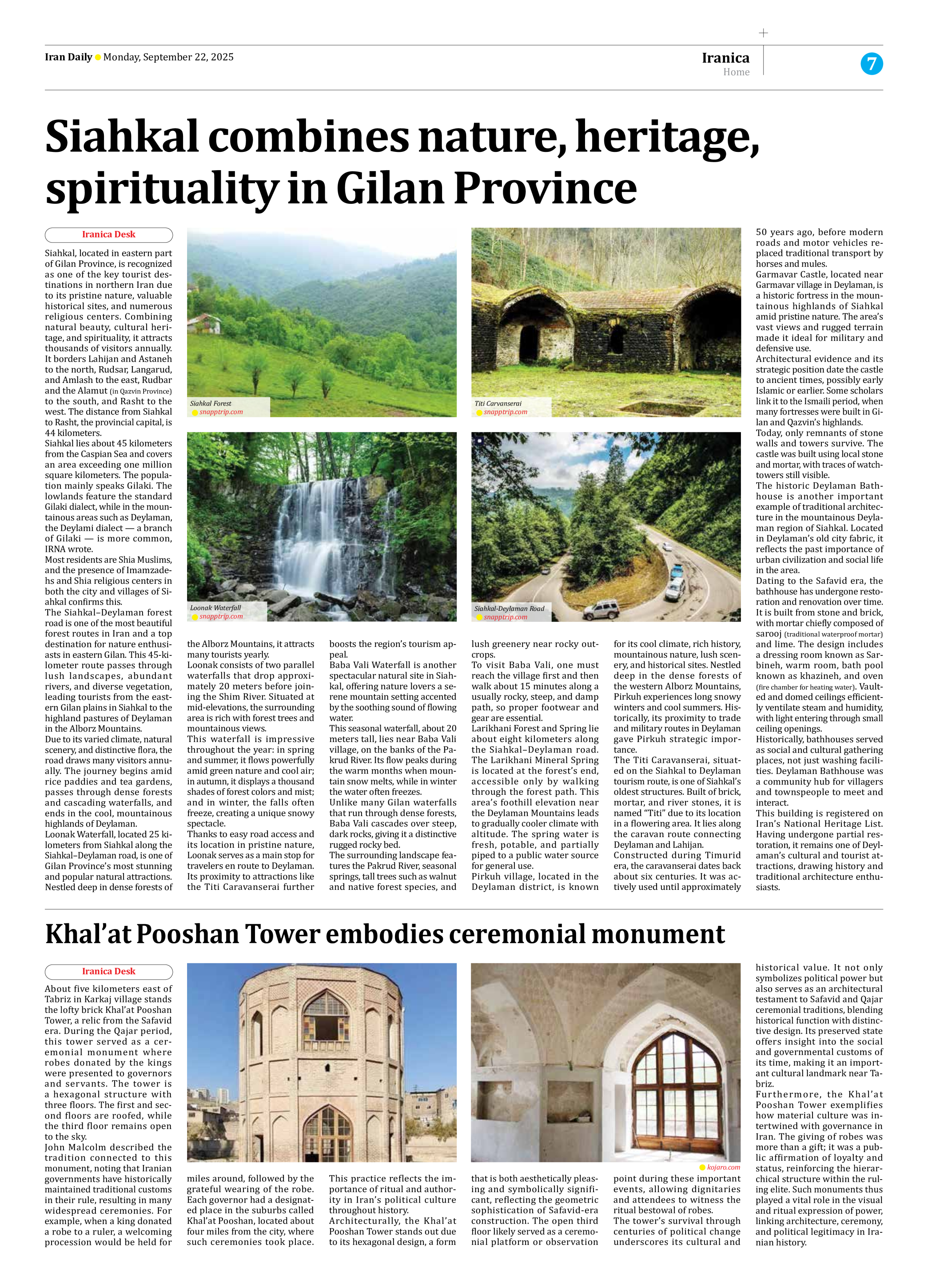
About five kilometers east of Tabriz in Karkaj village stands the lofty brick Khal’at Pooshan Tower, a relic from the Safavid era. During the Qajar period, this tower served as a ceremonial monument where robes donated by the kings were presented to governors and servants. The tower is a hexagonal structure with three floors. The first and second floors are roofed, while the third floor remains open to the sky.
John Malcolm described the tradition connected to this monument, noting that Iranian governments have historically maintained traditional customs in their rule, resulting in many widespread ceremonies. For example, when a king donated a robe to a ruler, a welcoming procession would be held for miles around, followed by the grateful wearing of the robe. Each governor had a designated place in the suburbs called Khal’at Pooshan, located about four miles from the city, where such ceremonies took place. This practice reflects the importance of ritual and authority in Iran’s political culture throughout history.
Architecturally, the Khal’at Pooshan Tower stands out due to its hexagonal design, a form that is both aesthetically pleasing and symbolically significant, reflecting the geometric sophistication of Safavid-era construction. The open third floor likely served as a ceremonial platform or observation point during these important events, allowing dignitaries and attendees to witness the ritual bestowal of robes.
The tower’s survival through centuries of political change underscores its cultural and historical value. It not only symbolizes political power but also serves as an architectural testament to Safavid and Qajar ceremonial traditions, blending historical function with distinctive design. Its preserved state offers insight into the social and governmental customs of its time, making it an important cultural landmark near Tabriz.
Furthermore, the Khal’at Pooshan Tower exemplifies how material culture was intertwined with governance in Iran. The giving of robes was more than a gift; it was a public affirmation of loyalty and status, reinforcing the hierarchical structure within the ruling elite. Such monuments thus played a vital role in the visual and ritual expression of power, linking architecture, ceremony, and political legitimacy in Iranian history.