







Gemstone mines fuel jewelry craftsmanship in Mashhad
There are many gemstone mines in Mashhad, the capital of Khorasan Razavi Province, and in its surrounding cities. This abundance is a major reason why one of the province’s prospering handicrafts is jewelry made from gemstones, also known as “Mekhraj Kari.”
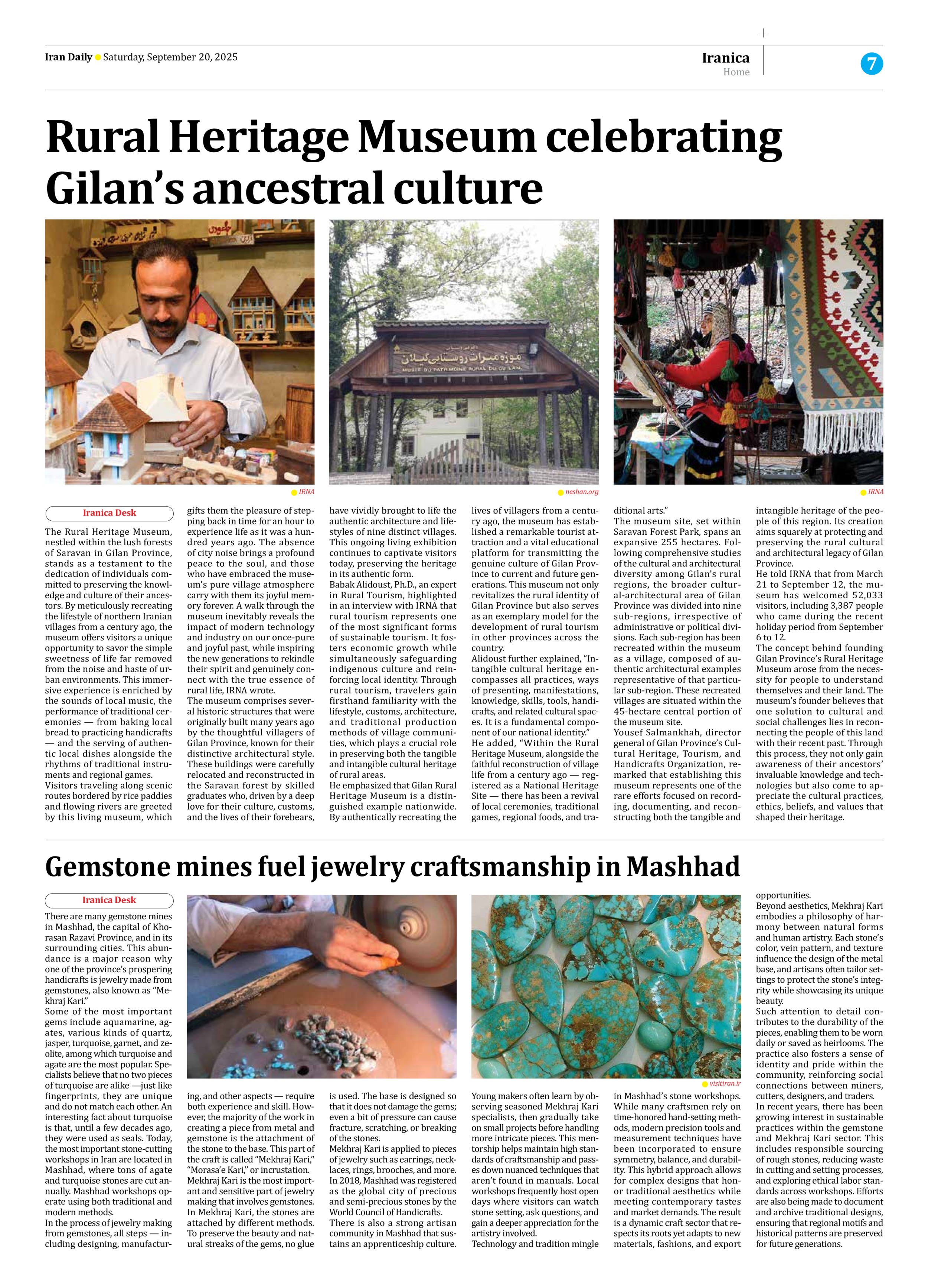
Some of the most important gems include aquamarine, agates, various kinds of quartz, jasper, turquoise, garnet, and zeolite, among which turquoise and agate are the most popular. Specialists believe that no two pieces of turquoise are alike —just like fingerprints, they are unique and do not match each other. An interesting fact about turquoise is that, until a few decades ago, they were used as seals. Today, the most important stone-cutting workshops in Iran are located in Mashhad, where tons of agate and turquoise stones are cut annually. Mashhad workshops operate using both traditional and modern methods.
In the process of jewelry making from gemstones, all steps — including designing, manufacturing, and other aspects — require both experience and skill. However, the majority of the work in creating a piece from metal and gemstone is the attachment of the stone to the base. This part of the craft is called “Mekhraj Kari,” “Morasa’e Kari,” or incrustation.
Mekhraj Kari is the most important and sensitive part of jewelry making that involves gemstones. In Mekhraj Kari, the stones are attached by different methods. To preserve the beauty and natural streaks of the gems, no glue is used. The base is designed so that it does not damage the gems; even a bit of pressure can cause fracture, scratching, or breaking of the stones.
Mekhraj Kari is applied to pieces of jewelry such as earrings, necklaces, rings, brooches, and more. In 2018, Mashhad was registered as the global city of precious and semi-precious stones by the World Council of Handicrafts.
There is also a strong artisan community in Mashhad that sustains an apprenticeship culture. Young makers often learn by observing seasoned Mekhraj Kari specialists, then gradually take on small projects before handling more intricate pieces. This mentorship helps maintain high standards of craftsmanship and passes down nuanced techniques that aren’t found in manuals. Local workshops frequently host open days where visitors can watch stone setting, ask questions, and gain a deeper appreciation for the artistry involved.
Technology and tradition mingle in Mashhad’s stone workshops. While many craftsmen rely on time-honored hand-setting methods, modern precision tools and measurement techniques have been incorporated to ensure symmetry, balance, and durability. This hybrid approach allows for complex designs that honor traditional aesthetics while meeting contemporary tastes and market demands. The result is a dynamic craft sector that respects its roots yet adapts to new materials, fashions, and export opportunities.
Beyond aesthetics, Mekhraj Kari embodies a philosophy of harmony between natural forms and human artistry. Each stone’s color, vein pattern, and texture influence the design of the metal base, and artisans often tailor settings to protect the stone’s integrity while showcasing its unique beauty.
Such attention to detail contributes to the durability of the pieces, enabling them to be worn daily or saved as heirlooms. The practice also fosters a sense of identity and pride within the community, reinforcing social connections between miners, cutters, designers, and traders.
In recent years, there has been growing interest in sustainable practices within the gemstone and Mekhraj Kari sector. This includes responsible sourcing of rough stones, reducing waste in cutting and setting processes, and exploring ethical labor standards across workshops. Efforts are also being made to document and archive traditional designs, ensuring that regional motifs and historical patterns are preserved for future generations.