







Rural Heritage Museum celebrating Gilan’s ancestral culture
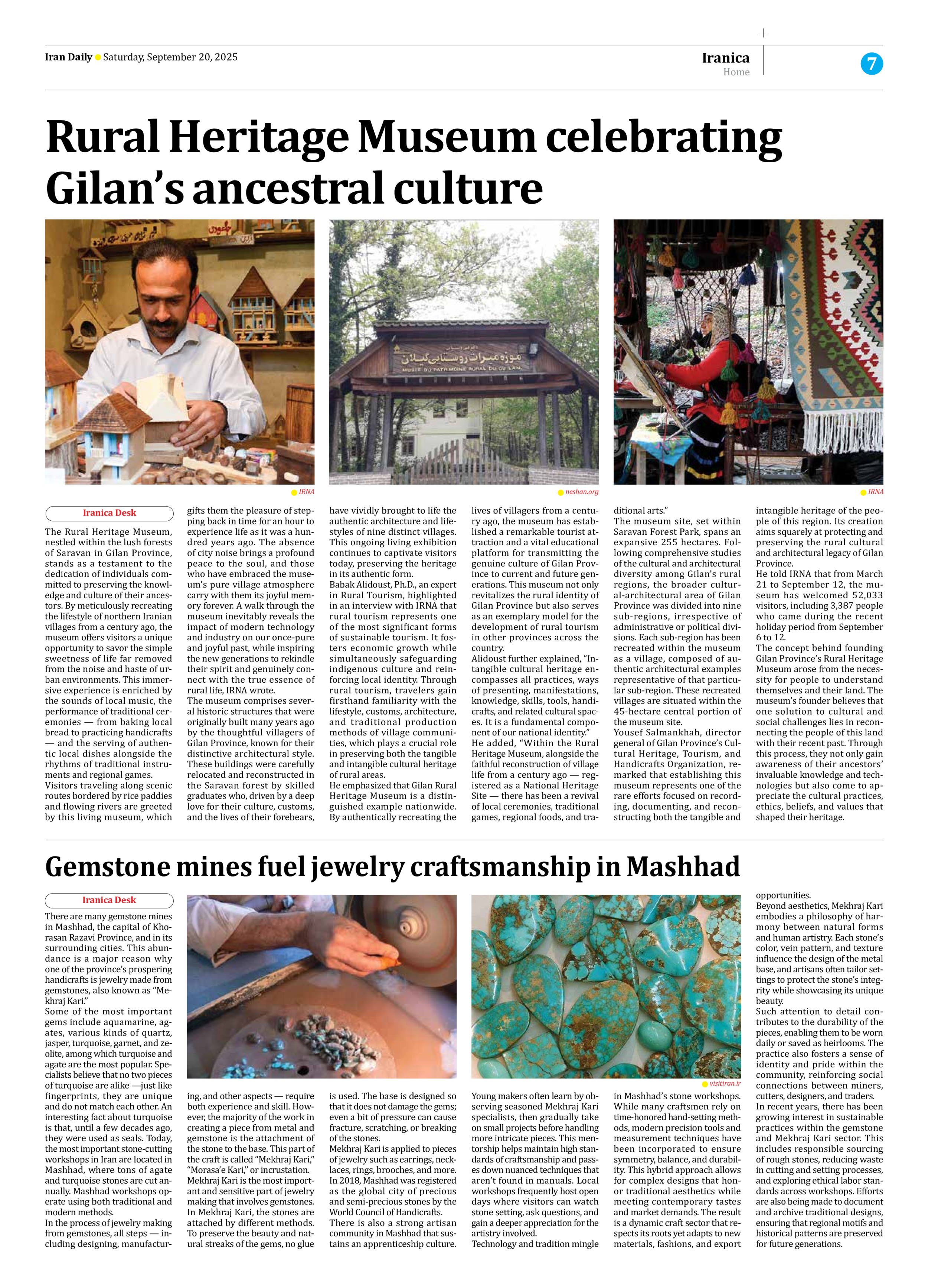
The Rural Heritage Museum, nestled within the lush forests of Saravan in Gilan Province, stands as a testament to the dedication of individuals committed to preserving the knowledge and culture of their ancestors. By meticulously recreating the lifestyle of northern Iranian villages from a century ago, the museum offers visitors a unique opportunity to savor the simple sweetness of life far removed from the noise and haste of urban environments. This immersive experience is enriched by the sounds of local music, the performance of traditional ceremonies — from baking local bread to practicing handicrafts — and the serving of authentic local dishes alongside the rhythms of traditional instruments and regional games.
Visitors traveling along scenic routes bordered by rice paddies and flowing rivers are greeted by this living museum, which gifts them the pleasure of stepping back in time for an hour to experience life as it was a hundred years ago. The absence of city noise brings a profound peace to the soul, and those who have embraced the museum’s pure village atmosphere carry with them its joyful memory forever. A walk through the museum inevitably reveals the impact of modern technology and industry on our once-pure and joyful past, while inspiring the new generations to rekindle their spirit and genuinely connect with the true essence of rural life, IRNA wrote.
The museum comprises several historic structures that were originally built many years ago by the thoughtful villagers of Gilan Province, known for their distinctive architectural style. These buildings were carefully relocated and reconstructed in the Saravan forest by skilled graduates who, driven by a deep love for their culture, customs, and the lives of their forebears, have vividly brought to life the authentic architecture and lifestyles of nine distinct villages. This ongoing living exhibition continues to captivate visitors today, preserving the heritage in its authentic form.
Babak Alidoust, Ph.D., an expert in Rural Tourism, highlighted in an interview with IRNA that rural tourism represents one of the most significant forms of sustainable tourism. It fosters economic growth while simultaneously safeguarding indigenous culture and reinforcing local identity. Through rural tourism, travelers gain firsthand familiarity with the lifestyle, customs, architecture, and traditional production methods of village communities, which plays a crucial role in preserving both the tangible and intangible cultural heritage of rural areas.
He emphasized that Gilan Rural Heritage Museum is a distinguished example nationwide. By authentically recreating the lives of villagers from a century ago, the museum has established a remarkable tourist attraction and a vital educational platform for transmitting the genuine culture of Gilan Province to current and future generations. This museum not only revitalizes the rural identity of Gilan Province but also serves as an exemplary model for the development of rural tourism in other provinces across the country.
Alidoust further explained, “Intangible cultural heritage encompasses all practices, ways of presenting, manifestations, knowledge, skills, tools, handicrafts, and related cultural spaces. It is a fundamental component of our national identity.”
He added, “Within the Rural Heritage Museum, alongside the faithful reconstruction of village life from a century ago — registered as a National Heritage Site — there has been a revival of local ceremonies, traditional games, regional foods, and traditional arts.”
The museum site, set within Saravan Forest Park, spans an expansive 255 hectares. Following comprehensive studies of the cultural and architectural diversity among Gilan’s rural regions, the broader cultural-architectural area of Gilan Province was divided into nine sub-regions, irrespective of administrative or political divisions. Each sub-region has been recreated within the museum as a village, composed of authentic architectural examples representative of that particular sub-region. These recreated villages are situated within the 45-hectare central portion of the museum site.
Yousef Salmankhah, director general of Gilan Province’s Cultural Heritage, Tourism, and Handicrafts Organization, remarked that establishing this museum represents one of the rare efforts focused on recording, documenting, and reconstructing both the tangible and intangible heritage of the people of this region. Its creation aims squarely at protecting and preserving the rural cultural and architectural legacy of Gilan Province.
He told IRNA that from March 21 to September 12, the museum has welcomed 52,033 visitors, including 3,387 people who came during the recent holiday period from September 6 to 12.
The concept behind founding Gilan Province’s Rural Heritage Museum arose from the necessity for people to understand themselves and their land. The museum’s founder believes that one solution to cultural and social challenges lies in reconnecting the people of this land with their recent past. Through this process, they not only gain awareness of their ancestors’ invaluable knowledge and technologies but also come to appreciate the cultural practices, ethics, beliefs, and values that shaped their heritage.