







Felt makers of South Khorasan secure place in Iran’s cultural heritage
The sturdy felt products, skillfully shaped by the strong hands of the felt makers, and the delicate, ornate hats that the women of Chenesht village sew with great care and patience, have both been officially registered today as intangible heritage of South Khorasan Province on Iran’s Intangible Cultural Heritage list. These invaluable treasures narrate an ancient story of the art, the way of life, and the cultural identity of the people of this land.
Fariba Kaheni, a heritage registration expert from South Khorasan Province, explained in an interview with ISNA about these two traditional Iranian arts, “The art of felt making and the traditional skill of making Keluteh (a type of traditional hat) have been nationally registered as two authentic and significant expressions of South Khorasan. Each of these distinguished skills is deeply rooted in the history, culture, and everyday life of the people of this region and represents an essential part of the local identity and the artistic creativity of the local people.
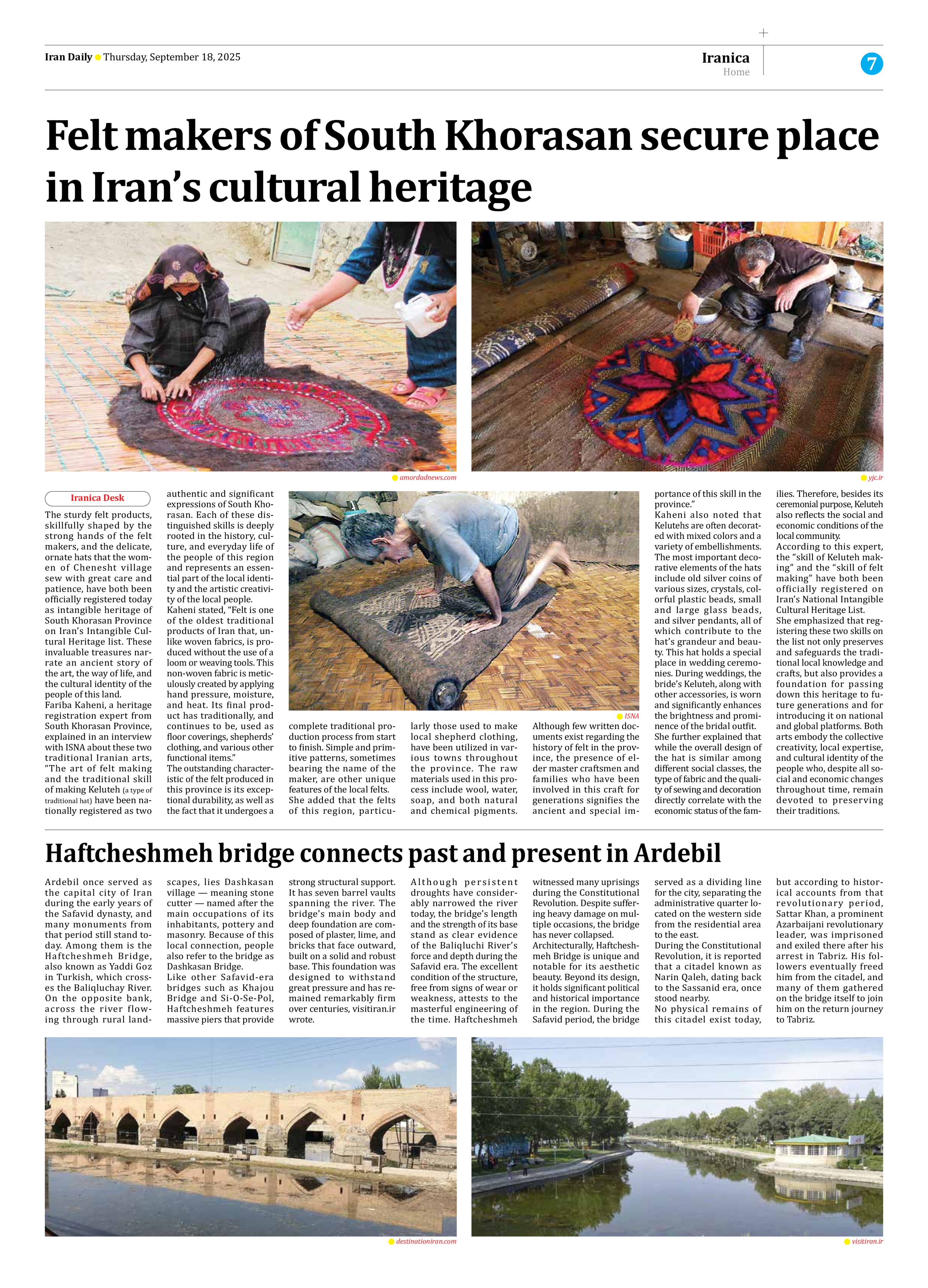
Kaheni stated, “Felt is one of the oldest traditional products of Iran that, unlike woven fabrics, is produced without the use of a loom or weaving tools. This non-woven fabric is meticulously created by applying hand pressure, moisture, and heat. Its final product has traditionally, and continues to be, used as floor coverings, shepherds’ clothing, and various other functional items.”
The outstanding characteristic of the felt produced in this province is its exceptional durability, as well as the fact that it undergoes a complete traditional production process from start to finish. Simple and primitive patterns, sometimes bearing the name of the maker, are other unique features of the local felts.
She added that the felts of this region, particularly those used to make local shepherd clothing, have been utilized in various towns throughout the province. The raw materials used in this process include wool, water, soap, and both natural and chemical pigments. Although few written documents exist regarding the history of felt in the province, the presence of elder master craftsmen and families who have been involved in this craft for generations signifies the ancient and special importance of this skill in the province.”
Kaheni also noted that Kelutehs are often decorated with mixed colors and a variety of embellishments. The most important decorative elements of the hats include old silver coins of various sizes, crystals, colorful plastic beads, small and large glass beads, and silver pendants, all of which contribute to the hat’s grandeur and beauty. This hat holds a special place in wedding ceremonies. During weddings, the bride’s Keluteh, along with other accessories, is worn and significantly enhances the brightness and prominence of the bridal outfit.
She further explained that while the overall design of the hat is similar among different social classes, the type of fabric and the quality of sewing and decoration directly correlate with the economic status of the families. Therefore, besides its ceremonial purpose, Keluteh also reflects the social and economic conditions of the local community.
According to this expert, the “skill of Keluteh making” and the “skill of felt making” have both been officially registered on Iran’s National Intangible Cultural Heritage List.
She emphasized that registering these two skills on the list not only preserves and safeguards the traditional local knowledge and crafts, but also provides a foundation for passing down this heritage to future generations and for introducing it on national and global platforms. Both arts embody the collective creativity, local expertise, and cultural identity of the people who, despite all social and economic changes throughout time, remain devoted to preserving their traditions.