







Enduring craft of woodturning in Iran
Woodturning, known in Persian as Kharrati, is a traditional handicraft of Iran in which a piece of wood is cut using a horizontal cutting machine. In fact, woodturning is the art-craft of cutting and shaping the wood by its rotation in the lathe machine. Kharrati is an Arabic word and its root is “khart” which according to the Dehkhoda word encyclopedia means cutting and smoothing of the wood. In regard to the history of woodturning, it should be mentioned that there are reliefs of throne, royal stool and censer in the remaining of Persepolis that indicate the craft of woodturning. Jean Chardin, the famous French traveler, was touched by the skills of the Iranian wood turners, saying, “The craft of woodturning is a mechanical art in which the Iranians has successfully prospered.”
The primary material of woodturning is white poplar wood. But other kinds of wood are also used. High density and strength of the wood makes it possible for finer and more durable products to be made.
After White poplar, Walnut, Alder, European ash, White Willow, Plane, Mesquites, Pear and Maple are mostly used. In Dezful, the woodturning artists use the wood from a kind of local tree.
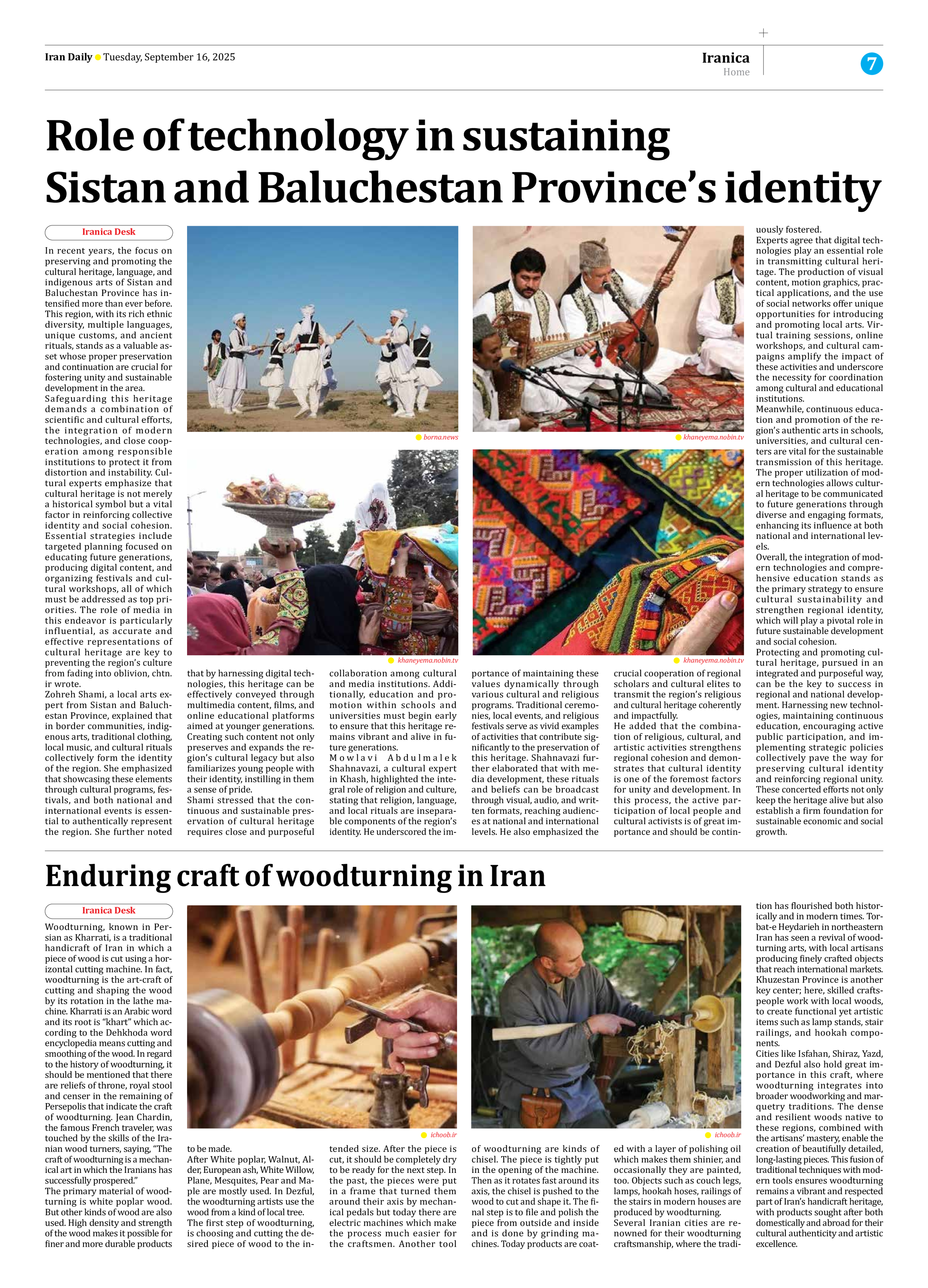
The first step of woodturning, is choosing and cutting the desired piece of wood to the intended size. After the piece is cut, it should be completely dry to be ready for the next step. In the past, the pieces were put in a frame that turned them around their axis by mechanical pedals but today there are electric machines which make the process much easier for the craftsmen. Another tool of woodturning are kinds of chisel. The piece is tightly put in the opening of the machine. Then as it rotates fast around its axis, the chisel is pushed to the wood to cut and shape it. The final step is to file and polish the piece from outside and inside and is done by grinding machines. Today products are coated with a layer of polishing oil which makes them shinier, and occasionally they are painted, too. Objects such as couch legs, lamps, hookah hoses, railings of the stairs in modern houses are produced by woodturning.
Several Iranian cities are renowned for their woodturning craftsmanship, where the tradition has flourished both historically and in modern times. Torbat-e Heydarieh in northeastern Iran has seen a revival of woodturning arts, with local artisans producing finely crafted objects that reach international markets.
Khuzestan Province is another key center; here, skilled craftspeople work with local woods, to create functional yet artistic items such as lamp stands, stair railings, and hookah components.
Cities like Isfahan, Shiraz, Yazd, and Dezful also hold great importance in this craft, where woodturning integrates into broader woodworking and marquetry traditions. The dense and resilient woods native to these regions, combined with the artisans’ mastery, enable the creation of beautifully detailed, long-lasting pieces. This fusion of traditional techniques with modern tools ensures woodturning remains a vibrant and respected part of Iran’s handicraft heritage, with products sought after both domestically and abroad for their cultural authenticity and artistic excellence.