







Role of technology in sustaining Sistan and Baluchestan Province’s identity
In recent years, the focus on preserving and promoting the cultural heritage, language, and indigenous arts of Sistan and Baluchestan Province has intensified more than ever before. This region, with its rich ethnic diversity, multiple languages, unique customs, and ancient rituals, stands as a valuable asset whose proper preservation and continuation are crucial for fostering unity and sustainable development in the area.
Safeguarding this heritage demands a combination of scientific and cultural efforts, the integration of modern technologies, and close cooperation among responsible institutions to protect it from distortion and instability. Cultural experts emphasize that cultural heritage is not merely a historical symbol but a vital factor in reinforcing collective identity and social cohesion. Essential strategies include targeted planning focused on educating future generations, producing digital content, and organizing festivals and cultural workshops, all of which must be addressed as top priorities. The role of media in this endeavor is particularly influential, as accurate and effective representations of cultural heritage are key to preventing the region’s culture from fading into oblivion, chtn.ir wrote.
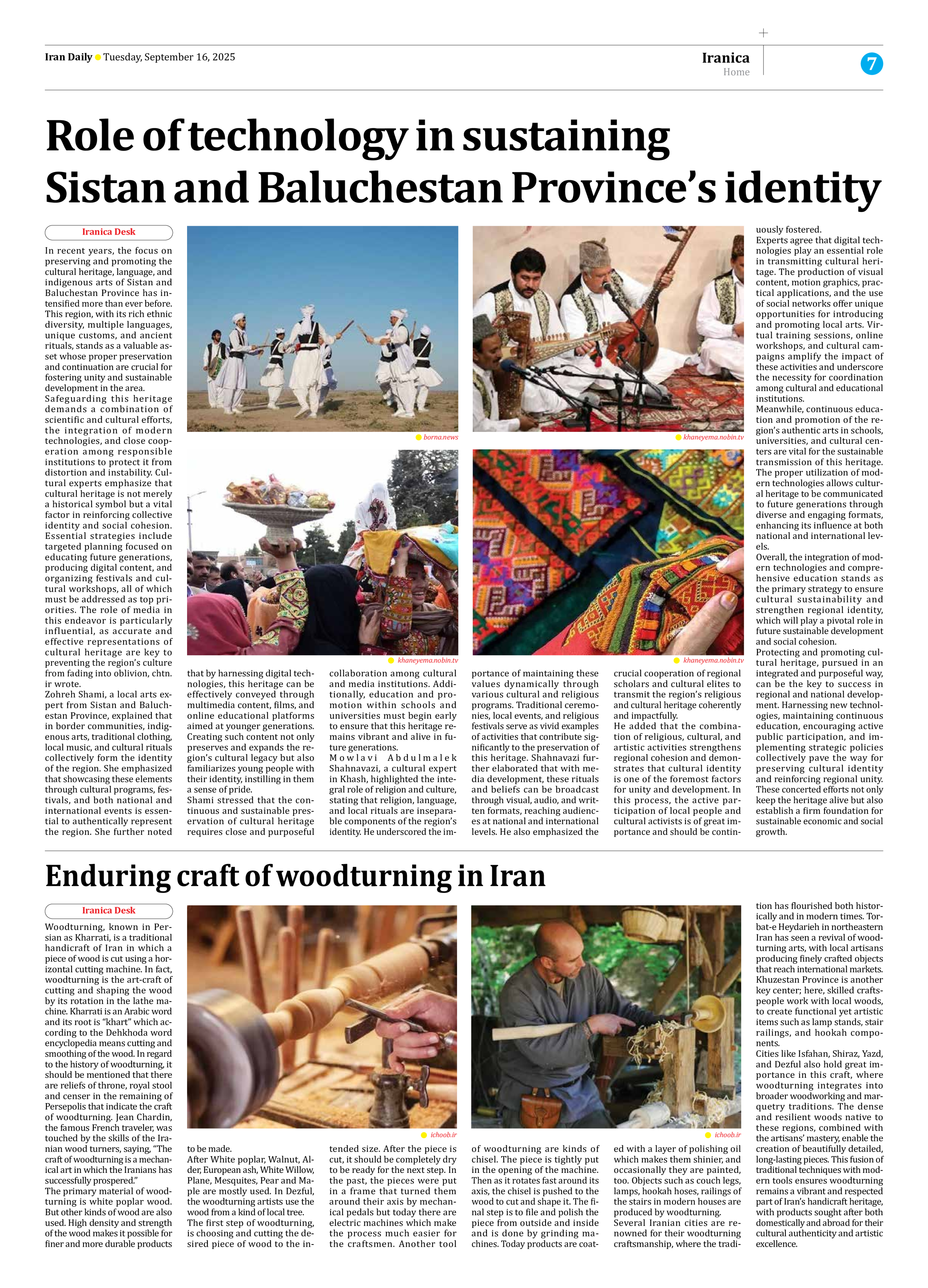
Zohreh Shami, a local arts expert from Sistan and Baluchestan Province, explained that in border communities, indigenous arts, traditional clothing, local music, and cultural rituals collectively form the identity of the region. She emphasized that showcasing these elements through cultural programs, festivals, and both national and international events is essential to authentically represent the region. She further noted that by harnessing digital technologies, this heritage can be effectively conveyed through multimedia content, films, and online educational platforms aimed at younger generations. Creating such content not only preserves and expands the region’s cultural legacy but also familiarizes young people with their identity, instilling in them a sense of pride.
Shami stressed that the continuous and sustainable preservation of cultural heritage requires close and purposeful collaboration among cultural and media institutions. Additionally, education and promotion within schools and universities must begin early to ensure that this heritage remains vibrant and alive in future generations.
Mowlavi Abdulmalek Shahnavazi, a cultural expert in Khash, highlighted the integral role of religion and culture, stating that religion, language, and local rituals are inseparable components of the region’s identity. He underscored the importance of maintaining these values dynamically through various cultural and religious programs. Traditional ceremonies, local events, and religious festivals serve as vivid examples of activities that contribute significantly to the preservation of this heritage. Shahnavazi further elaborated that with media development, these rituals and beliefs can be broadcast through visual, audio, and written formats, reaching audiences at national and international levels. He also emphasized the crucial cooperation of regional scholars and cultural elites to transmit the region’s religious and cultural heritage coherently and impactfully.
He added that the combination of religious, cultural, and artistic activities strengthens regional cohesion and demonstrates that cultural identity is one of the foremost factors for unity and development. In this process, the active participation of local people and cultural activists is of great importance and should be continuously fostered.
Experts agree that digital technologies play an essential role in transmitting cultural heritage. The production of visual content, motion graphics, practical applications, and the use of social networks offer unique opportunities for introducing and promoting local arts. Virtual training sessions, online workshops, and cultural campaigns amplify the impact of these activities and underscore the necessity for coordination among cultural and educational institutions.
Meanwhile, continuous education and promotion of the region’s authentic arts in schools, universities, and cultural centers are vital for the sustainable transmission of this heritage. The proper utilization of modern technologies allows cultural heritage to be communicated to future generations through diverse and engaging formats, enhancing its influence at both national and international levels.
Overall, the integration of modern technologies and comprehensive education stands as the primary strategy to ensure cultural sustainability and strengthen regional identity, which will play a pivotal role in future sustainable development and social cohesion.
Protecting and promoting cultural heritage, pursued in an integrated and purposeful way, can be the key to success in regional and national development. Harnessing new technologies, maintaining continuous education, encouraging active public participation, and implementing strategic policies collectively pave the way for preserving cultural identity and reinforcing regional unity. These concerted efforts not only keep the heritage alive but also establish a firm foundation for sustainable economic and social growth.