







Copy in clipboard...
Snapback sanctions manageable, of limited consequence: Parliamentary report
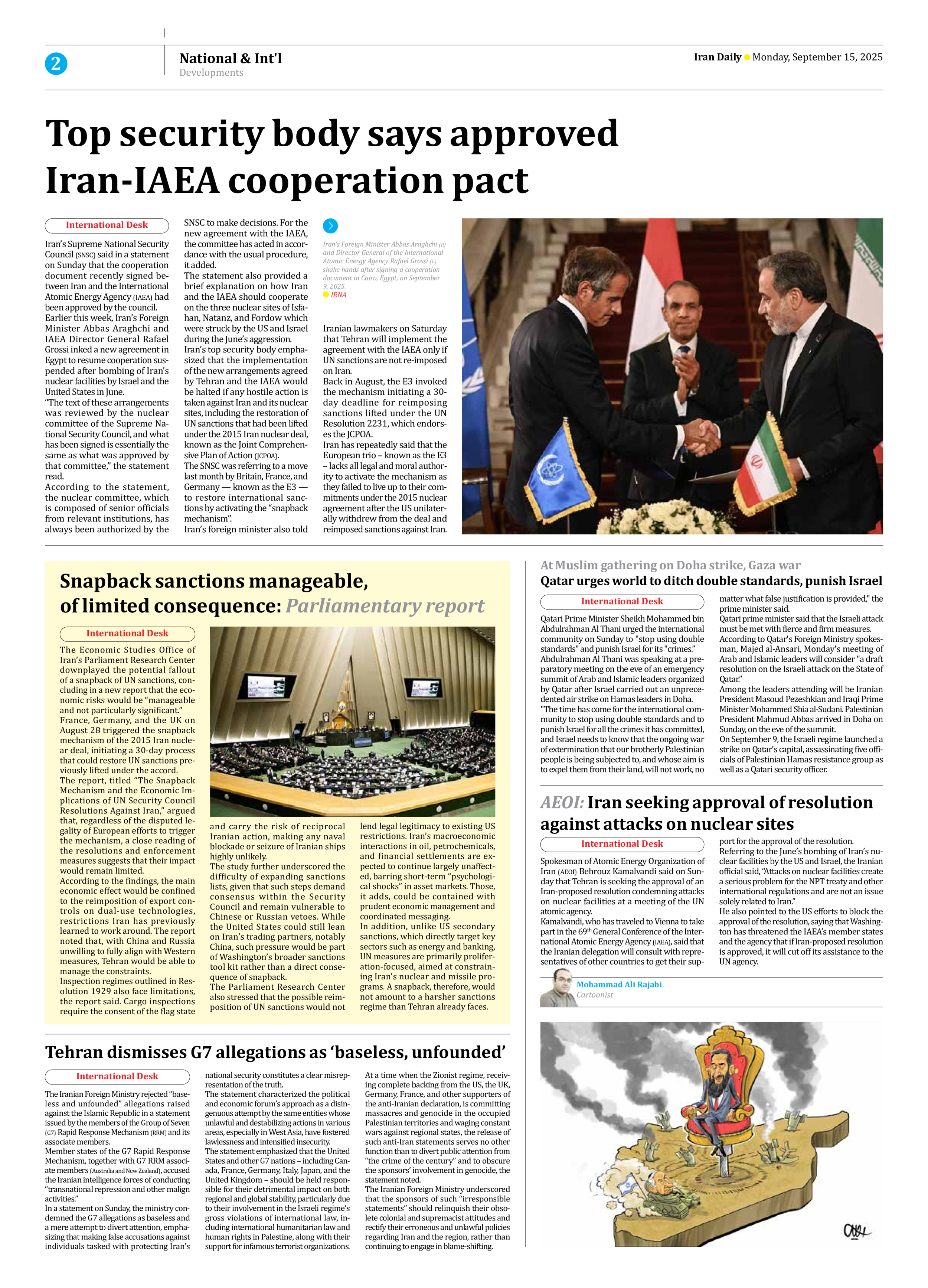
The Economic Studies Office of Iran’s Parliament Research Center downplayed the potential fallout of a snapback of UN sanctions, concluding in a new report that the economic risks would be “manageable and not particularly significant.”
France, Germany, and the UK on August 28 triggered the snapback mechanism of the 2015 Iran nuclear deal, initiating a 30-day process that could restore UN sanctions previously lifted under the accord.
The report, titled “The Snapback Mechanism and the Economic Implications of UN Security Council Resolutions Against Iran,” argued that, regardless of the disputed legality of European efforts to trigger the mechanism, a close reading of the resolutions and enforcement measures suggests that their impact would remain limited.
According to the findings, the main economic effect would be confined to the reimposition of export controls on dual-use technologies, restrictions Iran has previously learned to work around. The report noted that, with China and Russia unwilling to fully align with Western measures, Tehran would be able to manage the constraints.
Inspection regimes outlined in Resolution 1929 also face limitations, the report said. Cargo inspections require the consent of the flag state and carry the risk of reciprocal Iranian action, making any naval blockade or seizure of Iranian ships highly unlikely.
The study further underscored the difficulty of expanding sanctions lists, given that such steps demand consensus within the Security Council and remain vulnerable to Chinese or Russian vetoes. While the United States could still lean on Iran’s trading partners, notably China, such pressure would be part of Washington’s broader sanctions tool kit rather than a direct consequence of snapback.
The Parliament Research Center also stressed that the possible reimposition of UN sanctions would not lend legal legitimacy to existing US restrictions. Iran’s macroeconomic interactions in oil, petrochemicals, and financial settlements are expected to continue largely unaffected, barring short-term “psychological shocks” in asset markets. Those, it adds, could be contained with prudent economic management and coordinated messaging.
In addition, unlike US secondary sanctions, which directly target key sectors such as energy and banking, UN measures are primarily proliferation-focused, aimed at constraining Iran’s nuclear and missile programs. A snapback, therefore, would not amount to a harsher sanctions regime than Tehran already faces.