







Art, industry of locksmithing in Chaleshtar
Chaleshtar is one of the oldest cities in the vicinity of Shahr-e Kord, located in Chaharmahal and Bakhtiari Province. Among the various Iranian handicrafts, Chaleshtar is renowned for a craft whose industrial aspect surpasses its artistic value — this is the art of Qoflsazi, or locksmithing, which has been practiced in this city for many years. The tradition of locksmithing in Chaleshtar dates back to the Safavid dynasty.
According to locals, one of the elders of Chaleshtar, Khajeh Abdollah Nasr, traveled to Isfahan during his childhood, where he learned the craft of locksmithing from the great master of weaponry, Mohammad Ali Talayi. After mastering the art, he returned to Chaleshtar and invented the city’s distinctive padlock design, visitiran.ir wrote.
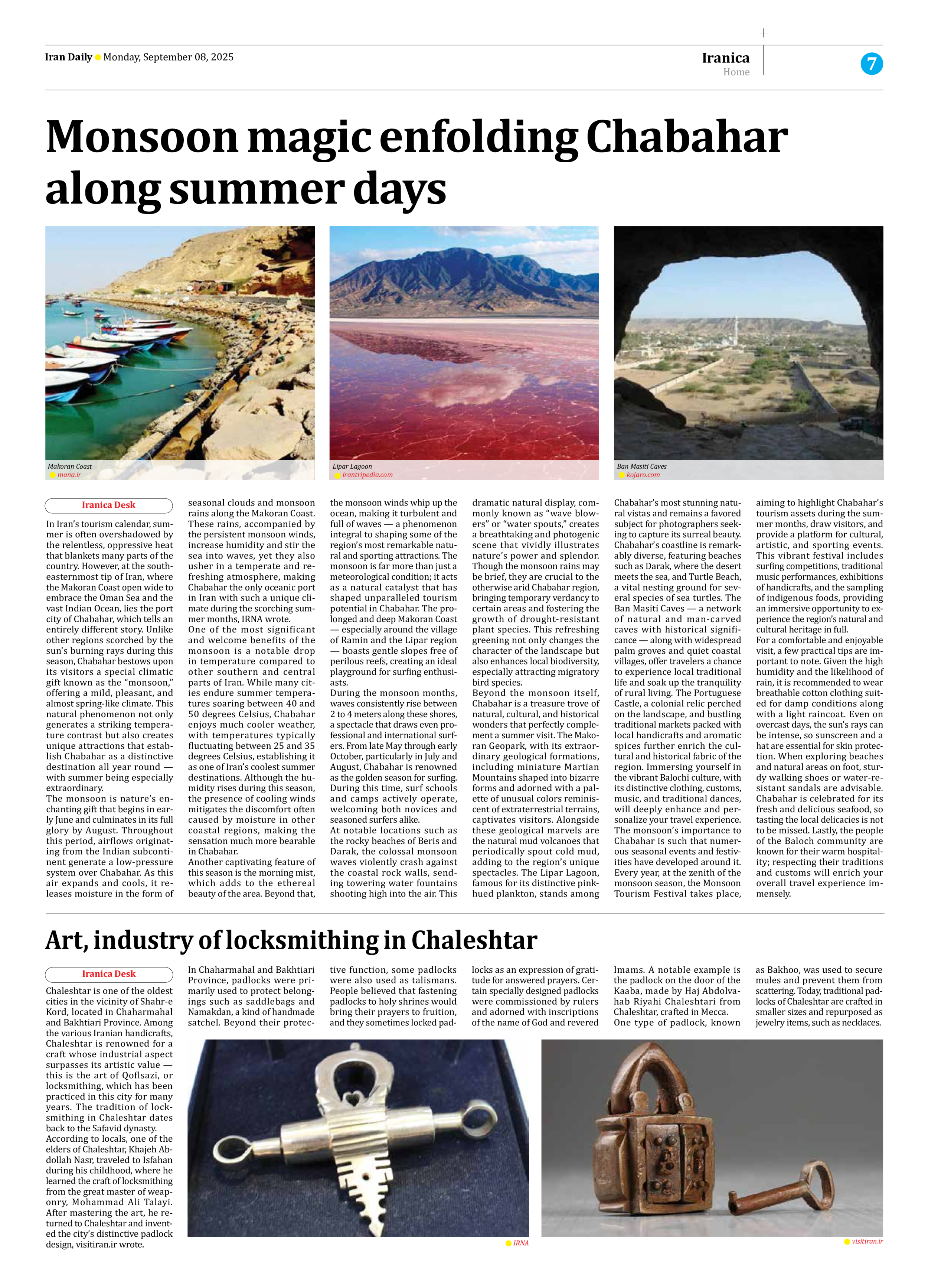
In Chaharmahal and Bakhtiari Province, padlocks were primarily used to protect belongings such as saddlebags and Namakdan, a kind of handmade satchel. Beyond their protective function, some padlocks were also used as talismans. People believed that fastening padlocks to holy shrines would bring their prayers to fruition, and they sometimes locked padlocks as an expression of gratitude for answered prayers. Certain specially designed padlocks were commissioned by rulers and adorned with inscriptions of the name of God and revered Imams. A notable example is the padlock on the door of the Kaaba, made by Haj Abdolvahab Riyahi Chaleshtari from Chaleshtar, crafted in Mecca.
One type of padlock, known as Bakhoo, was used to secure mules and prevent them from scattering. Today, traditional padlocks of Chaleshtar are crafted in smaller sizes and repurposed as jewelry items, such as necklaces.