







Monsoon magic enfolding Chabahar along summer days
In Iran’s tourism calendar, summer is often overshadowed by the relentless, oppressive heat that blankets many parts of the country. However, at the southeasternmost tip of Iran, where the Makoran Coast open wide to embrace the Oman Sea and the vast Indian Ocean, lies the port city of Chabahar, which tells an entirely different story. Unlike other regions scorched by the sun’s burning rays during this season, Chabahar bestows upon its visitors a special climatic gift known as the “monsoon,” offering a mild, pleasant, and almost spring-like climate. This natural phenomenon not only generates a striking temperature contrast but also creates unique attractions that establish Chabahar as a distinctive destination all year round — with summer being especially extraordinary.
The monsoon is nature’s enchanting gift that begins in early June and culminates in its full glory by August. Throughout this period, airflows originating from the Indian subcontinent generate a low-pressure system over Chabahar. As this air expands and cools, it releases moisture in the form of seasonal clouds and monsoon rains along the Makoran Coast. These rains, accompanied by the persistent monsoon winds, increase humidity and stir the sea into waves, yet they also usher in a temperate and refreshing atmosphere, making Chabahar the only oceanic port in Iran with such a unique climate during the scorching summer months, IRNA wrote.
One of the most significant and welcome benefits of the monsoon is a notable drop in temperature compared to other southern and central parts of Iran. While many cities endure summer temperatures soaring between 40 and 50 degrees Celsius, Chabahar enjoys much cooler weather, with temperatures typically fluctuating between 25 and 35 degrees Celsius, establishing it as one of Iran’s coolest summer destinations. Although the humidity rises during this season, the presence of cooling winds mitigates the discomfort often caused by moisture in other coastal regions, making the sensation much more bearable in Chabahar.
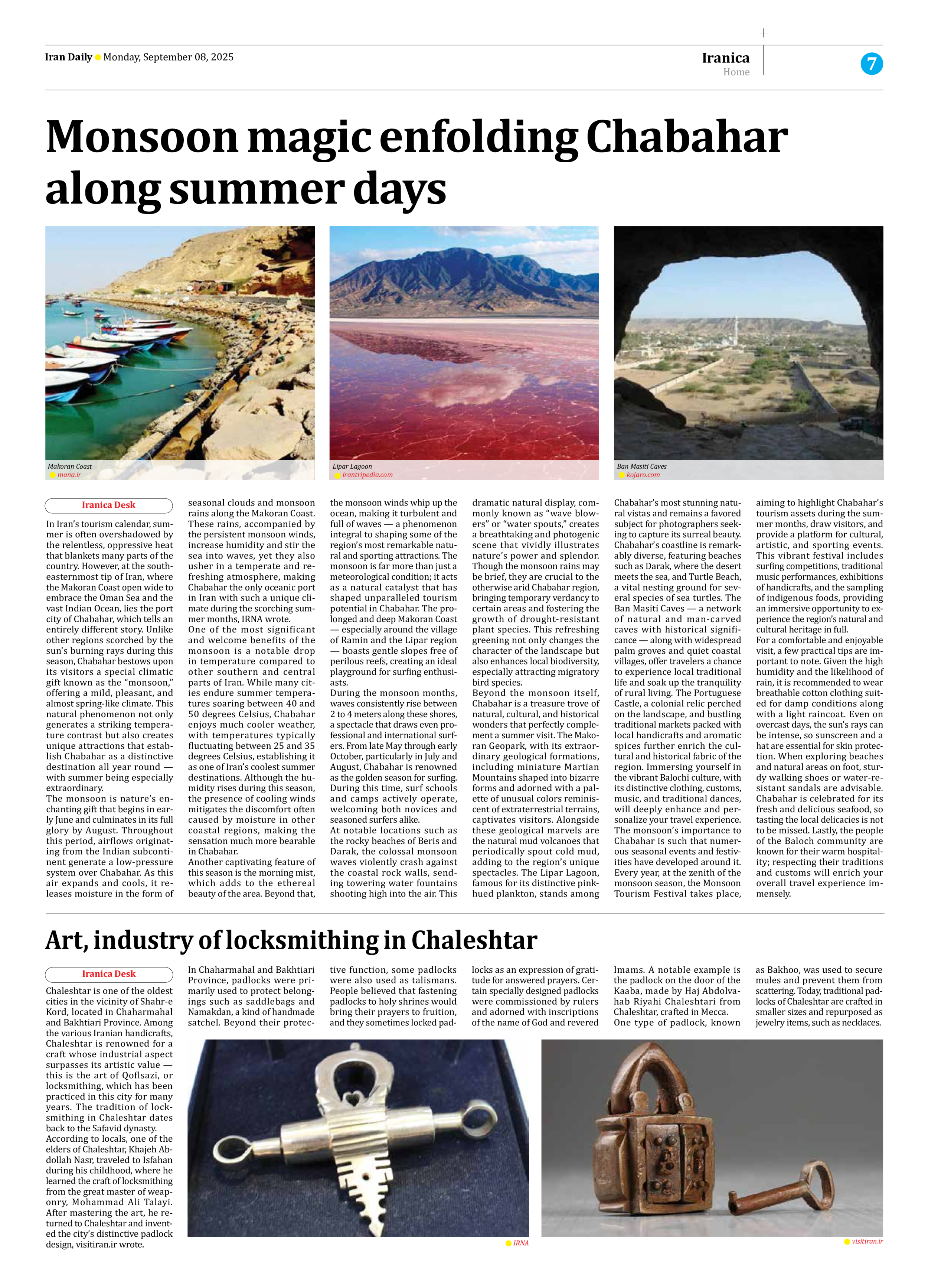
Another captivating feature of this season is the morning mist, which adds to the ethereal beauty of the area. Beyond that, the monsoon winds whip up the ocean, making it turbulent and full of waves — a phenomenon integral to shaping some of the region’s most remarkable natural and sporting attractions. The monsoon is far more than just a meteorological condition; it acts as a natural catalyst that has shaped unparalleled tourism potential in Chabahar. The prolonged and deep Makoran Coast — especially around the village of Ramin and the Lipar region — boasts gentle slopes free of perilous reefs, creating an ideal playground for surfing enthusiasts.
During the monsoon months, waves consistently rise between 2 to 4 meters along these shores, a spectacle that draws even professional and international surfers. From late May through early October, particularly in July and August, Chabahar is renowned as the golden season for surfing. During this time, surf schools and camps actively operate, welcoming both novices and seasoned surfers alike.
At notable locations such as the rocky beaches of Beris and Darak, the colossal monsoon waves violently crash against the coastal rock walls, sending towering water fountains shooting high into the air. This dramatic natural display, commonly known as “wave blowers” or “water spouts,” creates a breathtaking and photogenic scene that vividly illustrates nature’s power and splendor. Though the monsoon rains may be brief, they are crucial to the otherwise arid Chabahar region, bringing temporary verdancy to certain areas and fostering the growth of drought-resistant plant species. This refreshing greening not only changes the character of the landscape but also enhances local biodiversity, especially attracting migratory bird species.
Beyond the monsoon itself, Chabahar is a treasure trove of natural, cultural, and historical wonders that perfectly complement a summer visit. The Makoran Geopark, with its extraordinary geological formations, including miniature Martian Mountains shaped into bizarre forms and adorned with a palette of unusual colors reminiscent of extraterrestrial terrains, captivates visitors. Alongside these geological marvels are the natural mud volcanoes that periodically spout cold mud, adding to the region’s unique spectacles. The Lipar Lagoon, famous for its distinctive pink-hued plankton, stands among Chabahar’s most stunning natural vistas and remains a favored subject for photographers seeking to capture its surreal beauty.
Chabahar’s coastline is remarkably diverse, featuring beaches such as Darak, where the desert meets the sea, and Turtle Beach, a vital nesting ground for several species of sea turtles. The Ban Masiti Caves — a network of natural and man-carved caves with historical significance — along with widespread palm groves and quiet coastal villages, offer travelers a chance to experience local traditional life and soak up the tranquility of rural living. The Portuguese Castle, a colonial relic perched on the landscape, and bustling traditional markets packed with local handicrafts and aromatic spices further enrich the cultural and historical fabric of the region. Immersing yourself in the vibrant Balochi culture, with its distinctive clothing, customs, music, and traditional dances, will deeply enhance and personalize your travel experience.
The monsoon’s importance to Chabahar is such that numerous seasonal events and festivities have developed around it. Every year, at the zenith of the monsoon season, the Monsoon Tourism Festival takes place, aiming to highlight Chabahar’s tourism assets during the summer months, draw visitors, and provide a platform for cultural, artistic, and sporting events. This vibrant festival includes surfing competitions, traditional music performances, exhibitions of handicrafts, and the sampling of indigenous foods, providing an immersive opportunity to experience the region’s natural and cultural heritage in full.
For a comfortable and enjoyable visit, a few practical tips are important to note. Given the high humidity and the likelihood of rain, it is recommended to wear breathable cotton clothing suited for damp conditions along with a light raincoat. Even on overcast days, the sun’s rays can be intense, so sunscreen and a hat are essential for skin protection. When exploring beaches and natural areas on foot, sturdy walking shoes or water-resistant sandals are advisable. Chabahar is celebrated for its fresh and delicious seafood, so tasting the local delicacies is not to be missed. Lastly, the people of the Baloch community are known for their warm hospitality; respecting their traditions and customs will enrich your overall travel experience immensely.