







RAJA ready to allocate land at Aprin to neighbors, eyes 40m-ton rail transit
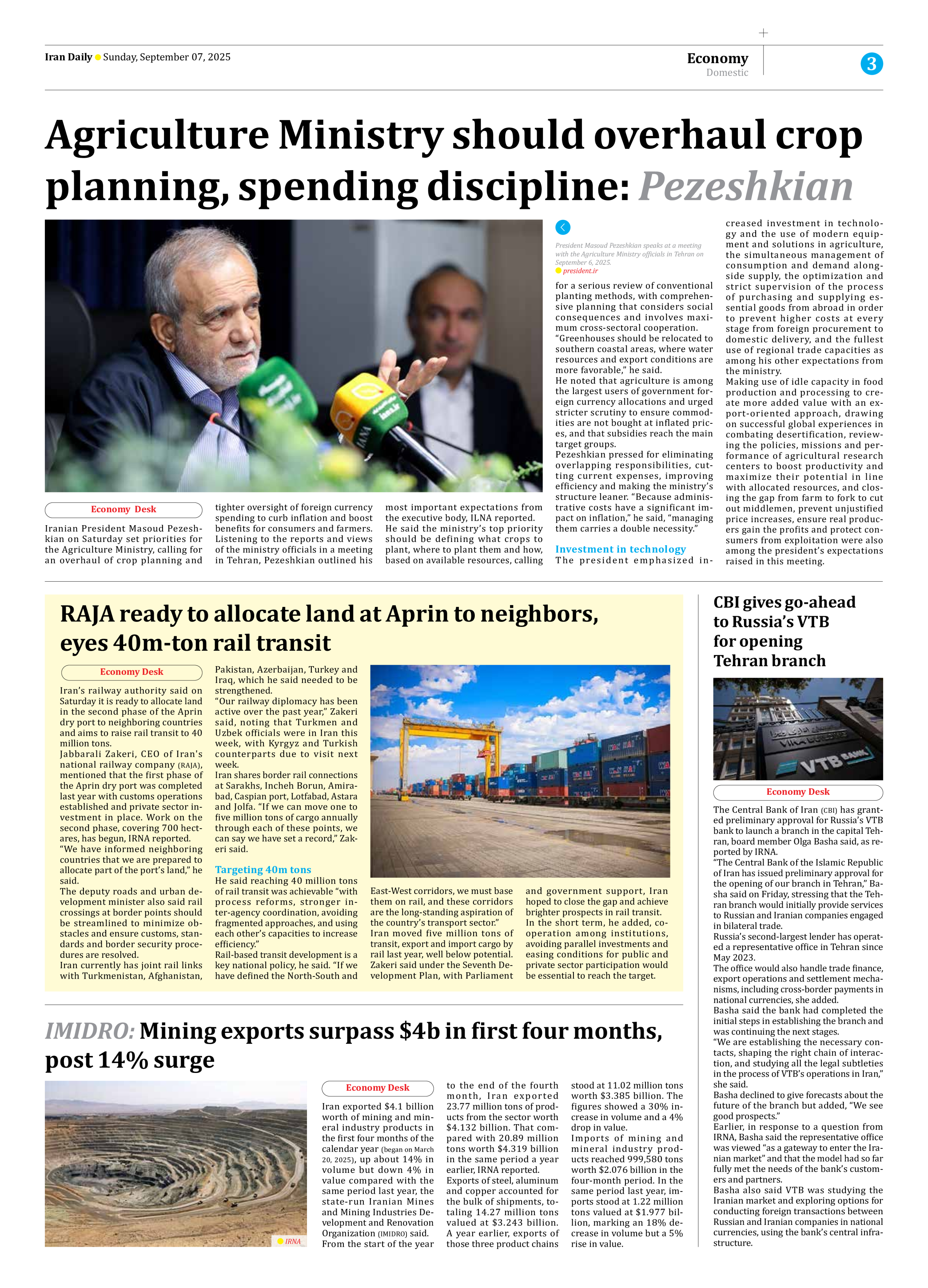
Iran’s railway authority said on Saturday it is ready to allocate land in the second phase of the Aprin dry port to neighboring countries and aims to raise rail transit to 40 million tons.
Jabbarali Zakeri, CEO of Iran's national railway company (RAJA), mentioned that the first phase of the Aprin dry port was completed last year with customs operations established and private sector investment in place. Work on the second phase, covering 700 hectares, has begun, IRNA reported.
“We have informed neighboring countries that we are prepared to allocate part of the port’s land,” he said.
The deputy roads and urban development minister also said rail crossings at border points should be streamlined to minimize obstacles and ensure customs, standards and border security procedures are resolved.
Iran currently has joint rail links with Turkmenistan, Afghanistan, Pakistan, Azerbaijan, Turkey and Iraq, which he said needed to be strengthened.
“Our railway diplomacy has been active over the past year,” Zakeri said, noting that Turkmen and Uzbek officials were in Iran this week, with Kyrgyz and Turkish counterparts due to visit next week.
Iran shares border rail connections at Sarakhs, Incheh Borun, Amirabad, Caspian port, Lotfabad, Astara and Jolfa. “If we can move one to five million tons of cargo annually through each of these points, we can say we have set a record,” Zakeri said.
Targeting 40m tons
He said reaching 40 million tons of rail transit was achievable “with process reforms, stronger inter-agency coordination, avoiding fragmented approaches, and using each other’s capacities to increase efficiency.”
Rail-based transit development is a key national policy, he said. “If we have defined the North-South and East-West corridors, we must base them on rail, and these corridors are the long-standing aspiration of the country’s transport sector.”
Iran moved five million tons of transit, export and import cargo by rail last year, well below potential. Zakeri said under the Seventh Development Plan, with Parliament and government support, Iran hoped to close the gap and achieve brighter prospects in rail transit.
In the short term, he added, cooperation among institutions, avoiding parallel investments and easing conditions for public and private sector participation would be essential to reach the target.