





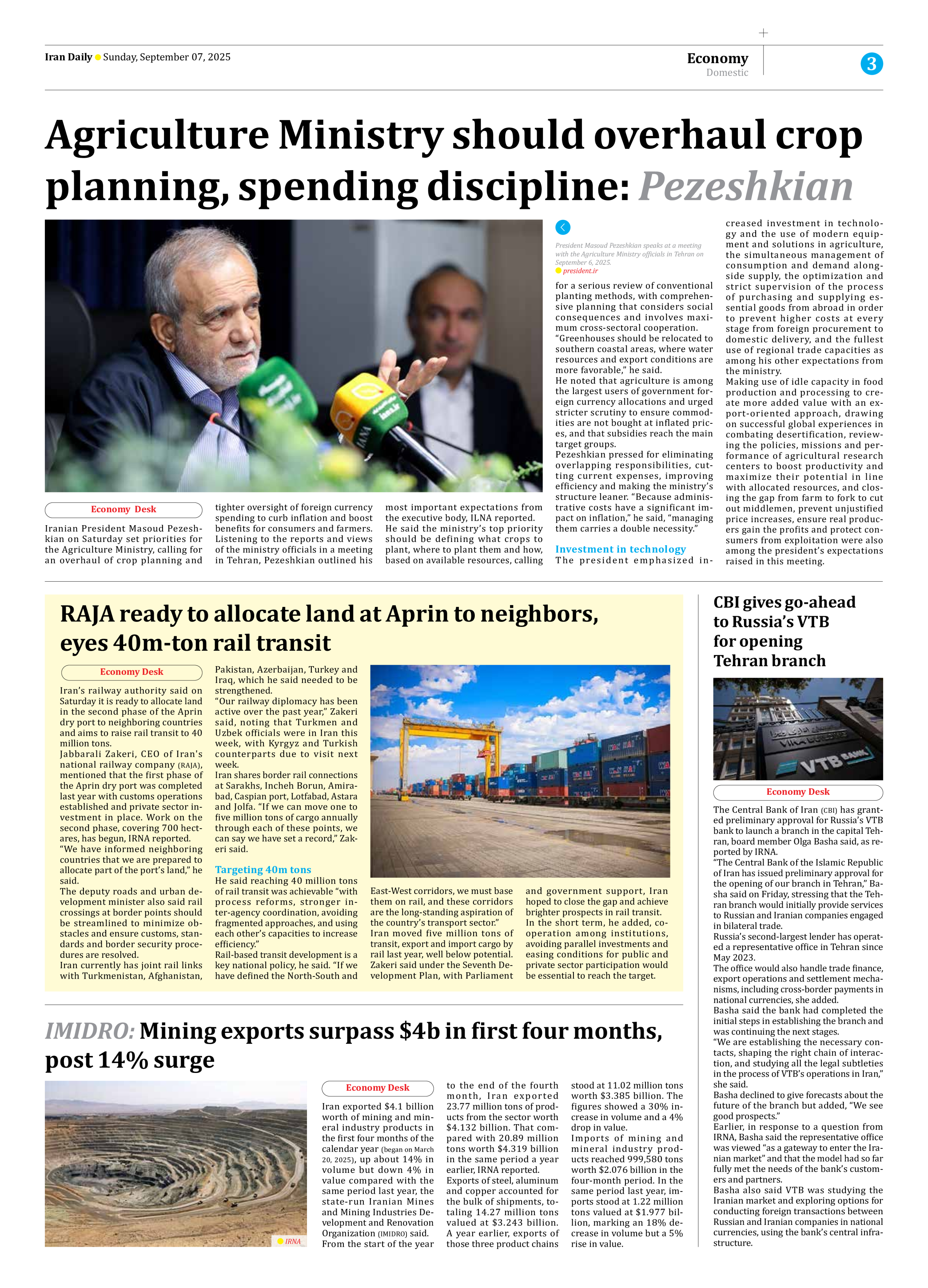


Agriculture Ministry should overhaul crop planning, spending discipline: Pezeshkian
Iranian President Masoud Pezeshkian on Saturday set priorities for the Agriculture Ministry, calling for an overhaul of crop planning and tighter oversight of foreign currency spending to curb inflation and boost benefits for consumers and farmers.
Listening to the reports and views of the ministry officials in a meeting in Tehran, Pezeshkian outlined his most important expectations from the executive body, ILNA reported.
He said the ministry’s top priority should be defining what crops to plant, where to plant them and how, based on available resources, calling for a serious review of conventional planting methods, with comprehensive planning that considers social consequences and involves maximum cross-sectoral cooperation.
“Greenhouses should be relocated to southern coastal areas, where water resources and export conditions are more favorable,” he said.
He noted that agriculture is among the largest users of government foreign currency allocations and urged stricter scrutiny to ensure commodities are not bought at inflated prices, and that subsidies reach the main target groups.
Pezeshkian pressed for eliminating overlapping responsibilities, cutting current expenses, improving efficiency and making the ministry’s structure leaner. “Because administrative costs have a significant impact on inflation,” he said, “managing them carries a double necessity.”
Investment in technology
The president emphasized increased investment in technology and the use of modern equipment and solutions in agriculture, the simultaneous management of consumption and demand alongside supply, the optimization and strict supervision of the process of purchasing and supplying essential goods from abroad in order to prevent higher costs at every stage from foreign procurement to domestic delivery, and the fullest use of regional trade capacities as among his other expectations from the ministry.
Making use of idle capacity in food production and processing to create more added value with an export-oriented approach, drawing on successful global experiences in combating desertification, reviewing the policies, missions and performance of agricultural research centers to boost productivity and maximize their potential in line with allocated resources, and closing the gap from farm to fork to cut out middlemen, prevent unjustified price increases, ensure real producers gain the profits and protect consumers from exploitation were also among the president’s expectations raised in this meeting.