







Copy in clipboard...
Artistic, structural mastery of Sarvestan Palace in Fars Province
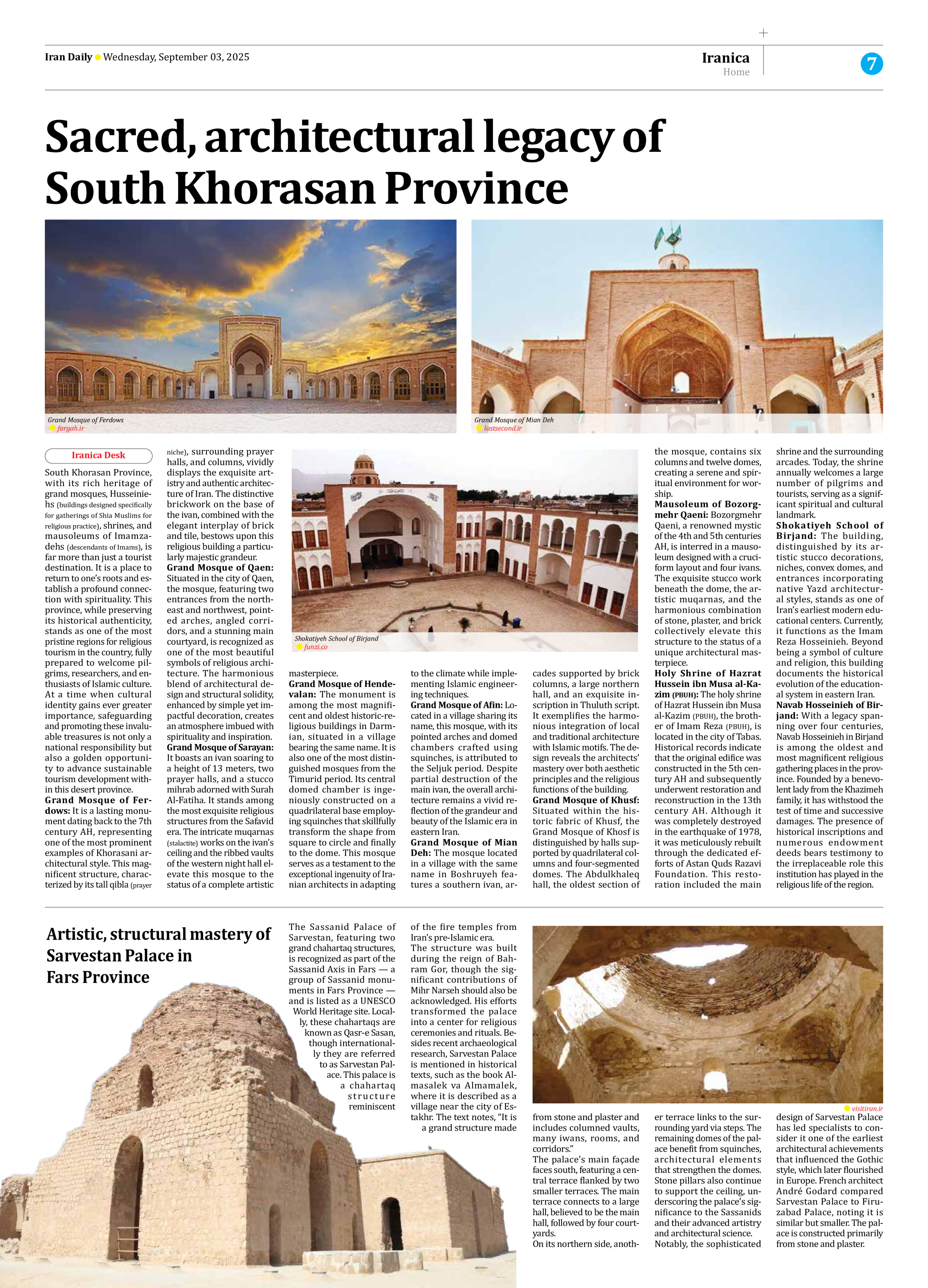
The structure was built during the reign of Bahram Gor, though the significant contributions of Mihr Narseh should also be acknowledged. His efforts transformed the palace into a center for religious ceremonies and rituals. Besides recent archaeological research, Sarvestan Palace is mentioned in historical texts, such as the book Almasalek va Almamalek, where it is described as a village near the city of Estakhr. The text notes, “It is a grand structure made from stone and plaster and includes columned vaults, many iwans, rooms, and corridors.”
The palace’s main façade faces south, featuring a central terrace flanked by two smaller terraces. The main terrace connects to a large hall, believed to be the main hall, followed by four courtyards.
On its northern side, another terrace links to the surrounding yard via steps. The remaining domes of the palace benefit from squinches, architectural elements that strengthen the domes. Stone pillars also continue to support the ceiling, underscoring the palace’s significance to the Sassanids and their advanced artistry and architectural science.
Notably, the sophisticated design of Sarvestan Palace has led specialists to consider it one of the earliest architectural achievements that influenced the Gothic style, which later flourished in Europe. French architect André Godard compared Sarvestan Palace to Firuzabad Palace, noting it is similar but smaller. The palace is constructed primarily from stone and plaster.