







Copy in clipboard...
Halim; embodiment of patience, culinary art
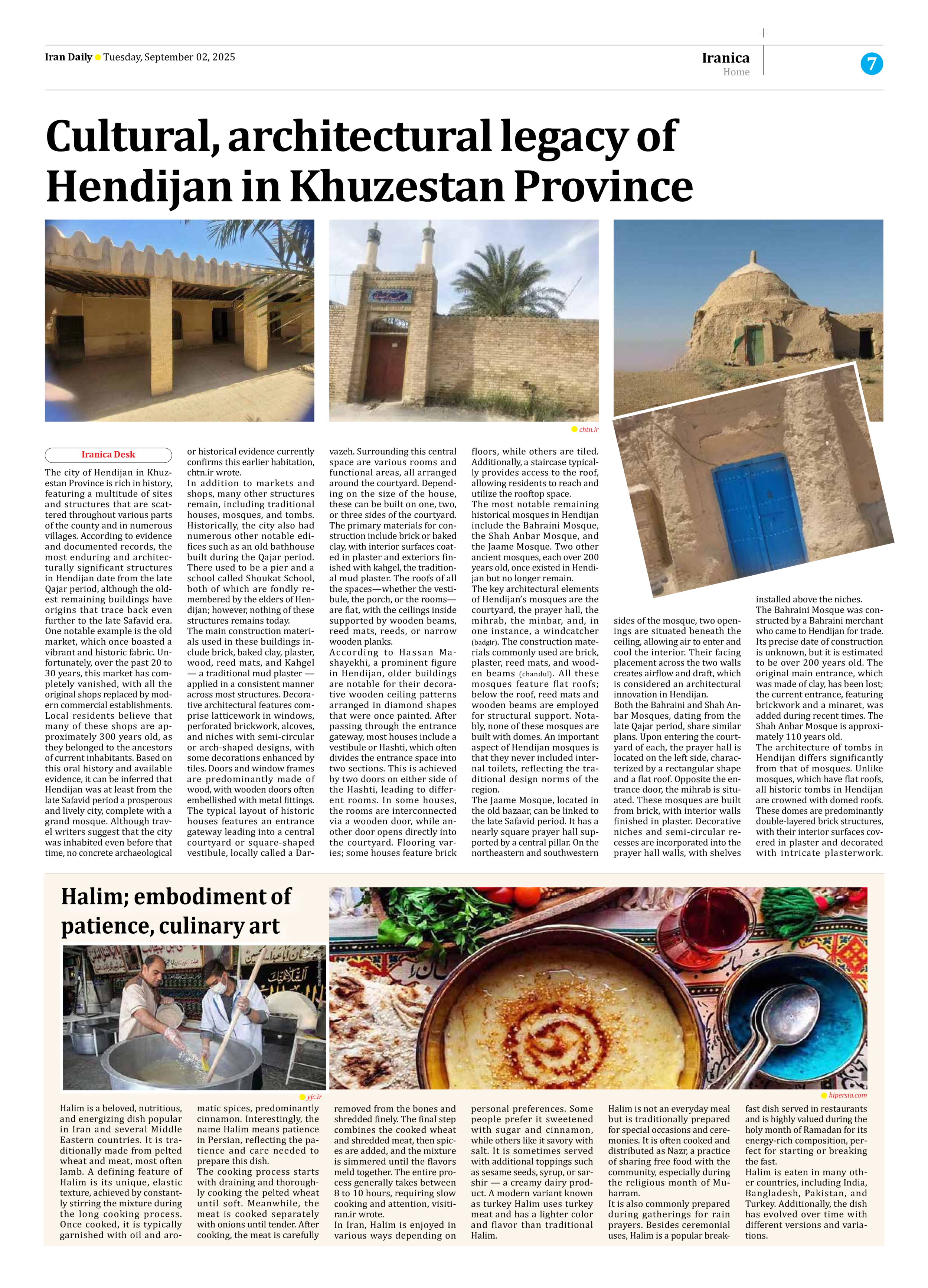
The cooking process starts with draining and thoroughly cooking the pelted wheat until soft. Meanwhile, the meat is cooked separately with onions until tender. After cooking, the meat is carefully removed from the bones and shredded finely. The final step combines the cooked wheat and shredded meat, then spices are added, and the mixture is simmered until the flavors meld together. The entire process generally takes between 8 to 10 hours, requiring slow cooking and attention, visitiran.ir wrote.
In Iran, Halim is enjoyed in various ways depending on personal preferences. Some people prefer it sweetened with sugar and cinnamon, while others like it savory with salt. It is sometimes served with additional toppings such as sesame seeds, syrup, or sarshir — a creamy dairy product. A modern variant known as turkey Halim uses turkey meat and has a lighter color and flavor than traditional Halim.
Halim is not an everyday meal but is traditionally prepared for special occasions and ceremonies. It is often cooked and distributed as Nazr, a practice of sharing free food with the community, especially during the religious month of Muharram.
It is also commonly prepared during gatherings for rain prayers. Besides ceremonial uses, Halim is a popular breakfast dish served in restaurants and is highly valued during the holy month of Ramadan for its energy-rich composition, perfect for starting or breaking the fast.
Halim is eaten in many other countries, including India, Bangladesh, Pakistan, and Turkey. Additionally, the dish has evolved over time with different versions and variations.